Personal Injury Basics
What Tort Law Means After a New York Property Injury
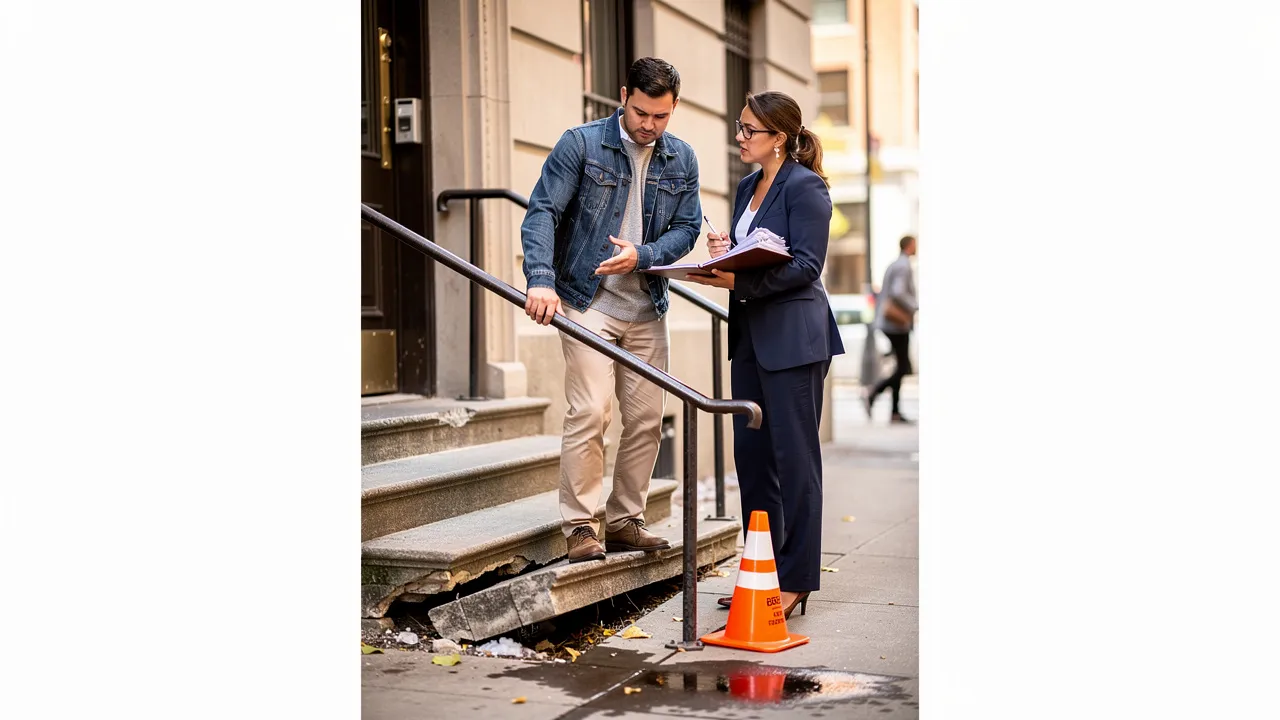
Begin With the Tort-Law Question
Tort law is part of civil law and addresses whether someone should be held legally accountable for another person’s injury and whether compensation may be available. If you were hurt on property owned, occupied, managed, or controlled by someone else, that broad question gives you a starting point—but it does not answer whether you have a claim.
A lawsuit for injuries or damages may fall under this area of civil law. In practical terms, you are asking whether another person or organization had a legal responsibility connected to the injury, whether the conduct or condition caused your harm, and whether civil law provides a way to seek relief. Those questions depend on the facts surrounding the event.
A New York property injury becomes easier to describe when you move from the broad question to four specific ones:
- What condition or conduct caused the injury?
- Who controlled the property or the work taking place there?
- What facts suggest that person or organization knew, or should have known, about the danger?
- What records, witnesses, or other information can help explain what happened?
This framework can help you describe the incident without assuming that a legal conclusion is already established.
Connect Negligence to the Property Condition
Negligence can involve failing to take an action that would have prevented an accident, including failing to repair a known hazard within a reasonable period. After a fall or other property injury, the question is not simply whether a dangerous condition existed. The facts may also need to show what the responsible party knew, what it could reasonably have discovered, and what it did or failed to do afterward.
The person or organization controlling property has a duty to maintain it in a reasonably safe condition, and negligence may lead to legal accountability for resulting harm. That does not mean every accident on someone else’s property establishes liability. The condition, the timing, the responsible party’s role, and the connection between the condition and your injury all matter.
A construction injury may raise an additional New York question under Labor Law Section 200. In some construction cases, Section 200 may apply when a property owner or contractor created a dangerous condition or had actual or constructive notice of it and failed to remedy it in a reasonable time. That rule is not a shortcut to a conclusion; the specific condition and the available proof still require review.
Incident notes should separate what you personally observed from what you later learned. Record the location of the hazard, its appearance, how long it may have existed if you know that, who was present, and what happened immediately afterward. This keeps the negligence question tied to facts rather than assumptions.
Identify the Premises-Liability Setting
Premises liability concerns harm caused by unsafe property conditions such as wet floors, broken stairs, poor lighting, loose floor tiles, inadequate security, structural defects, and other hazards. It commonly includes slip-and-fall accidents, inadequate security, and dangerous structural conditions.
A property owner may be legally responsible when a failure to address an unsafe condition causes an injury. The relevant responsibility may also involve another party that controlled or maintained the area, depending on the facts. Identify more than the property address: note the store, landlord, building manager, contractor, general contractor, public entity, or other organization connected to the location if you know it.
The same legal category can arise in very different settings. A wet floor in a store, a broken step in an apartment building, poor lighting in a parking area, inadequate security at a building, or a hazardous condition at a construction site may each require a different factual review. The label identifies the kind of issue; it does not determine who is responsible or what remedy may be available.
Property control is a useful starting question: who controlled the area when the condition caused your injury? Follow it with a second question: what duty, if any, did that party have in relation to the condition? Those questions can help you decide whether a premises-liability consultation is relevant without treating the accident category as a final legal answer.
Recognize Construction and Property Hazards
Construction sites may contain debris, tools, and materials. Workers may slip or fall because of uneven surfaces, wet floors, or inadequate lighting. If you were injured at a worksite, write down whether the event involved a surface condition, materials left in a walkway, lighting, equipment, a structural feature, or the way work was being performed.
Slip-and-fall and trip-and-fall accidents can involve spills, slick or uneven surfaces, objects on the ground, broken steps, ripped carpet, snow and ice buildup, cracks, or holes. The exact description matters. “I fell” gives a starting point; “my foot caught on a raised edge beside the entrance” identifies a condition that can be investigated.
Property-related hazards can include:
- Wet floors or unmarked spills
- Broken stairs, loose steps, or damaged railings
- Poor lighting or exposed electric cables
- Sidewalk cracks and potholes
- Ice or snow in an area where you were walking
- Debris, tools, or equipment left at a construction site
Record the location, lighting, weather if relevant, surface condition, warnings, barriers, and anything that changed before you left.
Structural failures can include ceiling collapses, balcony failures, broken steps, missing handrails, and malfunctioning elevators or escalators. These events may involve maintenance, construction, ownership, control, or inspection questions. Preserve the condition as you found it when possible, but do not put yourself at further risk to obtain photographs or return to a dangerous area.
Inadequate security is another premises-liability setting identified in New York-focused materials. If your injury involved an assault or another security-related event, record the location, lighting, access points, warnings, security personnel, and any prior complaint or incident information you already possess. A lawyer must assess whether those facts support a legal theory.
Separate a Property Condition From How Work Was Performed
A construction injury may require two separate lines of inquiry: whether a dangerous condition existed on the property and whether the injury arose from the way work was performed. Those questions can point to different evidence and different legal issues. Do not assume that the person who owned the site also controlled the work method.
A dangerous or defective condition may raise a New York Labor Law Section 200 issue in some cases when a property owner or contractor created the condition or had actual or constructive notice of it, failed to remedy it in a reasonable time, and the other requirements of the claim are met. A hole in a floor, a tripping hazard, inadequate lighting, or a slippery surface may be examples of conditions that warrant investigation.
An injury arising from how work was performed may involve improper supervision, insufficient training, or dangerous procedures when the defendant had authority to control or supervise the work. The control question is therefore central. For this branch, note who directed the task, who established the procedure, who supervised the workers, and what instructions or warnings were given if you know.
Construction-injury notes can use two headings:
- Condition: What was physically wrong with the property, and who may have created, maintained, or known about it?
- Work method: How was the task performed, who controlled it, and what supervision or instructions were involved?
Bring both sets of facts to a New York construction-injury consultation. The distinction helps prevent a single description from hiding an issue that needs separate review.

Use Specific Facts Before Drawing Conclusions
Snow and ice illustrate why the surrounding facts matter. New York snow-and-ice removal rules can be ambiguous, and the cited New York material distinguishes steps and walkways leading to entrances from other areas such as parking lots and sidewalks. If you fell on ice or snow, record the exact area, its distance from an entrance, weather conditions, warnings, lighting, photographs, and who appeared to maintain the location.
Dog-bite incidents present a different factual question. In New York, a property owner is not automatically liable for a dog bite; the facts must show knowledge, or reason to know, of the dog’s dangerous propensities. Record where the bite occurred, who owned or controlled the dog, what you were told about the animal, whether anyone witnessed earlier behavior, and whether the property owner had information about the dog.
Snow-and-ice and dog-bite examples cannot be reduced to a single word such as “ice” or “bite.” Similar injuries may lead to different questions because the location, notice, control, warnings, conduct, and prior knowledge may differ. Describe the facts first. Let a qualified New York attorney evaluate which legal theory, if any, fits them.
Build the Incident Record While Details Remain Available
An incident record should begin with a short timeline. Write the date, approximate time, exact location, reason you were there, condition you encountered, sequence of events, immediate symptoms, people who saw what happened, and actions taken afterward. Evidence collection can continue throughout a personal injury case, while information gathered in the first days may affect later case development.
After an injury, a lawyer may advise you to seek medical attention, notify the property owner or manager, make sure an incident report is filed, and preserve photographs and witness statements. If you already have an incident report, ask for a copy and keep it with your records. Preserve written communications that describe the event or your requests for information.
Potentially relevant evidence may include:
- Photographs or video of the condition and surrounding area
- Names and contact information for witnesses
- An incident report or notice to the property owner or manager
- Prior complaints about the condition
- Public records of prior claims or lawsuits arising from the condition
- Security footage from the premises or a nearby location
You do not need to decide which item proves your case before organizing it. Preserve what you have and identify what may exist.
Evidence organization works best when each item has a date, source, and short description. Place the timeline first, followed by photographs, witness information, reports and communications, and a list of possible evidence held by someone else. Then mark unanswered questions, such as who maintained the area or whether a camera covered the location. Organizing evidence into a timeline, categories, and investigative gaps can help legal professionals develop a case.
A consultation file can also include the names of property owners, managers, contractors, employers, or other parties you believe were connected to the location. Add the medical providers you have seen and the dates of any reports or notices you made. Keep facts you know separate from facts you need investigated. That separation gives you a clearer account without requiring you to decide liability before legal review.
Treat Preservation and Timing as Immediate Questions
Evidence preservation deserves prompt attention after a property injury when the condition may change, witnesses may become difficult to locate, or video may disappear. Surveillance footage can frequently be overwritten in a few short weeks, potentially eliminating visual proof. If a camera may have captured the event, record its location and tell the property owner or manager that the footage should be preserved. A lawyer can advise you about the appropriate communication.
Immediate priorities after an injury include:
- Obtain appropriate medical attention for the injury.
- Report the incident to the property owner or manager when appropriate.
- Preserve photographs and witness details.
- Write the timeline while the sequence remains clear.
- Identify cameras, maintenance records, complaints, or other information that may be held by someone else.
These steps preserve information; they do not establish liability by themselves.
A government-related property injury requires particular urgency because notice issues may apply. New York court materials describe an outside limit of one year and 90 days for a late Notice of Claim, and seeking permission to serve a late notice requires a special proceeding in Supreme Court. This is not a universal deadline for every injury or defendant. Identify whether a public entity may be involved and obtain current, case-specific legal review rather than relying on this general description.
A deadline for taking action is different from the time a claim or lawsuit may take to resolve. This general overview does not establish a typical duration for a New York tort or premises-liability matter, so seek case-specific legal review rather than relying on a universal timetable. Contact a lawyer promptly when you are unsure who owns or controls the property, when a public entity may be involved, or when important evidence may be lost.

Understand What General Information Cannot Decide
General information cannot determine which legal theory fits your injury. The same location may involve premises liability, a construction-related claim, workers’ compensation questions, another theory, or no viable claim after the facts are reviewed. New York court guidance suggests consulting an attorney when you are unsure what legal right or theory your facts support.
You may be able to commence a civil action without a lawyer, but court staff may not give legal advice, prepare your papers, or act as your attorney.
New York court guidance also warns that a claim that clearly does not support a legal theory could be dismissed with a sanction as frivolous. That makes legal classification a practical issue, not merely a vocabulary exercise. Before filing anything, make sure you understand the defendant, the theory you are asserting, the facts supporting it, and any time-sensitive requirement that may apply.
A consultation can focus on concrete questions:
- What condition or conduct should be investigated?
- Who may own, control, maintain, or supervise the area or work?
- What evidence is available, and what may still need to be obtained?
- Could another path, such as workers’ compensation, also matter?
- Are there notice or timing issues that require immediate attention?
These questions help you seek review without treating an article’s general explanation as an individualized determination.
Compare Possible Paths for a Construction Worker
A construction injury may involve more than one legal question. Workers’ compensation is one path to ask about, while a premises-liability or other personal-injury theory may focus on a property condition or another responsible party. New York Labor Law also gives construction workers rights that other workers do not have. The correct path depends on the work relationship, the accident facts, the property, and the parties involved.
| Possible path | General focus | Fact questions to bring |
|---|---|---|
| Workers’ compensation | In a New York work injury case, workers’ compensation covers treatment. | Who employed you, when did the injury occur, and what work or reporting records exist? |
| Premises liability | An unsafe property condition may raise questions about the party controlling the property and the failure to address the danger. | What was the condition, where was it, who controlled the area, and was there evidence of notice? |
| Labor Law Section 200 | In some New York construction cases, Section 200 may apply to a dangerous condition or to the way work was performed. | Did an owner or contractor create or know about the condition, or have authority to control or supervise the work? |
| Other New York construction-worker protections | New York Labor Law 240 and 241 provide construction workers with rights that other workers do not have. | What type of work and accident occurred, and which parties were involved? |
These paths are not interchangeable labels, and this comparison does not determine whether you qualify for any of them. Bring your employment information, accident timeline, property details, reports, and available photographs to a consultation so the possible routes can be considered together.
The comparison also helps you avoid treating one route as an automatic substitute for another. Ask which party employed you, who owned or controlled the location, whether the injury came from a property condition or work method, and whether any notice or supervision facts are available. Keep copies of worksite instructions, incident reports, and communications that may help answer those questions. A lawyer can assess how the possible paths relate to your particular facts.

Know When the Facts Require Professional Review
Professional review is appropriate when the injury involves a construction site or unsafe property condition and you cannot tell which legal path fits. It is also appropriate when the responsible party is unclear, a public entity may be involved, security footage or another record may disappear, or the condition changed before you could document it.
Timely review may be useful if any of these facts apply:
- You were injured at a worksite, store, apartment, sidewalk, entrance, parking area, or other property controlled by someone else.
- You do not know whether the problem was a property condition, a work method, or both.
- A camera, witness, incident report, maintenance record, or prior complaint may help explain what happened.
- The property may belong to a city, town, county, state agency, or other public entity.
- You are unsure whether workers’ compensation, premises liability, New York Labor Law, or another route should be considered.
Prompt review gives you a place to organize these questions before a time-sensitive issue becomes harder to address.
A short account can make the first discussion more focused. Include what happened, where it happened, the condition or work activity involved, who was present, what you reported, what treatment you received, and what records or photographs you have. Add a separate list of facts you do not know yet. Clear uncertainty is more useful than filling gaps with guesses.
Questions for professional review can stay practical:
- Which condition, work method, or conduct needs investigation?
- Who may have owned, controlled, maintained, or supervised the area?
- What records should be preserved or requested now?
- Does the incident raise workers’ compensation, premises-liability, or construction-law questions?
- Could a public entity or notice issue affect the available path?
Bring the questions with your timeline and records. The purpose is to identify what requires individualized analysis, not to force a conclusion from a general description.
Request a Focused Free Consultation
The civil-law framework provides the broad starting point, while premises liability and construction-related rules focus the inquiry on the property, the condition, the work, the responsible parties, and the available proof. If your injury happened in New York and those questions remain uncertain, gather your timeline and records so the discussion can begin with specific facts.
At Bergman, Bergman, Fields & Lamonsoff, LLP, we handle premises liability and construction accident cases and offer free consultations for personal-injury matters. We emphasize personal and frequent one-on-one communication with our clients. During a construction-accident consultation, our experienced construction accident attorneys gather information about injuries and job sites.
We have two full-service offices located in Hicksville, Nassau County and Kew Gardens, Queens. Bring the incident timeline, location details, photographs, reports, witness information, and any notice or timing concern you have. A qualified New York attorney must decide whether your specific facts support a particular legal path and whether the consultation is appropriate for your situation.
Keep reading
More on Personal Injury Basics
 Personal Injury Basics
Engineering Accidents in New York: Causes, Evidence, and Injury-Claim Questions
Learn how engineered-system failures can develop, what evidence to preserve, and which New York injury-claim questions to ask.
Read article Personal Injury Basics
New York Statute of Limitations: A Claim-and-Defendant Deadline Reference
Learn how New York injury deadlines vary by claim and defendant, what dates to gather, and when to seek prompt legal review.
Read article Personal Injury Basics
4 Best Practices for Choosing Injury Accident Lawyers Near You
Discover essential tips for choosing injury accident lawyers near me for personalized legal support.
Read articleHurt like this?
Tell us what happened.
The consultation is free and you pay nothing unless we win.
- Answered 24/7
- No fee unless we win
- Hablamos español
Send us the details
Takes about a minute. Free and confidential.