Personal Injury Basics
Engineering Accidents in New York: Causes, Evidence, and Injury-Claim Questions
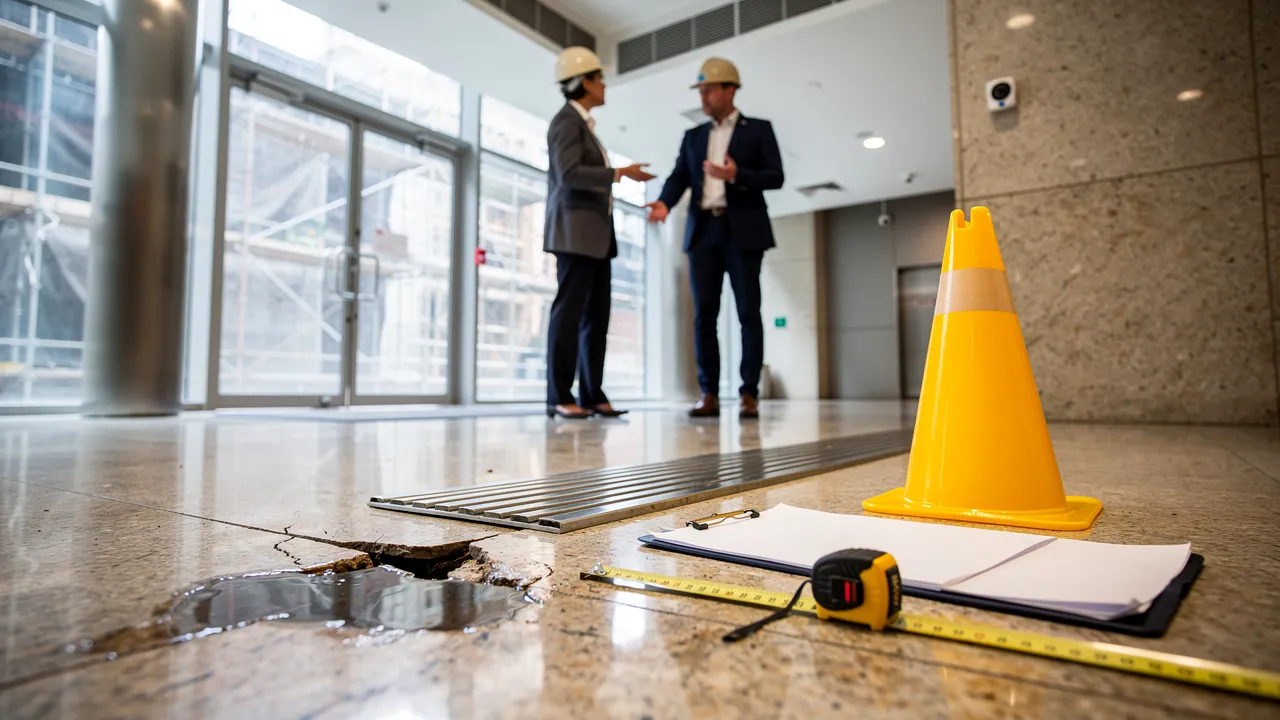
Start With the Engineered System, Not Just the Incident
An engineering accident is a useful working description for an event involving the failure or unsafe performance of a structure, support, machine, infrastructure component, or related system. The description directs your attention beyond the final movement or visible break. It asks what the system was designed to do, what condition it was in, how it was built or operated, and what changed before someone was injured.
A concrete or masonry structure may have conditions whose causes require assessment before repair, strengthening, or renovation can be selected. Engineering projects may also include supports for equipment, signs, towers, tanks, and similar items. A support failure can be expensive and disruptive and may lead to claims or litigation, but the failure alone does not establish who is legally responsible.
An ordinary equipment or workplace incident may involve a worker and a tool without showing that a structure, support, design, or related system failed. Your first question should therefore be whether the accident involved an engineered component or condition, rather than assuming that every workplace injury is an engineering failure.
ASCE 7 provides guidance on basic design and construction requirements for buildings and other structures, including strength and stiffness for structural stability and integrity and consideration of risks to human life, health, and welfare from structural damage or failure. That kind of technical reference can help frame questions about the system. It cannot, by itself, answer whether a particular person or organization violated a legal duty in your case.
Recognize the Main Construction and Infrastructure Categories
Construction and infrastructure incidents can involve several kinds of engineered systems, so begin by identifying the component connected to the event. A category gives you an investigation path, not a conclusion about fault.
- Buildings and structural frames: Examine the part of the building that failed or performed unsafely, including the surrounding condition and the work taking place nearby.
- Concrete and masonry: Look at the affected material, its condition before the event, and any repairs, strengthening, or renovation work associated with it.
- Structural supports: Consider supports for equipment, signs, towers, tanks, and similar items, including what each support was expected to carry or hold in place.
- Equipment and attached systems: Identify the equipment involved and the support or connection that linked it to the larger structure.
- Infrastructure components: Describe the portion of a larger system that failed, shifted, collapsed, or otherwise created the dangerous condition.
The same incident may fit more than one category. A falling component, for example, may require questions about the component itself, its support, the surrounding structure, and the work performed on each part.
A category list becomes useful when you connect each item to a specific fact. Write down what failed, where it was located, what it supported, who interacted with it, and what condition you observed. Concrete and masonry condition assessment addresses typical problems, their causes, and possible repair or strengthening approaches. Structural-support review likewise focuses on the design and performance of the support rather than stopping at the last visible action.

Trace the Possible Failure Path
A failure path can include several contributing conditions before the injury occurs. OSHA describes incident-investigation guidance as using a systems approach to identify and control underlying or root causes of incidents. That approach gives you a better set of questions than asking only what happened in the final seconds.
Use the following sequence as an organizing method:
- Design: What was the structure, support, or component intended to do, and what design information governed that purpose?
- Materials and condition: What condition were the concrete, masonry, connections, or other materials in before the event?
- Construction or installation: What was built, assembled, altered, or installed, and what work had been performed before the incident?
- Maintenance and inspection: What records describe the system’s condition, repairs, inspections, or known concerns?
- Warnings and instructions: What information was provided about hazards, limits, changes, or safe operation?
- Operations: What was happening when the event occurred, and did the actual use differ from the expected use?
- Organizational controls: What decisions, supervision, communication, scheduling, or safety-management practices shaped the work?
These are investigation questions, not findings about your accident. The available engineering evidence must show which questions matter and how the answers connect. It can help to separate the event into three stages: the condition that existed before the work or incident, the change or operation that immediately preceded it, and the injury-producing event itself. This separation keeps a visible trigger from swallowing the earlier history. For example, an operator action may be relevant to operations, while design information, material condition, inspection history, and management decisions may help explain why that action produced an unsafe result. That is a way to organize evidence, not a conclusion that any stage caused the injury. It also helps identify gaps: a missing plan, inspection entry, repair record, warning, or witness account may limit what can be concluded. Preserve the gap as well as the records you have.
Organizational and management errors or failures can be a significant causal influence in industrial accidents. An ASME account of the Chernobyl reactor explosion on April 26, 1986, attributes that event to flawed reactor design combined with operator mistakes and a lack of safety culture. The example does not determine what happened at a New York worksite, but it shows why the last action before an accident may not explain the whole sequence.
A systems review should therefore keep separate questions connected: what failed physically, what conditions allowed the failure to develop, and what information could establish each part of the sequence. The selected organizational failure analysis method was developed from safety-management audits, accident and incident investigations, and emergency-training exercises conducted over 26 years. You do not need to diagnose the system yourself; you need to preserve enough detail for qualified reviewers to examine it.
Use Standards and Condition Evidence as Investigation Questions
ASCE 7 can provide a technical reference point for questions about structural stability, integrity, strength, stiffness, and risks from structural damage or failure. ASCE states that the standard is adopted by reference into the International Building Code, International Existing Building Code, International Residential Code, and NFPA 5000 Building Construction and Safety Code. Adoption depends on the applicable jurisdiction and code framework, so the reference does not automatically establish the requirements governing your particular location or project.
You can use a standard as a question prompt: What was the structure expected to withstand? What design or construction information applies? What condition existed before the incident? Which part of the system changed? Those questions help separate a technical inquiry from an assumption that a standard was violated.
Condition evidence describes what the system was like before, during, and after the event. Concrete and masonry assessment may examine typical problems, why they occurred, and whether repair, strengthening, or renovation addressed them. For your records, connect photographs, inspection entries, repair documents, and communications to dates and locations whenever those details are available.
A useful condition record should identify the affected component and describe its state without guessing at the cause. Marking a crack, deformation, missing connection, damaged support, or change in alignment as an observed fact is more useful than labeling the condition as negligence before the technical review is complete. When records do not line up, treat the difference as a question to document rather than an immediate answer. A photograph may show a condition at one point in time, an inspection record may describe an earlier condition, a repair record may show that work was performed, and a communication may identify a concern or planned response. Organizing those items by date, location, and component can help a qualified reviewer examine whether the system changed and which information is still missing. The combined record may be more useful than any single item, but it still does not by itself prove a standards violation or legal responsibility. Keep technical observations separate from assumptions about who should have acted.

Separate Technical Causation From Legal Responsibility
Technical causation and legal responsibility answer different questions. Technical causation asks how the system failed or contributed to the injury. Finding a design issue, material condition, construction problem, maintenance concern, warning issue, operational choice, or management failure does not by itself answer the second question.
Several parties may have had different roles in the system. A designer may have supplied design information, a contractor may have performed construction or installation, an owner or manager may have controlled the property, and another party may have maintained, supplied, or operated equipment. Those possible roles are starting points for gathering facts, not conclusions about liability.
New York construction-injury information identifies workers’ compensation and third-party claims as distinct avenues for compensation. A worker may pursue a personal injury lawsuit against a third party if the accident resulted from that party’s negligence. The existence of an injury does not establish that a third-party lawsuit is available, and identifying a possible third party does not establish negligence.
Preserve facts that allow the roles to be examined separately: the employer and work assignment, the property or project, the equipment or structure involved, the people and companies present, the condition observed, and the records that describe design, construction, maintenance, or operation.
Begin With Health and Incident Reporting
Medical attention is the first priority after an injury-related incident. New York workers’ compensation guidance includes assistance in obtaining immediate medical treatment or first aid. Follow the treatment instructions you receive and keep the dates, providers, diagnoses, restrictions, and related records in one place.
An injury connected to work can fit the New York workers’ compensation terminology for an accident when it arises out of and in the course of employment and results in personal injury to a worker. That description helps identify a reporting and claim question; it does not decide whether your specific injury meets every legal requirement.
Incident reporting should follow the channels that apply to your workplace and the event. The applicable requirements depend on the circumstances and the responsible workplace or agency, so the information below should not be read as a universal deadline.
OSHA’s recordkeeping requirements under 29 CFR Part 1904 include recording, reporting, and electronic submission of work-related injury and illness information. Report the incident through the appropriate workplace channel, ask how the report will be documented, and keep your own dated account of what you reported and when.

Preserve the Story of the System and the Event
A practical incident record can organize the system, the event, and the available evidence for later review. Use a dated folder or note and gather the following when you can do so safely and lawfully:
- The date, time, exact location, weather or lighting conditions if relevant, and the work being performed.
- A plain-language description of what you saw, heard, touched, or experienced before, during, and after the event.
- Photographs or video of the condition, surrounding area, equipment, supports, warnings, and visible damage, if those materials are already available or can be obtained without creating another hazard.
- Names and contact information for witnesses, supervisors, contractors, property representatives, and others who may know what happened.
- Equipment names, identifying numbers, project details, plans, drawings, inspection records, maintenance records, repair records, and communications that you can lawfully access.
- The incident report, medical records, treatment instructions, work restrictions, and dates of missed or modified work.
The list is a recordkeeping aid, not a finding that every item exists or must be obtained by you personally.
Preservation matters because a systems review may need to connect the physical condition with the design, support, work, and management decisions surrounding it. OSHA describes incident-investigation guidance as examining underlying or root causes, while engineering guidance recognizes that support failures can be disruptive and may invite claims or litigation. Do not guess at missing facts or alter an item to make it fit a theory. Record what is known, identify what is missing, and preserve available physical and written information in its existing form when possible.
Understand the Reporting Record Without Treating It as the Whole Case
OSHA records can document work-related injuries and illnesses, but the recordkeeping process has defined steps and limits. Certain employers must prepare and maintain records of work-related injuries and illnesses under the Occupational Safety and Health Act of 1970.
The process includes deciding whether the incident is work-related, whether it is a new case or a recurrence, and which injury-and-illness incident report form to use if the case is recordable. Those classifications describe the employer’s recordkeeping decision. They do not, standing alone, reconstruct every technical condition or establish legal responsibility.
An incident report is one part of the available record. It may preserve what was reported, when the workplace received information, and how the event was described at the time. It may not capture the full condition of a structure, support, equipment, or worksite, and it does not by itself resolve technical causation or legal responsibility.
For a later review, keep the report with your own dated description, medical information, photographs, witness details, and available system records. Compare the report’s description with the physical condition and other records without assuming that an omission proves that an event did not occur. If the report uses a workplace or workers’ compensation classification, treat that label as part of the record rather than as a complete answer to a separate third-party question. The relevant evidence may include the employer, project, property, contractors, equipment, and the roles each party had. This information helps distinguish what the reporting record establishes from what still requires technical or legal review.
Compare the Available New York Claim Pathways
New York claim pathways can involve different questions, so do not assume that one label resolves the other. New York workers’ compensation terminology describes an accident as an event arising out of and in the course of employment that results in personal injury to a worker. New York construction-injury information also identifies workers’ compensation and third-party claims as distinct avenues for compensation.
A high-level comparison can help you organize the facts:
| Question | Workers’ compensation pathway | Third-party personal-injury pathway |
|---|---|---|
| What relationship matters? | Whether the injury arose out of and in the course of employment | Whether another party’s negligence contributed to the injury |
| What facts should you organize? | The work assignment, accident date, injury, treatment, and employment connection | The identity and role of the other party, the system or condition involved, and evidence of negligence |
| What can you conclude at the outset? | The work connection may warrant review of a workers’ compensation question | A third-party claim requires separate evidence-based review and is not established by the accident alone |
An injured worker may have both questions at the same time. Preserve information about the employer, project, property, equipment, contractors, and condition instead of discarding one pathway before the facts are reviewed.
Know When a Case-Specific Evaluation May Help
A case-specific evaluation may help when an engineering-related event caused an injury, the failure path is unclear, physical evidence or records may matter, or the roles of an employer and other parties need to be separated. The need for review does not depend on your having a complete technical explanation. Your account can identify the questions that require further examination.
At Bergman, Bergman, Fields & Lamonsoff, LLP, we offer free consultations where experienced construction accident attorneys gather information regarding injuries and job sites. During that process, bring the organized details you have and ask direct questions about the facts that need review.
A useful preparation list can include:
- A short timeline from the condition or task through the injury and medical treatment.
- The location, project, employer, contractors, equipment, structure, and people involved.
- Photographs, videos, messages, reports, plans, maintenance information, and witness contacts that you can lawfully share.
- The injuries diagnosed, treatment received, work restrictions, and questions about what happened next.
- Any uncertainty about whether the event involved a work-related pathway, a third party, or both.
You do not need to decide who was legally responsible before providing these details. The purpose of the review is to discuss the available information and the questions it raises. At a consultation, the most useful questions may be about the next evidence step rather than about reaching an immediate conclusion. Ask which parts of the timeline are unclear, what records or physical items may need to be preserved, which people or entities had identified roles, and whether the available information raises separate work-related and third-party questions. Share what you know, identify what you do not know, and note questions about treatment, work restrictions, reports, or the condition of the system. This approach gives the attorneys reviewing the injury and job site a clearer account to consider without requiring you to diagnose the engineering failure or decide liability in advance.
Request the Next Step
Your next step is to preserve your timeline, treatment information, incident reports, photographs, witness details, and available records about the structure, support, equipment, or worksite. Write down the questions you want answered, including how the event may relate to employment and whether another party’s role requires review. A qualified New York attorney must assess your individual facts before anyone can determine which legal pathway may apply.
Keep reading
More on Personal Injury Basics
 Personal Injury Basics
What Tort Law Means After a New York Property Injury
Understand tort law after a New York property injury, including premises liability, evidence, timing, and possible consultation paths.
Read article Personal Injury Basics
New York Statute of Limitations: A Claim-and-Defendant Deadline Reference
Learn how New York injury deadlines vary by claim and defendant, what dates to gather, and when to seek prompt legal review.
Read article Personal Injury Basics
4 Best Practices for Choosing Injury Accident Lawyers Near You
Discover essential tips for choosing injury accident lawyers near me for personalized legal support.
Read articleHurt like this?
Tell us what happened.
The consultation is free and you pay nothing unless we win.
- Answered 24/7
- No fee unless we win
- Hablamos español
Send us the details
Takes about a minute. Free and confidential.