Car Accidents
Bergman, Bergman, Fields & Lamonsoff, LLP: A New York Car Accident Firm Profile
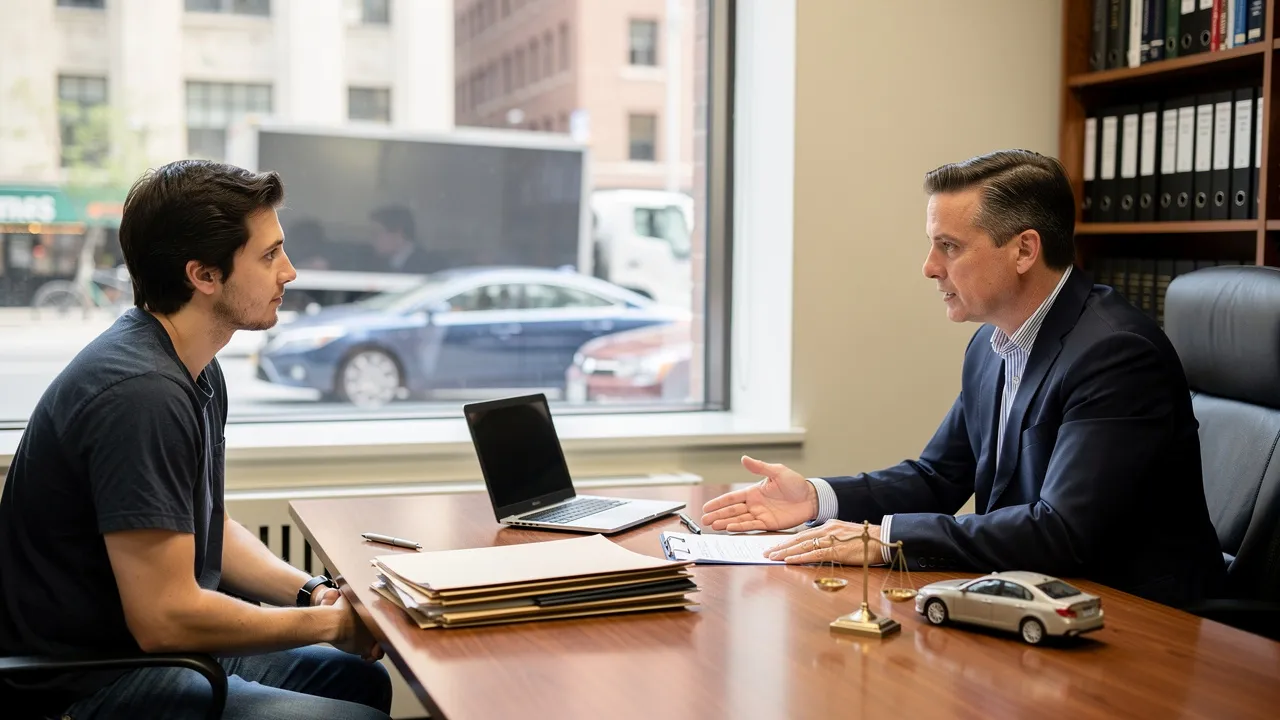
Who Bergman, Bergman, Fields & Lamonsoff, LLP says it is
We are a New York personal injury law firm, and our listed work includes automobile accidents, construction accidents, premises liability, products liability, and medical malpractice. If you are looking into us after a car accident, the automobile-accident category is the direct connection to your question. It tells you that this type of case appears in our stated practice; it does not answer what happened in your collision or what may follow from it.
That distinction gives you a useful way to read a firm profile. It can identify the kinds of cases we list and the locations where we have offices. It cannot turn those broad descriptions into a decision about your own circumstances. Use the profile to understand what we say our practice includes, then keep any conclusion about a specific matter separate.
On June 8, 2026, we described our experience in personal injury law as over 60 years. That statement concerned our overall personal injury experience. It did not specify how many years relate to automobile-accident cases, describe the handling of an individual matter, or predict a result.
You can treat the experience statement as background about how we describe our practice, not as a measure of what will happen in your case. It answers a general question about the organization’s stated experience. Your questions about a particular collision remain specific to your circumstances.
The details here answer three basic questions: what kind of law we practice, whether automobile accidents appear among our listed matters, and where we list our offices. Those answers can help you decide whether you want to learn more about us.
They are a starting point, not an individual assessment. A practice category is not a conclusion about responsibility or eligibility; a location is not a conclusion about whether a case fits; and an experience statement is not a forecast. Keeping each detail within its proper scope makes the profile useful without asking it to do more than it can.
Automobile accidents are among the cases the firm says it handles
Our listed practice includes automobile accident cases. If you are researching representation after a car collision, that is a direct subject-area overlap with the work we describe. You do not have to infer it from a general personal injury label: automobile accidents appear in our list.
The wording remains broad. It names a category of case, rather than defining every situation within it or explaining how we would assess any particular set of facts. You can use the category to identify a topic worth asking about, but it does not establish that your specific matter will be accepted or that anyone is legally responsible.
A list of practice areas is easiest to understand as a description of subject matter. It places automobile accidents alongside other kinds of cases we handle, including construction accidents, premises liability, products liability, and medical malpractice. That list helps you distinguish the kinds of work we describe from a profile that names no automobile-accident practice.
It does not explain the facts that would matter in a specific collision. For example, the category alone cannot tell you how the events occurred, what injuries are involved, or whether a legal requirement is met. Those are questions about your situation, not details supplied by a broad practice label. You can recognize the overlap without treating it as a finding about your claim.
You can keep your first question close to what the profile actually establishes: does your question concern an automobile accident? If it does, the listed practice provides a clear reason to ask whether our stated work is relevant to your circumstances. The answer to that question is not supplied by the category itself.
If your concern involves a different type of incident, the other listed areas may help you understand the breadth of our practice. Their presence does not prove that a particular issue falls within any one category. Describe the subject you want to discuss in ordinary terms, then ask how it relates to the work we list rather than trying to settle the legal classification from a profile.
The practical distinction is between identifying a practice area and evaluating a case. The first is what this profile can do: it shows that we include automobile accidents among the matters we handle. The second requires attention to the particular situation and cannot be supplied by that general description.
So if you see a close match between your topic and our list, treat it as a reason to ask a focused question—not as a promise that we will take the matter or that it will result in compensation. You can understand the stated connection while leaving the individual conclusion open.

The firm lists offices in Hicksville and Kew Gardens
We have two full-service offices: one in Hicksville, Nassau County, and one in Kew Gardens, Queens. Those locations describe our listed New York presence. If you are learning about our practice, they provide geographic context; they do not establish which location would suit a particular matter or how any individual case would be handled.
The place names can help you orient yourself without implying that location decides legal fit. An office in either place does not, by itself, tell you whether a specific accident falls within the work we describe. Keep the location information separate from the practice-area information: one answers where we list offices, while the other identifies kinds of cases.
Our Hicksville office is at 801 S. Broadway, Hicksville, NY 11801. This gives you a precise address if you are looking for the Hicksville location. The listing does not establish that you need to visit in person, that an appointment is required, or that every service is available at that address.
These address and hours details apply only to Hicksville: this profile does not supply a Kew Gardens street address or its hours. If you are considering that location, check the firm’s current contact information rather than assuming Hicksville’s details apply there. Confirm which office you mean before using address information to plan a visit.
As of November 2, 2026, our contact page lists the Hicksville office as open 24 hours a day, 7 days a week. That listing describes the stated hours for that location. It does not, by itself, promise that a consultation or another service can be arranged at any hour.
This is a useful boundary when you interpret office information. An address identifies a place, and the hours listing describes what our contact page says about the Hicksville office. Neither tells you whether a particular matter fits our practice or settles what arrangements may be available for an individual discussion.
If you are weighing the profile against your own needs, keep two questions distinct: where we list offices, and whether the work we describe relates to the issue you want to raise. The locations answer the first question. The practice-area list speaks to the second only at a general level.
A nearby or familiar location may be relevant to you as you learn about our New York presence, but proximity is not proof that a case fits. Likewise, the address and hours do not tell you what result to expect. Treat each detail as a separate piece of basic firm information, not as a combined assessment of your circumstances.
What a firm profile and consultation cannot establish
A firm profile describes our stated practice and locations; it does not determine the facts or legal significance of your accident. The automobile-accident category names an area of work, but it does not describe your collision or decide what those events mean.
You can conclude that automobile accidents appear in our listed practice. You cannot conclude from that statement alone that another person is legally responsible, that your particular circumstances meet legal requirements, or that a claim will proceed. Those are separate, case-specific questions. The profile is useful for identifying a subject-area connection, not for supplying answers to questions about your individual matter.
Responsibility is a question about the circumstances of a specific accident. A list of cases we handle does not describe what happened to you or establish what another person may have done. Reading the category as a finding about responsibility would give it a meaning it does not contain.
The same limit applies to whether a specific claim meets legal requirements. The profile does not apply the law to your facts, and a practice-area description is not a decision that a particular matter qualifies. You can recognize that automobile accidents appear in our stated work while keeping those individual conclusions open.
The profile also does not give you a deadline for a particular matter. Its practice areas, office locations, address, and listed hours do not answer which timing rules apply to your circumstances. If timing is among your questions, do not use general firm information as an answer about a case-specific date.
Nor can a profile predict a recovery. The fact that we list automobile accidents does not promise that we will accept a matter or that it will result in compensation. Experience in personal injury law, a location, or a category of work cannot forecast the outcome of your individual claim.
A consultation request gives you a route to raise questions about our practice and your situation; the request itself is not a finding about responsibility, eligibility, timing, or likely recovery. Keep the distinction clear: firm information can help you decide what you want to ask, but it cannot answer every question about a specific accident.
That boundary does not make the profile irrelevant. It helps you use the information accurately. You can identify the listed automobile-accident practice, note the two office locations, and decide whether you want to ask about the connection between that stated work and your circumstances. What you should not do is mistake those general facts for a conclusion about your case.
Use a consultation to ask whether the firm’s practice fits your questions
If you want to learn more, you can make the gap between the profile and your circumstances the focus of your questions. For example:
- Does the automobile-accident work we list relate to the issue I want to discuss?
- What should I explain about my situation so you understand the question I am raising?
- Which parts of my question need an assessment specific to my circumstances?
These questions stay close to the profile’s purpose. They ask about the relationship between the work we describe and your concern without treating a practice category, experience statement, or office location as an answer about the merits of your matter.
The profile can help you identify the broad connection, but it cannot make that assessment or promise an outcome. If you want to raise your questions with us, use the available consultation request.
What should I know before contacting the firm?
Does Bergman, Bergman, Fields & Lamonsoff, LLP represent passengers and pedestrians after a car accident?
The firm’s practice list names automobile accidents but does not specify which roles in a collision it represents. Ask whether your situation fits the work it describes rather than assuming the broad category answers that question.
Does the firm’s stated experience apply specifically to car accident cases?
The experience statement in the article refers to personal injury law overall; it does not identify a number of years devoted specifically to car accident cases. Treat it as general background, not a measure of experience with your particular type of collision.
Does the automobile-accident practice listing explain what help is available for a particular claim?
No. It identifies automobile accidents as a listed practice area, but does not describe the services or case-specific assessment available for any particular claim. You can ask whether the work the firm describes relates to the issue you want to discuss.
Keep reading
More on Car Accidents
 Car Accidents
A Five-Part Answer Check for a New York Car Accident Consultation
Use a five-part record to decide whether a nearby New York car accident lawyer can address your unanswered claim questions.
Read article Car Accidents
How to Choose a Nearby New York Car Accident Law Firm: A Verification-First Guide
Choose an attorney firm near you for a New York car accident claim with a verification-first review and consultation checklist.
Read article Car Accidents
How to Prepare for a New York Car Accident Attorney Consultation
Prepare for a New York car accident consultation by organizing records and separating no-fault, injury, insurance, and fault questions.
Read articleHurt like this?
Tell us what happened.
We handle Car Accidents cases across Long Island, Queens and New York City. The consultation is free and you pay nothing unless we win.
- Answered 24/7
- No fee unless we win
- Hablamos español
Send us the details
Takes about a minute. Free and confidential.