Car Accidents
How to Choose a Nearby New York Car Accident Law Firm and Prepare for a Consultation
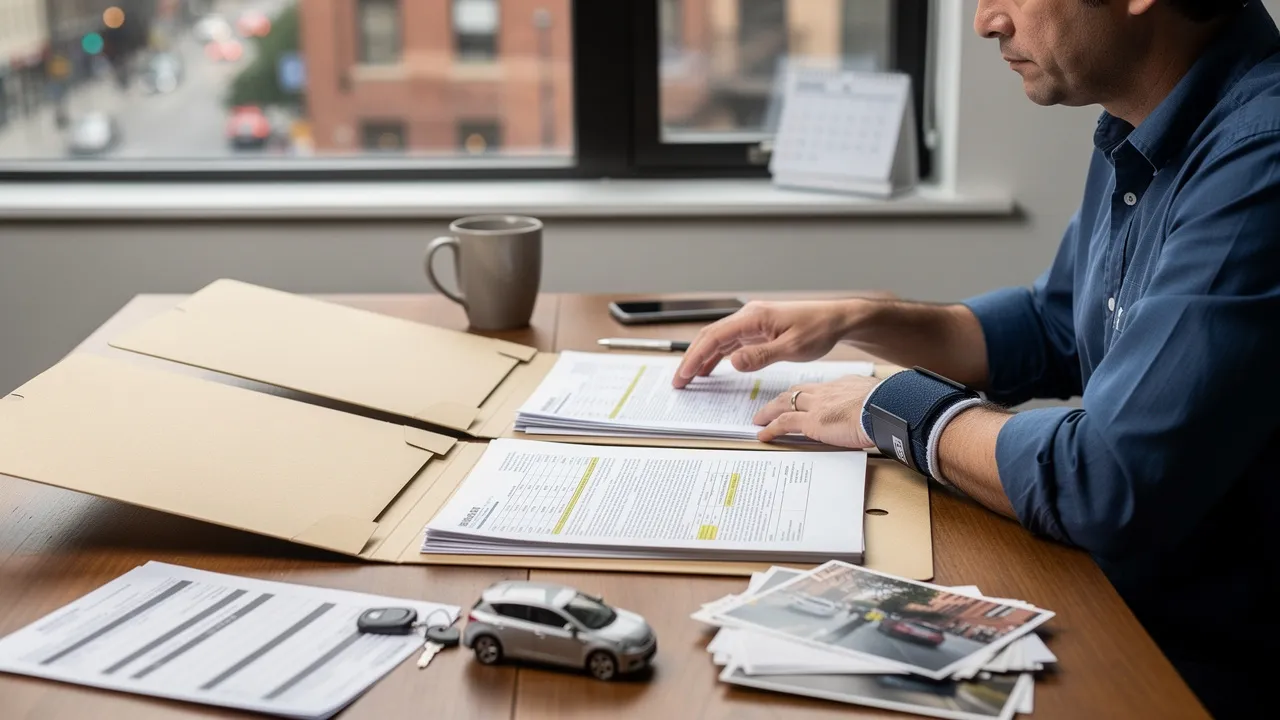
Start with the decision to contact a New York car accident law firm
Choosing a New York car accident law firm is a contact decision, not a conclusion about who caused the crash, whether you qualify to recover, or what your case may be worth. You can make that decision in a focused way by checking three points: whether the stated automobile-accident practice fits what happened, whether the office and New York service context are workable for you, and whether you can bring a clear account to an initial conversation.
This approach keeps the search practical. You do not need to resolve every legal question before speaking with a lawyer, but you should know what you want the conversation to address. Your role in the crash, the people involved, your injuries, treatment, insurance communications, and day-to-day effects can all shape the questions that need attention.
A nearby office may matter because it gives you a location to consider, but a listed location does not by itself establish convenience, eligibility, responsibility, or a likely result. Treat location as one fit question among several. Treat the consultation as a chance to organize the unresolved questions rather than as a promise that the claim will proceed.
For a New York driver, passenger, or pedestrian, that stated practice is one reason to consider an initial conversation about an accident-related claim. They do not decide the merits of your particular matter.
Use the rest of this guide to test the fit in order. First, describe the crash and the assistance you need. Next, consider whether the Hicksville or Forest Hills office context is usable for you. Then separate the time-sensitive No-Fault notice question from the broader consultation and prepare the facts you want reviewed.
First check: does the stated practice fit the crash?
The stated automobile-accident practice is the first fit question. During a free consultation, we can review your accident details, discuss whether you may have a claim, and provide initial legal advice.
Start by describing the event in ordinary language. Explain whether you were driving, riding as a passenger, or walking when the collision occurred. Identify the vehicles or people involved, where the contact happened, and what changed immediately afterward. You do not need to label the legal theory or decide who was negligent before the conversation. A factual account gives the lawyer a starting point for identifying the questions that require closer review.
The practice fit also depends on what you want help with. You may need to understand how an insurer is handling the matter, organize injury and treatment information, or decide what to do after receiving communications about the crash. You may also want to discuss whether the circumstances support pursuing a personal-injury claim. State the concern directly instead of assuming that a lawyer will know which part of the situation is troubling you.
A consultation can help you identify what remains unresolved; it cannot be treated in advance as a determination of liability, eligibility, damages, or outcome. Keep those conclusions open until the relevant facts and New York law have been considered.
Use this first check when you contact us:
- Give a short description of the collision.
- State your role as driver, passenger, or pedestrian.
- Explain whether you were injured and what treatment has occurred.
- Identify the insurance or claim issue that needs attention.
- Say what you want the initial conversation to clarify.
If those points describe the help you are seeking, move to the question of what assistance may be relevant to your circumstances.
Match the accident circumstances to the available assistance
Your accident circumstances should guide the way you describe the help you need. We provide emotional and logistical assistance to people affected by accidents. We also help accident victims file personal-injury claims to cover medical expenses and loss of income due to negligence, and we help accident victims pursue medical bills not covered by insurance and compensation for pain and rehabilitation.
These descriptions give you topics to raise, not a prediction about your case. If medical bills remain unpaid, identify which bills and what insurance response you have received. If treatment or rehabilitation has affected your daily routine, describe the effect plainly. If the crash has affected your ability to work or caused income concerns, include that information without estimating a legal recovery.
The same accident can create several separate questions. Your physical symptoms may require one line of discussion, insurance paperwork another, and the practical disruption to your household a third. Keeping those subjects separate makes it easier to explain what happened and prevents a broad statement such as “I need help” from hiding the specific problem you want addressed.
Insurance and No-Fault questions can also be part of the fit. Bring the insurer’s name, any claim number you have, notices or letters, and a short description of what remains unanswered. If you were a pedestrian, say so clearly because the applicable insurer question may be different from the question for someone who occupied a vehicle.
Describe your position without trying to reach a legal conclusion. “I was a passenger and received treatment two days later” is more useful as an opening account than a statement that a particular party is definitely responsible. The consultation can then focus on the facts, the records, and the insurance issues that require review.
Before moving on, write one sentence that completes this prompt: “I want help understanding ______ after my New York car accident.” Use the sentence to identify whether your main concern is the accident account, injuries and treatment, insurance, unpaid expenses, daily-life effects, or the next step in pursuing a claim. Bring that sentence with you and expand it during the consultation.

Second check: assess the Hicksville and New York office context
Our office context includes Hicksville in Nassau County and another office in Forest Hills, Queens. If you are in or near Hicksville, the Hicksville office is a location to consider when deciding whom to contact; if you are elsewhere in New York, weigh the location alongside the way you want the matter handled.
Use the location as a practical comparison point. Consider the distance you would need to travel, whether you can communicate effectively about the incident, and whether the office context makes an initial conversation workable. An office location alone does not establish that the practice is the right fit for your crash. Location answers where you may begin the conversation. It does not answer whether your facts support a claim.
A short local-fit check can keep the decision grounded:
- Identify whether Hicksville, Nassau County, or Forest Hills, Queens, is the more usable office context for you.
- Note whether your accident occurred in New York and where you were located when it happened.
- Decide whether you can provide a clear account by phone, in person, or through the available consultation process.
- Keep the office question separate from questions about fault, deadlines, insurance coverage, and potential recovery.
The result should be a practical decision about where to start, not a conclusion about the legal outcome. Once the location is workable, address the timing issue that should not be left vague.
Keep the New York No-Fault notice question separate
The New York No-Fault notice question has its own timing rule. Under Regulation 68, give written No-Fault notice to the applicable insurer as soon as reasonably practicable, but no more than 30 days after the accident, unless written proof provides clear and reasonable justification for the delay. The notice must identify the eligible injured person and provide reasonably obtainable information about the accident’s time, place, and circumstances.
Treat the 30-day period as a question to address promptly, not as a date to estimate casually. Write down the accident date, the date you notified an insurer, the insurer’s response, and any reason a notice may have been delayed. If more than 30 days have passed, do not assume that the issue is automatically resolved in either direction. The approved exception depends on written proof and a clear and reasonable justification for the delay, so raise the timing facts during the consultation.
The applicable insurer also depends generally on your position in the New York accident. For a New York accident, file a No-Fault claim with the insurer of the vehicle you were in or, if you were a pedestrian, the insurer of the vehicle that struck you. This is a general direction for identifying the starting point, not an individualized determination of which insurer must handle your circumstances.
Write down whether you occupied a vehicle, which vehicle it was, and whether you were walking when the vehicle struck you. Include whether the vehicle belonged to you, someone in your household, or another person if that fact is easy to identify. Bring the information rather than relying on memory during a stressful conversation. A lawyer can then address the facts that may affect the applicable filing path.
No-Fault notice and a broader personal-injury consultation are related but should not be collapsed into one question. Ask about the notice, the insurer, and the records separately from questions about fault, injuries, and a possible claim. If the accident date is approaching or has already passed the 30-day period, place that fact at the beginning of your account so it receives immediate attention.

Build a concise consultation record
The consultation record should give a lawyer a short, orderly account of the incident, your symptoms, and the effect on daily life. Prepare that account before you make contact. A concise record is not a legal argument and does not need to explain why you should win; it should make the sequence of events and the unresolved questions easier to discuss.
Use a simple file, note, or folder with these sections:
- Crash account: Write the date, approximate time, location, people or vehicles involved, and what you remember happening in sequence. Separate what you personally observed from what someone else told you.
- Your role and immediate effects: State whether you were the driver, a passenger, or a pedestrian. Describe what you felt after the collision and what changed during the hours and days that followed.
- Symptoms and treatment: List symptoms in ordinary language, the providers or facilities you visited, the treatment you received, and any appointment or treatment information you already have.
- Daily-life effects: Note changes to sleep, movement, household tasks, transportation, work, or other routines without trying to assign a dollar value to them.
- Insurance information: Record the relevant insurer, claim number, adjuster or other contact, notices, requests, and responses that you have received. Add the date of any No-Fault notice you sent if you know it.
- Existing documents: Gather the accident-related documents, photographs, correspondence, bills, records, and other materials already in your possession. Do not delay contact while trying to create a perfect file.
- Witness information: List names and contact details for people who saw the collision or its immediate effects, if you have that information.
The purpose of this list is to give you a usable starting record. It does not establish that every item is required, that every document proves a fact, or that a missing item ends the discussion.
Put the information in time order where possible. Start with the collision, move to symptoms and treatment, then record insurance communications and continuing effects. Mark uncertain details as uncertain instead of filling gaps with guesses. If you remember new information after making contact, add it to the record and explain when you remembered it.
Keep copies of what you send or receive. Bring the original documents only when appropriate and retain your own copies of important materials. The consultation becomes easier to use when you can answer basic questions without searching through unrelated messages, photographs, and bills. Preparation should reduce confusion, not create a new burden.
Bring questions about the claim review and next steps
Questions about the claim review and next steps can help you identify topics for the initial conversation.
Bring questions such as these:
- Which parts of my accident account need more detail or supporting records?
- How will you review my injuries, treatment, and effect on daily life?
- Which insurance and No-Fault questions should I address first?
- What documents or communications would be useful to organize next?
- What facts would you need before discussing whether I may have a claim?
- What next steps would follow the initial review?
- Who should receive later documents or insurance communications?
- How will I know which questions remain open after the conversation?
They also give you a way to distinguish a question that can be addressed from one that requires additional records or legal analysis.
Use the conversation to explain what kind of communication you need. If medical treatment is continuing, say so. If an insurer has set a response date or requested information, identify that date and request. If you are unsure whether a document matters, bring the question with the document rather than deciding its importance on your own.
Take notes during the discussion. Record the action you need to take, the document you need to locate, and the question that remains unresolved. A written follow-up list helps you leave with a clearer understanding of the next conversation without treating the initial discussion as a final determination about your claim.
Clarify the free consultation and fee terms
The consultation and the later fee agreement are separate questions. We offer free consultations for personal-injury cases. That stated offer addresses the consultation itself; it does not, by itself, establish the terms of representation, costs, expenses, or any contingency-fee arrangement for your particular matter.
Use the conversation to ask for a plain-language explanation of the financial terms that would apply if you move forward. Ask which services are covered, whether expenses are handled separately, when any payment would be due, and which terms will appear in the written agreement. If you receive an agreement, read it carefully and ask about any provision you do not understand before signing.
Do not treat a free initial conversation as a promise that representation will follow or as a conclusion that your claim has a particular value. It is a chance to discuss the accident, the possible claim, and the questions that must be answered before you decide what to do next.
Write these fee questions beside your accident questions:
- Is the initial consultation free?
- What agreement would govern representation if I proceed?
- Which costs or expenses are separate from legal fees?
- When would I receive the written terms?
- Who can explain a term that I do not understand?
The answers should be specific to the proposed arrangement and your circumstances. Keep the fee discussion distinct from the local-office question and from any assessment of liability or potential recovery.

Make the contact decision from the assembled record
The contact decision is strongest when you can identify the questions that need attention, confirm whether the Hicksville or Forest Hills office context is workable for you, and gather the accident, injuries, insurance questions, and documents you already have. That alignment does not predict liability, eligibility, case value, or outcome. It tells you that an initial conversation may address the questions you need answered.
Use the consultation to organize the questions raised by your record and discuss possible next steps. A qualified legal professional must decide how New York law applies to your individual circumstances, including timing, insurance issues, and any potential recovery.
If your record is ready, place the accident date and the No-Fault notice question near the beginning of your account, then bring your treatment, insurance, and daily-life information to the conversation. That gives the discussion a clear starting point.
Prepare for a consultation with your organized account.
What should I prepare for a consultation with a car accident lawyer?
Before your consultation, prepare a concise record that includes a description of the accident, your role (driver, passenger, or pedestrian), any injuries and treatments received, insurance information, and the impact on your daily life.
What types of cases does Bergman, Bergman, Fields & Lamonsoff, LLP handle?
The firm handles various personal injury cases, including automobile accidents, motorcycle accidents, construction accidents, slip and fall incidents, product liability, and medical malpractice.
How can I determine if the Hicksville office is a suitable contact point for my case?
Consider whether you are located near Hicksville, the nature of your accident, and if you can effectively communicate your situation during a consultation.
What questions should I ask during my consultation?
You should ask about which parts of your accident account need more detail, how your injuries will be reviewed, what documents are needed, and what the next steps will be after the initial review.
What information is crucial to bring to the consultation?
Bring details about the accident, your symptoms, treatment history, insurance communications, and any relevant documents or photographs related to the incident.
Keep reading
More on Car Accidents
 Car Accidents
What Is a Legal Tort? A Practical Guide for New York Crash Injuries
Learn what a legal tort means after a New York crash, how negligence and no-fault issues differ, and when to seek legal advice.
Read article Car Accidents
What Does Negligent Mean After a New York Car Accident?
Learn what negligent means after a New York car accident, how negligence differs from carelessness, and what to do next.
Read article Car Accidents
Comparative Negligence After a New York Car Accident: Fault, Evidence, and Your Next Steps
Understand comparative negligence after a New York crash, preserve key evidence, and prepare for case-specific legal guidance.
Read articleHurt like this?
Tell us what happened.
We handle Car Accidents cases across Long Island, Queens and New York City. The consultation is free and you pay nothing unless we win.
- Answered 24/7
- No fee unless we win
- Hablamos español
Send us the details
Takes about a minute. Free and confidential.