Construction Accidents
How Hicksville Construction Workers Can Choose a New York Personal Injury Law Firm

Begin with the nearby-firm decision
Choosing a New York personal injury firm after a construction injury starts with five practical checks: local connection, matter fit, relevant experience, consultation access, and communication. Those checks help you decide whether a firm is worth contacting without trying to decide your eligibility, potential recovery, or legal position from a webpage.
Bergman, Bergman, Fields & Lamonsoff, LLP has an office in Hicksville, Nassau County, and another in Forest Hills, Queens. We handle construction-accident cases as part of our personal-injury practice, and we offer free consultations for personal-injury cases. Those facts make the firm a possible first contact for you if you work in or near Hicksville and want to discuss an injury connected with construction work. Start with the Hicksville connection and keep the New York setting in view.
2. Compare the incident with the practice areas we identify.
3. Treat experience as a relevance question, not a promise about your result.
4. Ask what the consultation covers and how communication works.
5. Prepare a short account of the incident, your symptoms, and its effect on daily life.
A local office can make an initial conversation more practical, but location alone does not answer whether your matter fits. A practice-area match can justify a call, but it does not establish liability or eligibility. The organized approach is simple: use the available firm information to decide whether to begin a conversation, then bring the facts that allow a qualified attorney to review your situation.
Overview
A nearby personal-injury decision becomes clearer when you separate what you can assess now from what requires a case-specific review. You can assess whether the office location is practical, whether construction accidents appear in the practice, whether the firm describes relevant experience, whether a free consultation is available, and whether its communication approach matches what you need.
This guide uses those questions to give you a decision path rather than a conclusion about your injury. Bergman, Bergman, Fields & Lamonsoff, LLP emphasizes personal and frequent one-on-one communication with clients, and our partners combine more than 125 years of experience with compassion for clients’ unique needs. We also offer free consultations for personal-injury cases. – Does the stated practice include the kind of construction-related incident you want to discuss?
- Does the firm’s experience give you a relevant subject to ask about, without treating experience as a guarantee?
- Can you identify what a consultation may cover and what communication you expect afterward?
- Can you explain the incident, prior incidents, pain and suffering, and changes to daily life in a concise way?
Preparation is useful because it gives the conversation a clear starting point. The firm’s preparation guidance recommends being ready to discuss prior incidents, tracking pain and suffering, and explaining how the incident affected your daily life. Thorough preparation can help you get more from the consultation and gather information for an informed decision. The point is to make your first contact focused enough that you can ask better questions and understand what needs individual review.
Check the Hicksville and New York connection
The Hicksville and New York connection gives you the first practical filter: identify where you can begin the conversation and keep the relevant jurisdiction in view. Bergman, Bergman, Fields & Lamonsoff, LLP has offices in Hicksville, Nassau County, and Forest Hills, Queens. For you in Hicksville or nearby, the Hicksville office is a direct local starting point; the Forest Hills office provides another New York location. – You can tell the attorney where the incident occurred and where you live or work when you describe the matter.
- You can keep the New York setting clear when you ask questions about the next stage of review.
- You can decide whether an in-person or other consultation arrangement is workable for you.
Bergman, Bergman, Fields & Lamonsoff, LLP lists 516-739-2220 as a telephone number for personalized support regarding a case. If that is the contact route you choose, have your short incident summary nearby so you can explain why you are calling and what you want to discuss. An office in Hicksville does not by itself establish that your construction injury falls within the firm’s practice or that you can pursue a particular claim. It does give you a concrete local point of contact. You can then compare the nature of the incident with the construction-accident work we identify and use the consultation to ask questions about your circumstances.
If you are searching from outside Hicksville, describe your location plainly instead of assuming that a nearby search result has the same relevance. The firm has offices in Hicksville, Nassau County, and Forest Hills, Queens. Keep your own location and the incident location separate in your notes, because they may be different parts of the conversation.
Match the construction incident to the stated practice
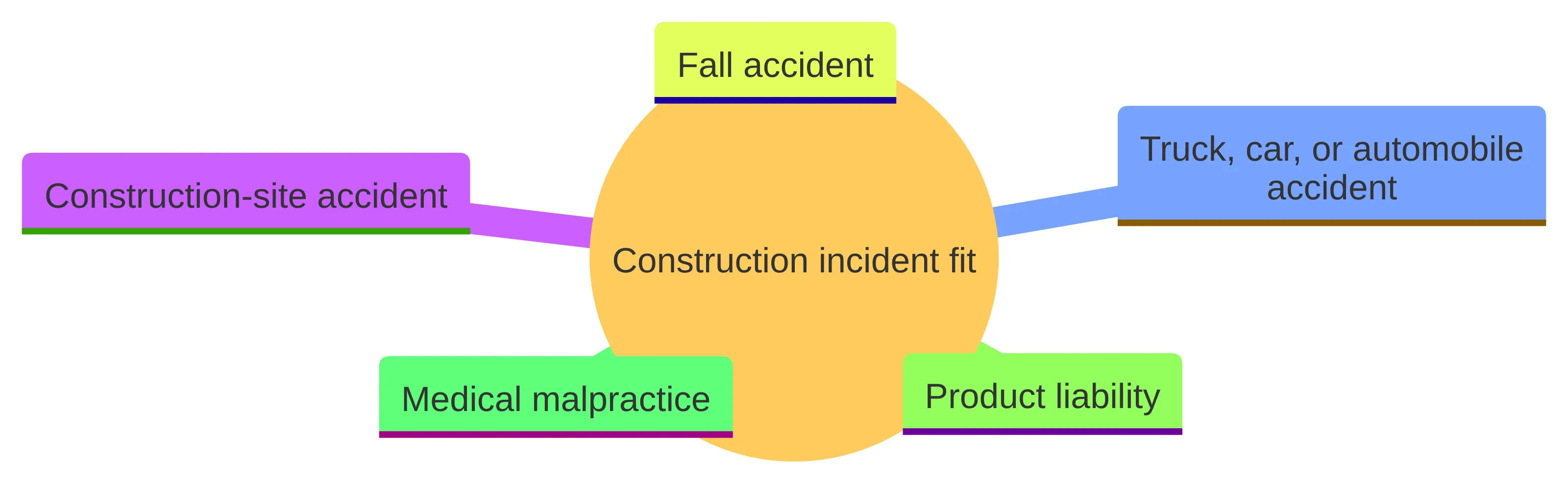
The construction incident is the next fit question: compare what happened to the personal-injury matters Bergman, Bergman, Fields & Lamonsoff, LLP identifies. We handle construction-accident cases.. – Truck, car, or automobile accident: Use these categories when a vehicle was part of the event, including an incident you experienced while traveling for work or performing construction-related duties.
- Fall accident: Use this category when a fall is central to the injury and you want to ask whether the matter fits the stated practice.
- Product liability: Use this category when a product or equipment issue is part of what you want reviewed.
- Medical malpractice: Use this category when the concern involves medical care rather than the original construction event.
A category match is a reason to ask a focused question. It is not a conclusion about liability, coverage, eligibility, or recovery. Your description should explain the event in ordinary language instead of forcing it into a legal label. For example, you can say where you were working, what happened, what injury followed, and how the event affected your daily life. The attorney can then decide which facts require closer attention.
Construction work can involve more than one type of event. A worker may want to discuss a site incident and a vehicle collision, or an injury that followed a fall and later medical treatment. Do not discard part of the story because you are unsure which category applies. Present the connected facts in sequence, identify the part you want reviewed, and ask how the firm would classify the matter for an initial discussion.
The stated practice also helps you avoid a weaker first contact. If your concern has nothing to do with the listed personal-injury areas, say that clearly before relying on the construction label. If the incident does fit one or more listed areas, keep the explanation factual and concise. The goal is to give the attorney enough context to discuss whether the matter belongs in the practice, not to make the classification yourself.
Use experience as a relevance check, not a guarantee
Experience is useful when it helps you ask whether a firm has handled matters resembling yours, but experience cannot predict the outcome of your case. We have experience representing clients injured in construction accidents. Our partners combine more than 125 years of experience with compassion for clients’ unique needs. Ask how the experience connects to the facts you need to discuss:
- Has the attorney handled construction-accident matters with a similar type of event?
- Does the attorney understand the difference between the construction setting and any vehicle, fall, product, or medical issue that is also part of your account?
- Can the attorney explain what information will be needed to evaluate your matter?
- Will you have a clear way to communicate questions and updates?
The firm’s selection guidance recommends concentrating on legal representatives who have effectively managed cases akin to yours and examining experience in the relevant area of law. That gives you a practical comparison method: start with the facts that make your incident distinctive, then ask how the firm’s experience relates to those facts. A firm may have experience in construction accidents while your particular event still requires review of details that are not available in a short online description. Experience can make a question more relevant; it cannot supply the facts that the attorney has not reviewed.
A useful consultation question is, “What part of my account would you need to understand before assessing whether this matter fits your practice?” That question keeps the conversation tied to your incident. It also lets you compare communication quality, not just a number of years or a broad practice label. Two experience descriptions can serve different comparison purposes. Bergman, Bergman, Fields & Lamonsoff, LLP has over 60 years of experience representing personal-injury victims, which gives you a way to understand the firm’s stated longevity. The partners’ combined more than 125 years describes cumulative partner experience. Neither figure identifies the facts of your incident. Use them as background, then ask about the event-specific issue that matters to you: the construction setting, any vehicle or equipment involved, the injury, and the effect on daily life. This keeps a large experience figure from becoming a substitute for a focused conversation. A useful answer is not necessarily a promise; it is a clear explanation of what the attorney needs to assess and what remains unknown.
Assess consultation access and communication
Consultation access and communication tell you how the first conversation may work. Bergman, Bergman, Fields & Lamonsoff, LLP offers free consultations for personal-injury cases. In the firm’s described car-accident consultation, a lawyer reviews the accident details, discusses whether you may have a claim, and provides initial legal advice. That description is specific to car-accident consultations, so use it as a model for questions about the process rather than assuming that every construction matter follows the same discussion. Before contacting the firm, write down:
- The type of incident you want reviewed.
- The main injury or injuries you experienced.
- The question you most need answered first.
- The information you already have about how the incident affected your daily life.
- Any concern about prior incidents that you expect to discuss.
Communication deserves its own check. We emphasize personal and frequent one-on-one communication with our clients and describe clear communication as part of a strong attorney-client relationship. The practical question for you is whether the communication approach gives you a way to explain the impact of the injury and understand the issues the attorney identifies. – How can you raise questions about changes in your pain or daily routine?
- What information should you send or have available for the attorney’s review?
- How will the attorney distinguish what can be discussed generally from what requires a closer review of your facts?
A free consultation removes one practical barrier to making an initial inquiry, but it does not turn a short conversation into a complete evaluation. Bring your incident record, listen for the questions the attorney asks, and note what information the attorney says is still needed. Communication is working for you when you leave with a clearer understanding of the issues to address, not merely with a general description of personal-injury law. Cost structure is another practical question to put on your consultation list. Bergman, Bergman, Fields & Lamonsoff, LLP states that it operates on a 100% contingency fee basis, with no legal fees charged unless the case is won. That information can help you decide what to ask before a first conversation, but it does not establish that the firm will represent you or explain every term of a possible agreement. Ask the attorney to explain the fee arrangement for your matter and identify any questions you have about the agreement before treating the consultation as a decision to proceed.
Prepare a concise incident record
Keep the record short enough to explain without losing the main sequence. Include these parts:
- The incident account. Write what happened in your own words, including the construction setting and the part of the event you want reviewed. If more than one event is connected to the injury, separate them rather than blending them into one description.
- Prior incidents. Note prior incidents you expect to discuss. The point is not to decide what they mean; it is to avoid being surprised when the attorney asks about them.
- Pain and suffering. Track how you have felt over time in terms you can explain. Use ordinary descriptions rather than trying to assign a legal value to the experience.
- Daily-life effects. Record how the incident affected your routine, work-related activities, and other parts of daily life that you want the attorney to understand.
- Questions. List the questions you want answered, including whether the construction incident fits the stated practice, what facts require further review, and what you should discuss next.
The record should help you communicate, not persuade you that you already know the legal answer. Avoid filling gaps with guesses. If you do not remember a detail, mark it as uncertain and say that during the conversation. If two events are easy to confuse, keep them in separate notes and explain the connection as clearly as you can.
A short record also helps you notice what you have not considered. You may remember the physical injury but overlook the effect on everyday activities. You may describe the incident but forget to mention a prior incident that the attorney will need to ask about. You may focus on what happened and leave no space for the questions you want answered. Writing the main points before you call gives each issue a place.
Use the record immediately before the consultation to refresh your memory, then speak naturally. You do not need to read every sentence aloud. Give the attorney the main account first, answer follow-up questions directly, and explain how the injury has affected your daily life. That approach keeps the first discussion focused while leaving room for the attorney to identify the facts that need more attention. An efficient way to use the record is to lead with the facts that identify the matter, then move to impact and questions. Start with the location and type of work, state the event in sequence, name the injury or symptoms you want reviewed, and finish with the daily-life effect and two or three questions. This order lets the attorney understand the subject before you discuss consequences. It also separates the description of what occurred from your request for legal assessment. If the attorney asks for more detail, add it then rather than trying to anticipate every issue in advance. The record is a communication aid, not a formal filing, and its usefulness comes from clarity and accuracy rather than length.
Keep individualized legal questions for the consultation
Individualized legal questions belong in the consultation because they depend on the facts of your incident. The firm handles construction-accident cases and identifies related personal-injury areas, while its described car-accident consultation involves reviewing accident details, discussing whether you may have a claim, and providing initial legal advice. – Information: Which facts about the incident, prior incidents, pain and suffering, or daily-life effects need closer review?
- Timing: Are there timing questions that should be addressed promptly based on the facts and location of the incident?
- Communication: What should you expect regarding one-on-one communication and the next exchange of information?
Do not try to answer those questions from a general article. The same broad description—such as a construction fall or a work-related vehicle collision—can leave important facts unresolved. Give the attorney the setting, the event, the injury, and the effect on your life, then listen to the questions that follow.
The consultation can also help you separate facts from assumptions. You may believe that a particular person, company, product, or insurer is responsible, but your initial record should describe what you know rather than present a conclusion as established. You may believe that a deadline applies, but your question should ask what timing issues require review rather than rely on a general date. You may believe that a particular recovery is possible, but that question belongs in an individualized discussion of the facts.
Write down the points that remain unresolved after the conversation. Those points may include additional information the attorney needs, questions about the fit of the matter, or communication steps to follow. A focused consultation does not require you to arrive with legal conclusions. It requires you to explain the incident clearly and ask the questions that matter to your decision.
One way to keep that discussion organized is to separate your notes into three groups: what you personally know, what you understand but cannot verify, and what you want the attorney to assess. For example, describe the event and symptoms as facts you observed, mark responsibility or coverage as questions, and identify any timing concern for review. This separation helps prevent an assumption from becoming the premise of your decision while giving the attorney a clearer list of issues to address. After the consultation, evaluate the conversation using three practical questions: Did you understand what facts require further review? Did you learn what information or next step is expected from you? Did the communication allow you to explain the injury and its effect on daily life? These questions do not ask you to judge legal merit or predict recovery. They help you decide whether you have enough process clarity to continue the discussion. If an answer is unclear, record the question rather than filling the gap with an assumption. This is especially useful when an incident includes multiple categories, because the construction event may need to be considered separately from a vehicle, fall, product, or medical issue before the matter can be assessed.
Key Highlights
The decision checklist gives you a short way to review the main points before you contact a New York personal-injury practice:
- Local connection: Bergman, Bergman, Fields & Lamonsoff, LLP has offices in Hicksville, Nassau County, and Forest Hills, Queens. The Hicksville office is the direct local connection for you if you are searching from that area. cite
- Communication: We emphasize personal and frequent one-on-one communication with clients. cite
- Preparation: Be ready to discuss prior incidents, track pain and suffering, and explain how the injury affected your daily life. cite
Use the checklist to decide whether the firm is a practical first contact and to organize the information you want to discuss. Do not use it to decide liability, eligibility, deadlines, or potential recovery before an attorney reviews your facts.
Request a focused consultation with your organized record
A focused first contact makes sense when the Hicksville location is practical for you, the stated practice includes construction accidents or a related part of your incident, and you are ready to explain what happened and how it affected your life. Bergman, Bergman, Fields & Lamonsoff, LLP offers free consultations for personal-injury cases, emphasizes personal and frequent one-on-one communication, and identifies offices in Hicksville, Nassau County, and Forest Hills, Queens. Start with the event, identify the injury, explain the effect on your daily life, and raise the questions you marked for review. A qualified New York attorney must assess your individual facts to address suitability, eligibility, possible deadlines, and potential recovery; this guide cannot make those determinations for you.
If the local connection, matter fit, consultation access, and communication expectations align with what you need, your organized record gives you a clear starting point for that conversation.
What should a construction worker confirm before contacting a personal injury firm?
What should I prepare before contacting the firm for a consultation?
You should prepare a concise incident record that includes details about the incident, prior incidents, pain and suffering, and how the injury has affected your daily life.
How does the firm approach communication with clients?
Bergman, Bergman, Fields & Lamonsoff emphasizes personal and frequent one-on-one communication with clients to ensure they feel supported throughout the legal process.
Keep reading
More on Construction Accidents
 Construction Accidents
How to Choose a Personal Injury Law Firm Near Hicksville After a New York Construction Injury
Learn how to assess whether a nearby personal injury practice fits your situation, organize your records, and request a focused New York injury consultation.
Read article Construction Accidents
How to Choose a Nearby New York Personal Injury Law Firm After a Construction Accident
Use this New York guide to compare injury-law fit, office access, consultation preparation, and next steps after a construction accident.
Read article Construction Accidents
5 Essential Practices for Hiring a Labor Law Attorney for Employers
Discover essential practices for hiring a labor law attorney for employers to ensure compliance and safety.
Read articleHurt like this?
Tell us what happened.
We handle Construction Accidents cases across Long Island, Queens and New York City. The consultation is free and you pay nothing unless we win.
- Answered 24/7
- No fee unless we win
- Hablamos español
Send us the details
Takes about a minute. Free and confidential.