Construction Accidents
How to Choose a Personal Injury Law Firm Near Hicksville After a New York Construction Injury
Start with fit, preparation, and case-specific review
After a New York construction injury, choosing a nearby personal injury practice requires more than finding an office close to home. You need to decide whether the practice handles the type of matter you are facing, prepare a useful record of what happened, and identify the questions that still require legal review.
A practical contact decision rests on three separate questions:
- Does the injury fit the practice’s stated areas? Construction accidents can overlap with premises, vehicle, equipment, product, or medical-treatment issues. The category affects what information deserves attention, but it does not establish liability.
- Can you explain the event and its effects clearly? A dated account, treatment information, and available documents give an attorney something concrete to examine.
- What remains case-specific? Fault, applicable deadlines, potential recovery, and whether representation is appropriate depend on facts that cannot be settled by location or by a general article.
Bergman, Bergman, Fields & Lamonsoff, LLP has a Hicksville location in Nassau County, so proximity may make an initial conversation practical for you. The useful question is whether that access can be paired with a focused review of your injury and records. Start with fit, then prepare the information that allows the consultation to move beyond a general description.
A consultation is more productive when you can describe the injury, medical treatment, and evidence already gathered. Prepare those basics before you make contact, then use the meeting to ask about experience, fees, process, next steps, and any additional information needed. That sequence keeps the decision grounded in your circumstances rather than in a promise about the result.
Map the injury to the stated personal-injury practice
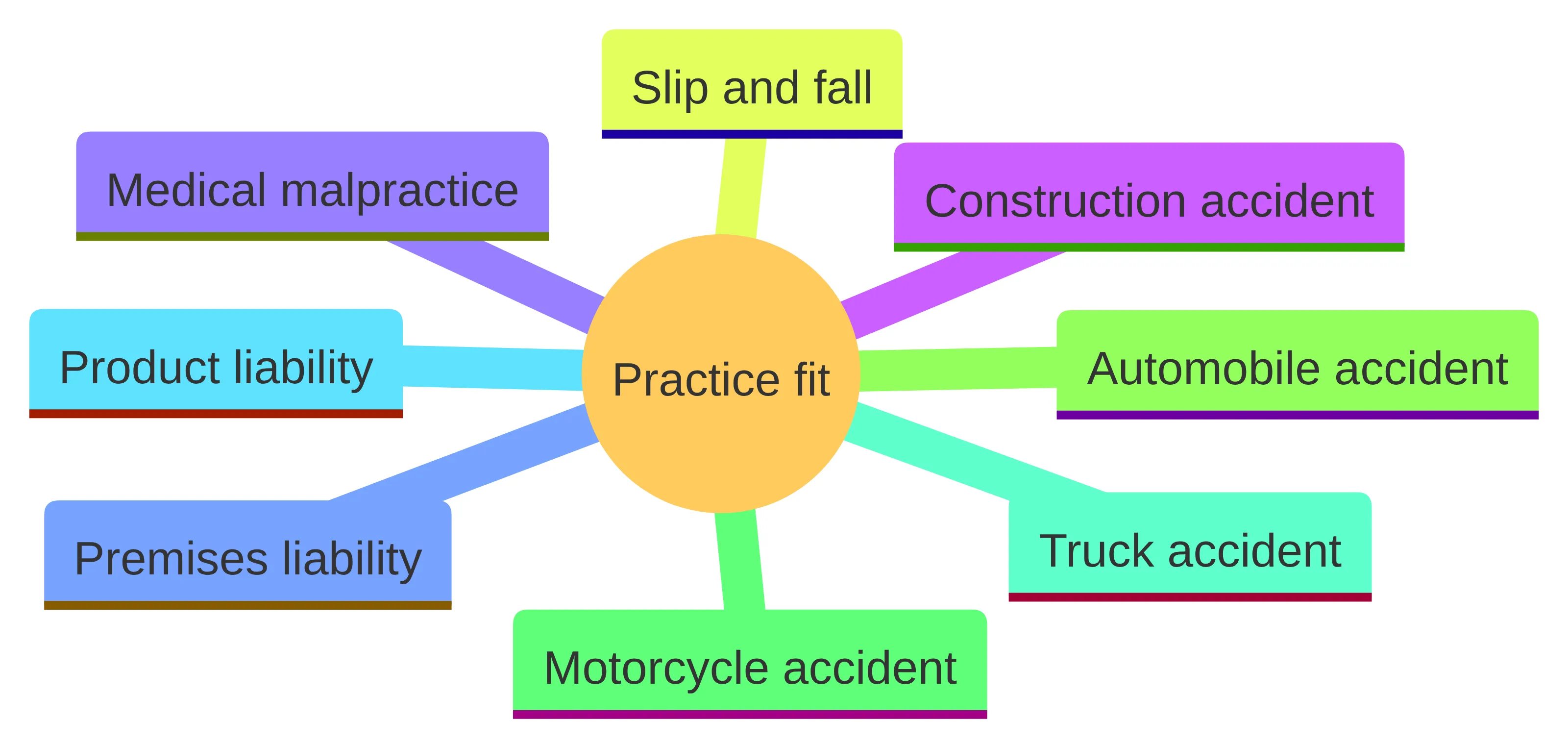
Practice fit starts with the event that caused the injury and the legal category it may raise. We handle construction accident matters.
Those labels are a starting map, not a conclusion about your case. A construction worker may have been hurt while performing construction work, struck by a vehicle, exposed to a product problem, or injured after entering another person’s property. The facts can place a single event in more than one category, and the relevant category may affect which records and questions deserve attention.
Use the following fit check:
- Construction accident: Record the task, worksite, equipment, height or surface involved, people directing the work, and the sequence before the injury.
- Premises liability or slip and fall: Identify the property, the condition you say caused the fall, where you were, and how the condition and injury connect. New York premises-liability analysis generally requires evidence connecting an unsafe condition and a property owner’s duty with the injury; the specific facts require legal review.
- Automobile, motorcycle, or truck accident: Preserve information about the vehicles, drivers, crash location, witnesses, injuries, and available insurance communications.
- Product liability: Keep the product, packaging, instructions, purchase information, and photographs if you still have them. Ask whether the particular product-related facts fit the practice’s representation.
- Medical malpractice: Separate the medical treatment, provider, dates, and claimed injury from the construction event itself. Ask directly about the practice’s experience with that type of matter and the timing questions it raises.
You do not need to select the final legal label before contacting a practice. Describe what happened in ordinary language and identify the categories that may apply. Ask whether the specific facts fit the representation being considered.
Experience with similar matters is a legitimate fit question. Ask whether the attorney regularly handles the type of injury and legal issues raised by your account, rather than assuming that a practice handling personal-injury matters has identical experience in every category. Then use the answer to decide what additional records or questions to bring.
Check whether construction-law issues may require focused review
Some New York construction-accident cases involve Labor Law §§ 200, 240(1), or 241(6). An attorney must determine which rules, if any, apply to the facts. That determination may depend on the work being performed, the equipment or protection involved, the people responsible for the work, and the way the injury occurred.
New York Labor Law § 240(1) contains safety-device requirements for specified construction work, but its coverage and exceptions must be evaluated against the facts. The statute addresses certain work involving the erection, demolition, repair, alteration, painting, cleaning, or pointing of a building or structure and refers to devices such as scaffolding, hoists, ladders, slings, braces, ropes, and other equipment. The statutory exception for owners of one- and two-family dwellings who do not direct or control the work is one example of why the property and work arrangement matter.
Do not treat a reference to a statute as a finding that it applies to you. Instead, prepare the facts that allow an attorney to examine the issue.
For a construction-focused consultation, organize these details:
- The exact task underway when you were injured.
- The structure, area, elevation, surface, tool, machine, scaffold, ladder, hoist, or other device involved.
- Who owned the property and who employed or directed the work, if you know.
- What instructions, warnings, protective equipment, or safety devices were present or discussed.
- Names of supervisors, coworkers, contractors, property representatives, or witnesses.
- Photographs, video, incident records, messages, work assignments, and medical records that you possess.
This list helps you describe the work sequence without making a legal conclusion. The direct action is simple: preserve the available information and bring it to an attorney who can assess which New York construction-law rules may matter.
Construction work can also produce a different type of claim. You may have been injured on a site because of a fall, a vehicle, a product, a property condition, or a medical issue that arose later. Keep the construction setting in the account, but do not force every injury into a construction-law theory. Ask for the specific issue to be separated and reviewed.
Keep premises and vehicle issues distinct from construction-site questions
A construction worker injured on property may need to describe both the work and the condition of the premises. In New York premises-liability matters, the evidence generally must connect an unsafe condition and the property owner’s duty with the injury; the specific facts require legal review.
Your record should therefore identify the condition, its precise location, what you observed before the incident, how the incident unfolded, and what happened immediately afterward. If you have photographs, videos, messages, incident reports, or witness information, keep them with the timeline. Document the unsafe condition and the sequence of events for your attorney to review.
A fall at a worksite does not by itself establish who was responsible. The site owner, contractor, employer, property manager, or another person may have different roles, and the consultation must examine those roles rather than relying on the location alone.
A vehicle event calls for a separate record. In a car-accident consultation, an attorney may examine negligence, damages, and potentially available insurance or assets; the outcome depends on the case-specific facts. Record the vehicles and drivers involved, the crash location, the sequence of movement, witness information, photographs, police or incident documents if available, treatment, and communications from insurers.
Keep vehicle information separate from construction-site information even when the crash happened at a worksite. This makes it easier to identify whether the central questions concern a work task, a property condition, a driver, insurance, or more than one issue. Bring the facts together at the consultation, but preserve the distinctions in your notes.
Use the event category to organize the record, not to predict the result. If two categories seem possible, tell the attorney both versions and explain which facts support each. Do not discard records because you are unsure which legal theory will matter.
Overview
The contact decision can follow a short sequence:
- Identify the event: construction work, a property condition, a vehicle, a product, medical treatment, or a combination.
- Match the event to the stated practice: ask whether the specific category and facts fit the representation being considered.
- Build the record: prepare a clear account of your injury, medical treatment, and the evidence you have gathered.
- Ask focused questions: discuss similar experience, fees, process, unresolved issues, and the next information needed.
- Flag timing early: describe the date, location, and public or private setting so the attorney can examine the applicable rules.
- Use proximity as a practical factor: a Hicksville location and a free consultation can make contact easier, but neither establishes liability, recovery, or representation.
The aim is not to decide the legal merits alone. The aim is to arrive with enough organized information for a New York attorney to identify what requires closer review.
Prepare the injury, treatment, and evidence record
Before a personal-injury consultation, prepare a clear account of your injury, medical treatment, and the documents or other evidence you have gathered. You do not need a polished legal narrative. A chronological account is more useful than a conclusion about fault.
Create a single physical or electronic folder with these sections:
- Event account: Write the date, approximate time, location, work or travel activity, people present, and the sequence from immediately before the incident through the injury. Use direct observations and identify anything you do not remember.
- Injury and treatment: List the body parts affected, symptoms you noticed, medical facilities and providers, treatment dates, follow-up appointments, restrictions, and instructions. Keep bills, appointment records, prescriptions, and related communications together if you have them.
- Work impact: Record missed work, changed duties, restrictions, transportation problems, and other effects you experienced. Keep pay or work records that show the change when available.
- Physical and digital evidence: Preserve photographs, video, messages, incident reports, work assignments, insurance correspondence, product information, and witness names or contact details that relate to the event.
- Questions: Write down what you do not understand, what information you could not obtain, and which people or entities may have records.
A folder is a practical aid. It does not prove a legal element or predict recovery. Its immediate use is to help you explain the event consistently and locate documents during the conversation.
Pay particular attention to sequence. For a premises matter, document the unsafe condition and the events connecting it to the injury. For a vehicle matter, preserve the crash sequence, vehicle information, medical effects, and available insurance communications. For a construction matter, explain the task, equipment, instructions, and people involved before turning to your legal questions.
Use a simple timeline if the event involved several locations or treatments:
- Incident date, time, and location.
- Report to a supervisor, property representative, police agency, or insurer, if any.
- First treatment and later appointments.
- Work restrictions, missed shifts, or changes in duties.
- Communications about the incident, treatment, insurance, or requested records.
Do not fill gaps with guesses. Mark a detail as uncertain and bring the question to the consultation. Review the folder once before the meeting and mark each item as original, copy, or unavailable. Put a short source note beside information supplied by a supervisor, coworker, provider, insurer, or family member so the attorney can distinguish what you saw from what you later learned. If more than one event contributed to the injury, keep separate timelines and then add a brief note explaining their relationship. For example, distinguish the worksite event from later medical treatment instead of blending the dates. This organization does not decide whether one event caused another; it simply gives the attorney a clearer sequence to question. Also write down the names of entities you are unsure about, such as an employer, contractor, property owner, vehicle owner, or medical provider. Uncertainty is useful information when it is identified clearly.
Bring all available case documents and evidence, and ask about the attorney’s experience with similar matters, fees, and the legal process. If a document is missing, write down who may have it and when you requested it. If an image or message is stored on a phone, keep the original and make a separate copy for your folder when possible.
You can also prepare a short paragraph explaining how you were injured and a second paragraph describing the treatment and work effects. Use those paragraphs as a starting point, then answer questions in the order the attorney asks them.
Use the consultation to test unresolved questions
A consultation should give you a structured way to test the questions your records cannot answer. Ask direct, matter-specific questions rather than relying on general statements about personal injury law.
Start with experience and scope:
- Have you handled construction injuries involving facts like mine?
- Does the event appear to involve construction law, premises liability, a vehicle, a product, medical treatment, or more than one category?
- What facts would you need before deciding whether the matter fits the practice?
- Which records or witnesses should I try to locate next?
Then ask about the working process:
- What steps would follow the initial review?
- Who would handle communication about the matter?
- How would you investigate the worksite, property, vehicle, product, or treatment history?
- What fees and case expenses should I understand before proceeding?
- What does the legal process generally involve for this type of matter?
The answers help you compare the practice’s stated scope with the facts you brought. They do not require you to decide liability during the meeting. Use the answers as decision criteria. A useful response should help you understand whether the attorney sees the matter as a construction, premises, vehicle, product, medical-treatment, or combined question; what facts remain unknown; and which records or witnesses would help resolve those unknowns. It should also clarify how updates and one-on-one communication would work, especially if your treatment or work situation changes. Bergman, Bergman, Fields & Lamonsoff, LLP states that it emphasizes personal, frequent one-on-one communication with clients. You can ask how that stated approach would apply to your consultation and follow-up. The firm also describes more than 60 years of experience representing personal-injury victims, while its partners are described as combining more than 125 years of experience. Those credentials may be relevant to your fit assessment, but they do not establish that the firm will accept your matter or predict its result.
If a vehicle caused or contributed to the injury, ask how the review will address negligence, damages, and potentially available insurance or assets. Those are issues that may be examined in a car-accident consultation, but the outcome depends on the case-specific facts. Bring the crash record and insurance communications so the discussion stays tied to the actual event.
Before the consultation ends, ask about next steps, when you should expect a response, and what additional information the attorney needs. Write down the answer while it is clear. If you need to obtain a work record, medical record, photograph, or witness contact, add that task to your folder rather than relying on memory.
A useful consultation leaves you with defined questions and defined follow-up information. It does not require a promise about representation or a prediction about recovery.
Treat Hicksville proximity and a free consultation as contact considerations
Bergman, Bergman, Fields & Lamonsoff, LLP identifies full-service offices in Hicksville, Nassau County, and Forest Hills, Queens. If you live or work near Hicksville, that location may reduce travel and make it easier to bring records or continue a conversation. Proximity is a practical factor, not proof that a practice fits your matter or that a claim will succeed.
Bergman, Bergman, Fields & Lamonsoff, LLP offers free consultations for personal-injury cases. The offer can make an initial discussion easier to arrange, but it does not determine liability, deadlines, potential recovery, or whether representation will follow. Use the time to present the injury record and ask the questions that matter to your situation.
Have your timeline and basic records available when you reach out. You can explain the injury first, then ask which information will help with the initial review.
A nearby office and a free initial discussion answer the access question. They do not answer the fit question by themselves. Pair location with the practice area, experience, communication process, fee discussion, and document review you need. To make the access comparison concrete, separate four questions: Is the office location workable for an initial meeting and later communication? Does the stated practice include the event categories your account raises? Can you provide the records needed for an initial review? Will the consultation explain what remains unknown about liability, deadlines, potential recovery, and representation? A positive answer about convenience only answers where contact may occur. A meaningful fit decision also depends on the scope of the review and the questions the attorney asks. If travel is difficult, ask how the practice wants you to provide your timeline and records for the initial discussion, without assuming that the method of contact changes the legal analysis.
Flag timing issues without relying on one generic deadline
Timing depends on the legal category and the parties involved. New York generally provides a three-year period for personal-injury actions under CPLR § 214, but exceptions and other rules may change the deadline; obtain case-specific legal advice promptly. Do not use that general period as a reason to postpone contact or assume that it applies to your injury.
Write down the incident date, the date you first noticed the injury, the dates of treatment, and the names of people or entities involved. If the event occurred during construction work, include the project and property information. If a vehicle, product, medical provider, municipality, or other public entity may be involved, identify that in your first account.
Medical, dental, and podiatric malpractice matters have a separate general rule. New York generally provides a two-year-and-six-month period for medical, dental, or podiatric malpractice actions under CPLR § 214-a, subject to statutory exceptions; obtain case-specific legal advice promptly. The date of the relevant act, omission, or last treatment may matter, and continuous-treatment and other statutory issues can affect the analysis.
If your construction injury was followed by treatment that you believe caused a separate injury, keep the worksite event and medical-treatment timeline distinct. Tell the attorney how the events relate, but do not assume that the first event’s timing rule controls the later issue.
A public-entity event can create an additional timing concern. If a notice of claim is required against a New York public corporation, General Municipal Law § 50-e generally requires service within 90 days, but applicability, exceptions, and deadlines require prompt case-specific review. This issue may arise when the location, owner, operator, or responsible entity is a municipality or another public corporation.
If you were hurt on public property, during work involving a public entity, or in an incident involving a public transportation or municipal body, identify that fact immediately. Do not wait for a general limitations period to answer whether a notice requirement applies.
Use your first contact to flag every possible timing issue:
- State when the injury occurred and when treatment began.
- Identify whether a public corporation, municipality, medical provider, employer, contractor, property owner, driver, or product manufacturer may be involved.
- Bring notices, claim forms, letters, insurance messages, and lawsuit papers if you received them.
- Ask which dates require immediate attention and what information is needed to evaluate them.
The direct action is to contact a qualified New York attorney promptly with the dates and parties you know. A generic deadline cannot replace that review. If a date is uncertain, record the best approximate date and explain why it is uncertain rather than filling the gap with a guess. Note dates that may be confirmed through a work assignment, incident report, medical record, insurance letter, or other document. You can contact an attorney with an incomplete record; identify what is missing and ask what should be obtained first. This keeps the timing discussion separate from the broader question of whether the facts support a claim. It also lets the consultation address public-entity, malpractice, or other category-specific issues without treating the general three-year period as a universal answer. Bring every deadline-related notice or letter you have, and ask which dates the attorney needs to verify.
Key Highlights
Keep these points in view as you decide how to make contact:
- Bring an organized record. Prepare your injury account, treatment details, timeline, available documents, evidence, witness information, and work impact.
- Ask about experience, fees, and process. Use the consultation to test whether the practice has handled similar matters and what information it needs next.
- Treat location and a free consultation as access factors. Hicksville proximity may help with contact, but it does not establish liability, deadlines, recovery, or representation.
- Flag timing early. General personal-injury, malpractice, and public-entity rules can differ, so provide dates and identify every potentially involved entity.
Take the prepared record into a focused New York consultation
Your next step is to turn the injury into an organized account: what happened, where it happened, who was involved, how you were treated, how the injury affected your work, and which records you can provide. Bring the questions that remain about construction law, premises conditions, vehicles, products, medical treatment, fees, process, and timing.
Bergman, Bergman, Fields & Lamonsoff, LLP’s Hicksville location and free personal-injury consultation provide a way to begin that discussion. A qualified New York attorney must evaluate your individual suitability, liability, deadlines, potential recovery, and whether representation is appropriate. Use your prepared record to make the conversation specific from the beginning.
Keep copies of what you submit and note any follow-up information requested. A clear record gives you a practical foundation for the next conversation without requiring you to decide the legal outcome in advance.
What should I bring and ask during the consultation?
What types of personal injury cases does Bergman, Bergman, Fields & Lamonsoff handle?
The firm specializes in various personal injury matters, including automobile accidents, construction site injuries, premises liability, product liability, and medical malpractice.
How should I prepare for a consultation with a personal injury lawyer?
Before your consultation, gather details about your injury, medical treatment, and any evidence you have. Organize this information in a folder to present during the meeting.
What is the significance of the firm's Hicksville location for my case?
The Hicksville location may provide convenience for meetings, but it does not determine the suitability of the firm for your specific case or guarantee a successful outcome.
What should I expect during a free consultation with the firm?
During the consultation, you can discuss your case details, ask about the attorney’s experience, understand the legal process, and inquire about fees and next steps.
What documentation is important to bring to my consultation?
Bring any available documents related to your case, including medical records, accident reports, photographs, and any correspondence with insurance companies.
Keep reading
More on Construction Accidents
 Construction Accidents
How Hicksville Construction Workers Can Choose a New York Personal Injury Law Firm
A practical guide for Hicksville construction workers assessing a local New York personal injury firm before a free consultation.
Read article Construction Accidents
How to Choose a Nearby New York Personal Injury Law Firm After a Construction Accident
Use this New York guide to compare injury-law fit, office access, consultation preparation, and next steps after a construction accident.
Read article Construction Accidents
5 Essential Practices for Hiring a Labor Law Attorney for Employers
Discover essential practices for hiring a labor law attorney for employers to ensure compliance and safety.
Read articleHurt like this?
Tell us what happened.
We handle Construction Accidents cases across Long Island, Queens and New York City. The consultation is free and you pay nothing unless we win.
- Answered 24/7
- No fee unless we win
- Hablamos español
Send us the details
Takes about a minute. Free and confidential.