Construction Accidents
Should You Contact a New York Tort Lawyer After a Construction or Premises Injury?
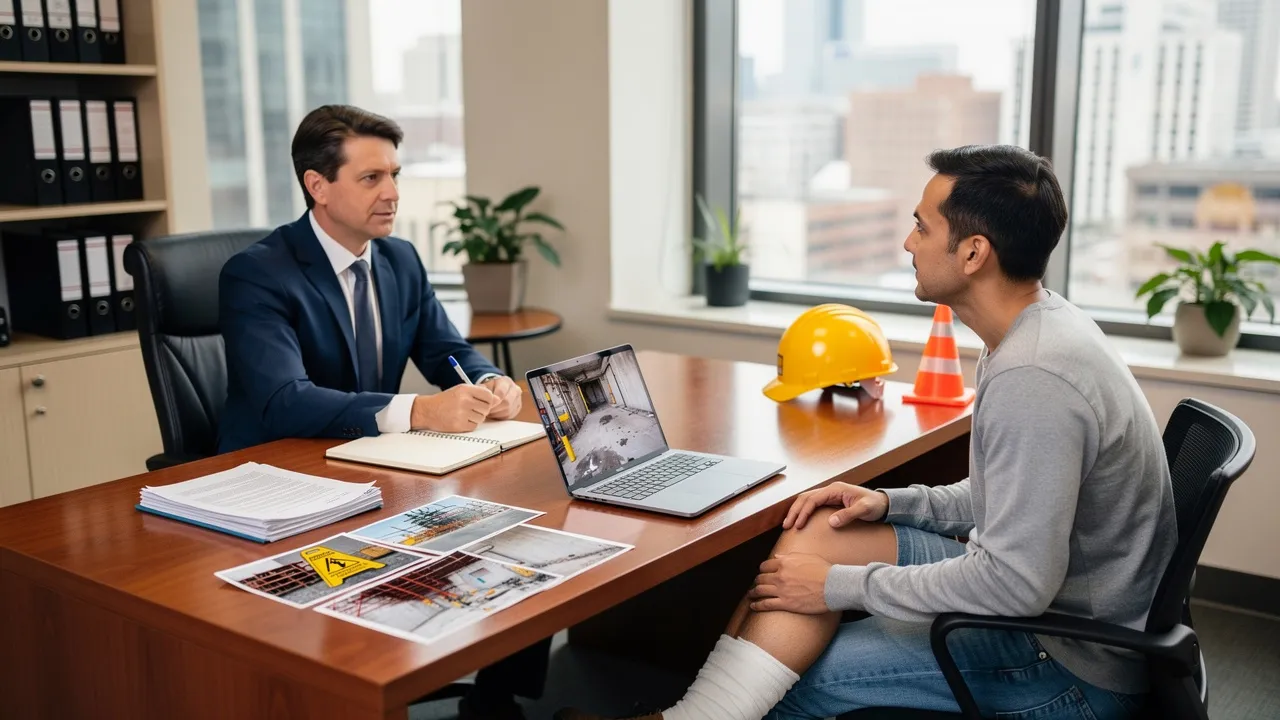
Turn the Incident Into a Consultation Decision
A New York tort-lawyer consultation can focus on the questions raised by a construction or premises injury without requiring an advance decision about whether a claim exists. The useful first question is whether your account, injury records, and available evidence are organized enough for a focused discussion about responsibility, matter fit, and possible next steps.
A tort lawyer may evaluate a negligence-based injury, gather evidence, negotiate with insurers, and help determine whether a personal-injury matter should move forward. The work begins with the facts: what happened, where it happened, who controlled the location, what condition contributed to the incident, and how the injury affected you.
New York negligence matters generally involve duty, breach, causation, and damages. Those legal questions are connected, but they are not answered by the fact that an accident occurred.
The consultation decision is also a preparation exercise. Start by doing four things:
- Write down the condition or event you believe contributed to the injury.
- Identify the property, worksite, business, landlord, contractor, or other party connected with the location.
- Gather the records that show what happened and how you were affected.
- Prepare questions about investigation, communication, fees, and the possible path after the meeting.
Incomplete facts do not require you to decide that legal review cannot help. If the condition has changed, evidence may disappear, or responsibility is unclear, organize what you know and bring the uncertainty to the discussion.
Test Whether the Facts May Fit a Tort-Lawyer Consultation
A potential construction or premises injury may fit a tort-lawyer consultation when another party’s property, conduct, or control appears connected to the condition that caused your injury. New York defendants have a duty to maintain property in a reasonably safe condition, but whether a dangerous or defective condition creates liability depends on the particular facts and circumstances of the case and is generally a question for the jury.
Your relationship with the property may also matter. New York premises cases may consider your status on the property when analyzing the duty owed by an owner or occupier. A construction worker, tenant, customer, visitor, delivery worker, or invited guest may have a different factual relationship to the location, so describe why you were there and what work or activity was taking place.
A premises-liability analysis generally asks whether a dangerous condition existed, whether the owner created it or had notice of it, whether the owner failed to fix or warn within a reasonable time, and whether the condition caused the injury. Constructive notice asks whether the condition existed long enough that the property owner should have known about it.
A practical fit check starts with four questions:
- What condition or event do you identify? Describe the broken stair, slippery surface, opening, falling object, unsafe access point, inadequate protection, or other circumstance in concrete terms.
- Who controlled the location or activity? List the property owner, employer, general contractor, subcontractor, store, landlord, managing agent, or public entity connected with the place or work.
- What connects the condition to your injury? Note where you were, what you were doing, what happened immediately before and after the incident, and who saw it.
- What can you show? Identify photographs, video, reports, witnesses, medical records, clothing, work records, and communications that support the account.
You do not need to label the legal theory before a consultation. Bring the facts and let the discussion address whether the matter may fit a premises, construction, or another negligence-based review.

Separate Notice From the Full Responsibility Question
Notice is one part of a New York premises analysis, not the entire responsibility question. In a premises-liability summary-judgment motion, defendants initially bear the burden on issues that include whether the condition was dangerous, whether they had notice, and whether the condition caused the accident.
If a property owner or employee created the dangerous condition, notice may not be required under the cited premises analysis. Whether the owner is liable still depends on the particular facts and the other applicable elements, such as causation and injury. Without proof about the condition, an owner may argue that the danger appeared moments before the fall and that a reasonable inspection would not have detected it.
That distinction affects what you preserve. A photograph showing the condition may help explain what existed. A witness account, maintenance record, complaint, inspection entry, incident report, or surveillance video may help show how long it existed or who knew about it. None of those records answers every legal question by itself.
Build your account around separate questions rather than a single conclusion:
- Condition: What was dangerous or defective?
- Creation: Did an owner, employee, contractor, or other worker create or alter it?
- Notice: Who knew about it, or what facts may show that it existed long enough to be discovered?
- Response: Was the condition repaired, cleaned, blocked off, or accompanied by a warning?
- Causation: How did the condition connect to the movement, fall, impact, or other event?
- Injury: What medical care and limitations followed?
Take this structure to a consultation. It helps keep a disputed notice question separate from the broader assessment of property control, causation, injury, and available proof.
Keeping those questions separate also helps show what each record can and cannot establish. A photograph may show the condition as it appeared at one moment, but not necessarily how long it was present. A maintenance or inspection entry may address what was checked, while a witness account may address what was visible before the incident. Medical records document care and symptoms, but they do not by themselves identify who controlled the location. Organizing evidence by the question it may help answer makes it easier to identify gaps without treating one document as proof of the entire matter. At the consultation, point out which facts are documented, which are based on memory, and which still need to be obtained.
Preserve Evidence Before the Scene Changes
Evidence from a construction or premises incident can change before you have a chance to study it. A spill may be cleaned, a broken step may be repaired, and surveillance footage may be overwritten. Preserve information promptly after a slip, trip, fall, or other premises incident.
A premises-liability source states that preservation during the first 30 days can drive the investigation, that surveillance footage may be overwritten in 30 to 90 days, and that witnesses and records may become harder to retrieve. Treat those time references as a reason to act promptly, not as a substitute for case-specific advice about your matter.
A useful evidence folder can include:
- Photographs and videos of the condition, the surrounding area, and your injuries.
- Names and contact information for witnesses.
- A store, property, business, or worksite incident report.
- Surveillance footage or the name of the person or business that may possess it.
- The shoes and clothing you wore during the incident.
- Medical records, bills, and treatment information.
- Pay stubs, missed-work records, and receipts for accident-related expenses.
- Notes describing what happened, when it happened, and what you noticed afterward.
- Communications with the property owner, employer, insurer, manager, or other involved party.
- Maintenance, inspection, cleaning, or repair records obtained during an investigation.
Keep original files when possible, preserve the dates and locations of photographs, and make a simple copy of your notes for the consultation. Do not alter clothing, shoes, photographs, or videos before you have organized them.
To make the folder usable, create an index with the date, source, and a one-line description for each item. Separate scene evidence, witness information and reports, medical material, work and expense records, and communications. Keep a running list of records you have requested but do not have, such as footage or inspection material, and note who may possess them. That list does not establish that a record exists; it preserves the question for investigation. Arrange photographs and videos in date order when known, and label uncertainty rather than guessing. This lets a lawyer see both the available proof and the missing links without requiring you to decide what any item proves. If several people gave accounts, preserve each account as received instead of combining them into one version.
We emphasize early investigation because we identify early evidence as a central part of premises cases. Bring the preserved material even when it seems incomplete. A missing photograph or uncertain witness name can still be a useful fact to discuss.

Build the Injury and Life-Impact Record
Your medical record should connect the incident to the care, symptoms, treatment, and limitations that followed. If you suffer a serious injury, call 911 or seek emergency medical care. Symptoms from concussions, sprains, or spinal injuries may become more noticeable later even when an injury initially seems manageable.
Keep emergency-room paperwork, doctors’ notes, imaging reports, physical-therapy records, and medical bills. Add the dates of appointments, the instructions you received, medication information, and notes about changes in pain, movement, sleep, concentration, or daily activities. Keep the description factual and dated.
A complete injury file also shows how the event affected your work and ordinary life. Add pay stubs, documentation of missed work, receipts for accident-related expenses, and a short record of tasks you could not perform or performed differently after the incident. Your notes can include transportation difficulties, household activities, job duties, and appointments without trying to assign a legal value to each item.
Evidence can help establish fault, the extent of your injuries, and how the accident affected your life. Bring both the medical records and the day-to-day account to the consultation so the discussion addresses the event and its consequences together.
Use a dated chronology to put the medical and life-impact records in sequence. Note the incident date, first treatment, later appointments, work absences, changes in symptoms, and expenses as they become known. If dates are uncertain, mark them as approximate rather than filling gaps from memory. Keep bills, treatment notes, and work records together, but distinguish material from a provider or employer from your own observations. This can help the consultation compare the account of the event with the records that followed it. It also gives you a place to note missing records, inconsistent dates, or symptoms that changed over time without trying to resolve those questions yourself. A factual chronology is useful even when the injury record is still developing.
Create a Construction-Specific Fact File
A construction-injury fact file should show how the job-site work, equipment, people, and property fit together. Start with the date, location, employer, job title, task, shift, and work area. Then describe what you were asked to do, what equipment or materials were involved, what changed immediately before the incident, and who directed or observed the work.
Add the names of the employer, general contractor, subcontractors, property owner, site manager, supervisor, safety personnel, and witnesses when you know them. Identify whether the incident was reported, to whom it was reported, what was written down, and whether the site condition was repaired, moved, cleaned, or left unchanged. Keep copies of worksite photographs, instructions, texts, emails, incident reports, and wage records.
We represent victims of automobile, motorcycle, construction, slip, trip and fall accidents, and medical malpractice. We also identify construction workers as having additional legal protections because of the dangers of construction work and identify New York Labor Law 240 and 241 as providing construction workers with rights that other workers do not have.
Those subjects make the worksite account especially useful during a consultation. Bring the job description, the task being performed, the equipment and protective measures involved, and the identity of the parties connected with the site. The consultation can then address whether the facts fit a construction-accident or premises-related evaluation rather than relying on the job title alone.
Use a short timeline to organize the file:
- Before the incident: task, instructions, equipment, conditions, and people present.
- During the incident: movement, object, surface, height, impact, or other event.
- Immediately afterward: complaints, witnesses, photographs, reports, and changes to the site.
- After leaving the site: medical care, work restrictions, communications, expenses, and continuing symptoms.
A clear timeline gives you a practical starting point for discussing property control, job-site responsibility, evidence preservation, and the injury record.

When a Case-Specific Review May Help
If you are unsure whether a New York tort-lawyer consultation fits a construction or premises injury, bring your incident details, injury records, and questions for a case-specific discussion. A consultation does not decide whether you have a claim or guarantee representation, compensation, or a particular outcome.
Ask Questions About Fit, Communication, Fees, and Process
An initial consultation should give you a structured chance to explain the incident and ask how the lawyer would approach the questions it raises. Bring a written agenda so the meeting covers matter fit, evidence, communication, fees, expenses, and next steps rather than stopping at a general description of the accident.
Questions about fit can include:
- Does the incident raise a construction, premises, or another negligence issue?
- Which property owners, contractors, employers, insurers, or other parties should be identified?
- What facts would change the initial assessment?
- What evidence should be preserved or obtained next?
- Which parts of the matter require more information before a decision can be made?
Questions about communication and process can include:
- Who will be your regular contact?
- How will you receive updates and provide new records?
- What investigation steps would be considered first?
- How will the lawyer explain a change in the assessment?
- What decision follows the initial review, and what information would be needed for that decision?
We emphasize personal and frequent one-on-one communication with our clients. Use the consultation to explain how your symptoms, work limitations, and losses affect your life and to ask how that information would be incorporated into the matter.
Use the answers to evaluate whether you understand the proposed working relationship, not only whether you agree with an initial assessment. You should be able to identify who will receive new records, how questions will be handled, what information is still missing, and what decision follows the review. If an answer depends on facts that have not yet been confirmed, write down the fact to be checked rather than treating the preliminary view as final. Before ending the meeting, restate the next action in your own words, including any documents you are expected to provide and any question that remains open. This gives you a practical way to decide whether the consultation produced the clarity you were seeking without assuming that a particular result is available.
Fee questions belong in the first discussion. Ask any attorney’s engagement agreement to explain how the fee is calculated, who is responsible for expenses, how often bills are sent, and when and how payment is made. New York Rules of Professional Conduct contain rules that apply to attorneys’ engagement agreements.
Ask for plain explanations of terms you do not understand. Record the answers, the documents you receive, and the next decision you are expected to make. A clear fee and communication discussion lets you compare the proposed process with the questions that brought you to the consultation. Treat the written agreement as a separate checkpoint: the conversation can clarify general expectations, while the agreement identifies the terms for the proposed arrangement. Note any unanswered question about costs or payment and resolve it before deciding whether the arrangement fits your needs.
Understand What May Happen After the Consultation
The period after a consultation may involve deciding whether more investigation is needed, organizing additional records, communicating with an insurer, negotiating, or considering litigation. The information available at an initial meeting may not resolve every issue.
Those possibilities describe different decisions rather than a promised sequence. Investigation may focus on clarifying the condition, the people connected with the location, the available records, and the relationship between the event and the injury. Further evaluation may identify which facts support the negligence questions and which facts remain uncertain. Communication or negotiation may be considered after the relevant information is organized, while litigation may be discussed if the matter cannot be resolved through the available path. The appropriate course depends on the particular facts, proof, defenses, and applicable law.
At each stage, ask what question is being answered and what information would change the assessment. You can ask whether the next step is intended to preserve evidence, clarify responsibility, evaluate the injury record, address an insurer, or decide among possible paths. You can also ask what you should do while that review is pending, such as preserving new records or reporting changes in treatment and work. This keeps the process understandable without turning a general description into a prediction about your matter.
New York comparative negligence can reduce a damages award in proportion to the percentage of fault attributed to you. A jury may assess whether you failed to exercise reasonable care separately from deciding whether that conduct was a proximate cause of the accident. Preserve your account of what you saw, what instructions you received, what you were doing, and what safety information was available so those facts can be addressed accurately.
A public property or governmental defendant can raise a separate question. A New York court passage distinguishes governmental-function immunity from the law of negligence. If your incident involved a city, state, county, public agency, or other governmental actor, identify that fact at the beginning of the consultation and bring every notice, report, and communication connected with the location.
No consultation can promise that a claim will be accepted, that another party will negotiate, or that compensation will be recovered. Use the meeting to learn which facts require further review, what records should be preserved, which path is being considered, and what decision comes next.
Seek Case-Specific Evaluation When the Path Is Unclear
Case-specific evaluation becomes especially useful when you cannot identify who controlled the location, the condition has been repaired or removed, witnesses are difficult to reach, or different accounts describe what happened. The same need arises when your medical symptoms are changing, work information is incomplete, or you are unsure whether the incident belongs in a premises, construction, workers’ compensation, or another legal discussion.
Bring the uncertainty itself to the meeting. Explain what you know, what you do not know, and which record might answer the question. A missing report, uncertain property owner, or disagreement about the sequence of events is a fact to organize—not a conclusion about the strength or weakness of your matter.
If you suffered a serious injury, seek emergency medical care as appropriate. Keep records when symptoms from a concussion, sprain, spinal injury, or another condition become more noticeable later. Include any account of comparative fault in your preparation, because New York law can reduce an award in proportion to the fault attributed to you.
A focused consultation can then address the incident, the condition, the parties, the evidence, the injury record, and the possible next step together. The purpose is to obtain an individualized assessment, not to predict a result from a short description.
Request the Consultation With the File You Built
Your next step is to place the organized incident and injury file in front of a New York personal-injury practice and ask whether the facts warrant further evaluation. We offer free consultations for personal injury cases, including construction consultations in which our construction-accident attorneys gather information about injuries and job sites.
Bring your timeline, photographs and videos, witness information, incident reports, medical records, work records, receipts, communications, and questions about property control and process. We emphasize personal and frequent one-on-one communication with our clients, so describe the practical effect of the injury as clearly as the event itself.
We work on a contingent basis, helping relieve accident victims from the financial stress of paying out of pocket for medical bills and rehabilitation costs. Our partners combine more than 125 years of experience with compassion for our clients’ unique needs.
We have two full-service offices located in Hicksville, Nassau County, and Kew Gardens, Queens. A qualified New York professional must decide whether your individual facts support a particular legal path, what representation may involve, and which next steps are appropriate.
Questions to Ask Before Requesting a Tort-Lawyer Consultation
What changes if the injury happened on public property or involved a government agency in New York?
Identify the public entity at the start of the consultation and bring related reports, notices, photographs, and communications. Governmental-function immunity can raise issues separate from the underlying negligence analysis, so the facts should receive case-specific review.
Can my own actions affect a New York injury claim?
They may. New York comparative negligence can reduce a damages award in proportion to the fault attributed to the injured person. Preserve your account of the instructions, conditions, conduct, and safety information involved; an assessment of fault does not by itself determine whether a claim can proceed.
What should a tort lawyer’s engagement agreement explain?
It should explain how the fee is calculated, who is responsible for expenses, how often bills are sent, and when and how payment is made. Ask for plain explanations of any unfamiliar terms before deciding whether the proposed arrangement fits your needs.
Keep reading
More on Construction Accidents
 Construction Accidents
Engineering Accidents: Documented Failures, Causes, Consequences, and Safety Lessons
Engineering accidents explained through documented failures, contributing causes, consequences, and practical safety lessons for current hazards.
Read article Construction Accidents
How to Choose an Injury Attorney in Westchester County After a Construction Accident
Compare a Westchester County injury attorney after a construction accident, protect evidence, and understand workers’ comp and contingency fees.
Read article Construction Accidents
Personal Injury Settlement Amount Examples for New York Construction Accidents
Compare New York construction injury settlements and verdicts, and learn which facts can shape your claim, evidence, and timeline.
Read articleHurt like this?
Tell us what happened.
We handle Construction Accidents cases across Long Island, Queens and New York City. The consultation is free and you pay nothing unless we win.
- Answered 24/7
- No fee unless we win
- Hablamos español
Send us the details
Takes about a minute. Free and confidential.