Construction Accidents
Pain and Suffering After a New York Construction Injury: What to Document Before a Consultation
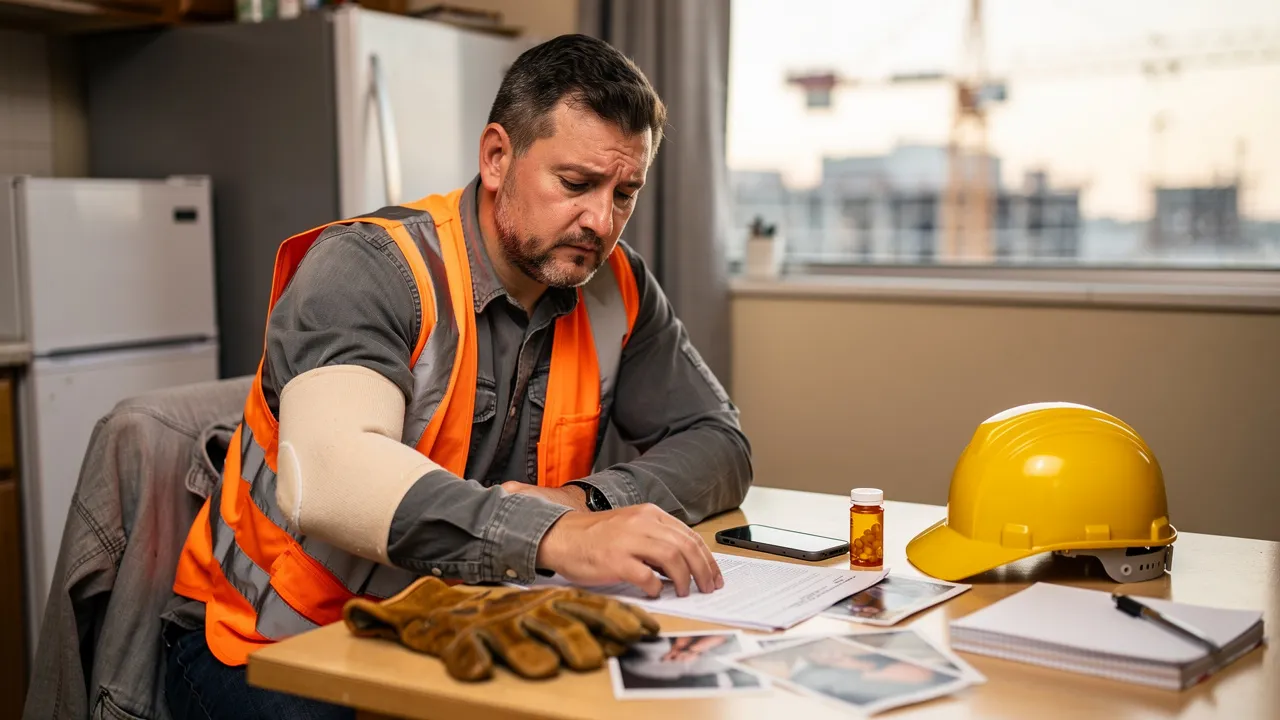
What pain and suffering means after a personal injury
Pain and suffering describes the physical and human effects of an injury that do not appear as a bill or paycheck. In a personal injury context, it is part of noneconomic damages, which can include physical pain, emotional distress, loss of companionship, and other intangible injuries rather than direct economic loss. After a construction accident, the category may concern what your body feels, how the injury affects your emotions, and what ordinary parts of life have become harder.
The category is broader than a list of medical charges. It calls for a concrete account of what happened, what changed afterward, and how those changes affected your work, home life, relationships, or ability to enjoy activities. Those effects may be relevant to a claim, but mentioning them does not automatically establish eligibility or determine a dollar amount. Your account should be accurate and specific rather than exaggerated or reduced to a single label.
Which physical and emotional effects may matter
Physical and emotional effects may both belong in your account. Potentially relevant examples include physical pain, emotional distress, mental anguish, confinement to bed, loss of enjoyment of life, and other intangible effects connected to the injury. Describe what you experienced and how it affected you; a label alone does not establish the loss.
Accuracy is especially important: include treatment you received, describe symptoms as they occurred, and tell your lawyer about relevant history rather than presenting only the facts that seem favorable.
Family and relationship effects can also be part of the broader noneconomic picture. For example, explain whether your injury changed how you participate in family routines, social contact, recreation, or other activities you previously enjoyed. Describe the actual change and its timing. Do not treat any single effect as automatic proof that a particular damages category applies to your situation.
What the New York legal context can and cannot establish
New York legal context supplies a limited point about conscious experience. In a 2021 New York court decision, the court stated that an award in this category requires consciousness of the injury-related pain. The court made that statement while distinguishing these damages from damages available under a cited Public Health Law statute.
That court statement does not decide every construction injury claim. It does not tell you whether your facts support a claim, whether another damages category applies, or what any claim might be worth. The decision addressed a particular legal issue and should not be treated as a personal conclusion about your eligibility. Your injury, medical history, treatment, work situation, and other facts require an individualized review under the applicable New York law.
Use the legal point as context when you prepare your account. Describe what you consciously experienced, when it occurred, how it changed, and what treatment or daily-life effects followed. If you are helping an injured family member, separate what you personally observed from what that person told you. That distinction keeps the discussion clear without turning a general legal explanation into a prediction about the claim.
Why pain and suffering has no universal dollar amount
Noneconomic damages have no precise value. The American Tort Reform Association states that assigning a dollar amount to these losses can be very difficult for juries. Physical pain, emotional distress, and other intangible effects do not come with an invoice that converts each experience into a fixed number.
The source describes jury valuation as difficult and variable, so a fixed multiplier, maximum, or assumed payout cannot stand in for a case-specific review. When you discuss these effects with an insurer or legal decision-maker, organize the facts and records that show what changed. A useful account identifies the incident, the symptoms, the treatment, the daily-life effects, and the time over which those effects occurred.
Do not judge the significance of your injury by comparing it with an amount found online or by assuming that a particular symptom has a standard price. Two accounts may contain similar labels while describing different treatment histories, limitations, or changes in daily life. The practical task before a consultation is to document your own circumstances carefully, not to calculate a result in advance.
How to describe the injury’s effect on everyday life
Your everyday-life account should connect the construction incident to what changed afterward. Start with a short description of the incident, then explain how your condition developed and what you could or could not do at different points. A clear timeline helps separate the original event from later developments without turning your description into an automatic conclusion about damages.
Organize your notes around these areas:
- Symptoms over time: Describe the physical pain or emotional effects, when they appeared, how often they occurred, and whether they changed.
- Treatment: List medical or psychological care, appointments, medications or other treatment you received, and any changes in care. Keep the description accurate.
- Work and daily activities: Explain changes in your ability to work, sleep, move around, care for yourself, handle household tasks, or participate in ordinary activities.
- Relationships and enjoyment: Describe changes in family life, social contact, recreation, hobbies, or other activities you previously enjoyed.
- Ongoing effects: State what remains difficult as of the date you prepare your notes. Do not predict how long an effect will last unless a qualified professional has given you that information.
Treat your timeline as a factual account, not a persuasive script.
Specific details are more useful than broad statements. Instead of writing only that you were in severe pain, note where the pain occurred, what activity brought it on, how it affected sleep or movement, and whether the effect changed over time. Instead of writing only that you felt distressed, describe the concrete change you noticed, such as avoiding an activity, struggling with a routine, or needing help with a task. Keep the description in your own words and distinguish what you remember from what someone else observed.

What to gather before discussing a potential claim
A short preparation packet can make your first legal conversation more focused. The New York State Bar Association advises having access to case papers, being concise, and telling the lawyer all relevant facts, including unfavorable ones. Before the conversation, gather what you already have rather than waiting until every detail is organized perfectly.
Use this checklist:
- Write down the names, addresses, and telephone numbers of people involved in the incident or its aftermath.
- Record the date, location, worksite details, equipment or conditions involved, and the facts you remember.
- Gather accident reports, medical records, bills, correspondence, insurance papers, photographs, and other case papers in your possession.
- Prepare a concise symptom and treatment timeline, including medical or psychological care and changes in daily activities.
- Note what you could do before the injury and what became difficult afterward, including work, household tasks, relationships, and recreation.
- Include facts that may be unfavorable, such as an earlier injury or medical condition, a missed appointment, a gap in treatment, or a disputed detail.
The goal is a complete starting point for discussion. Do not edit out a fact simply because you think it may weaken your position; your lawyer needs the relevant information to analyze the matter.
A family member can help collect dates, organize papers, or describe changes that you observed. Keep that help separate from your own account. You should identify who supplied each detail and avoid guessing about symptoms, treatment, or the extent of an effect. A concise chronology with clear sources is easier to discuss than a long narrative that mixes memory, assumption, and secondhand information.
Questions to ask during an individualized review
An individualized review can cover the incident, symptoms, treatment, and daily-life effects in detail. During case reviews, we encourage construction accident victims and their loved ones to ask questions and provide detailed information.
Consider asking:
- What steps would be involved in reviewing this matter?
- What information or documents should I provide next?
- Which facts appear helpful, and which facts may create difficulty?
- How might the symptoms, treatment history, and daily-life effects be evaluated?
- What time estimate can you give for the next stages, and what could affect that estimate?
- How will you keep me informed about progress or new developments?
- What should I understand before signing documents or taking legal action?
The New York State Bar Association advises asking a lawyer to explain the steps involved, estimate how long the matter may take, and provide updates about progress. Clear questions help you understand the boundaries of the discussion and the information still needed.
You can also ask which parts of your account need supporting documents, which details require clarification, and whether you should continue keeping a symptom or activity record. Ask how the discussion treats facts that do not fit neatly into a favorable story. Honest answers about uncertainty are more useful than an early promise about eligibility, value, representation, or recovery. Early consultation can sometimes prevent serious problems later, according to the New York State Bar Association. That does not mean every consultation changes the outcome or that contacting a lawyer establishes a claim. It means timing can matter when facts, records, or next steps need clarification. If you are unsure whether a document matters, bring it rather than deciding on your own that it is irrelevant. Ask which materials should be preserved, which questions remain open, and what information should be updated if symptoms or treatment change. Keep a dated record of new developments and share relevant updates, while avoiding guesses about what those developments mean legally. If you are supporting a worker, note when an observation was made and whether it came from the injured person or from what you personally saw. This gives the lawyer a clearer basis for explaining the process, identifying missing information, and discussing the strengths and weaknesses of the matter. It still leaves eligibility, damages, and any potential outcome for individualized review under applicable New York law. The consultation is a place to ask what remains uncertain, not to supply a conclusion yourself.
When a construction injury may warrant a consultation
A construction injury may warrant a consultation when you want to discuss the incident, the jobsite conditions, your symptoms, treatment, or changes in daily life under New York law. At Bergman, Bergman, Fields & Lamonsoff, LLP, we handle construction-accident cases as part of our personal-injury practice, and we educate construction workers and their families about their rights regarding construction-site injuries. Those facts describe what we offer; they do not promise that a particular claim qualifies or will produce a specific result.
Our offices are in Hicksville, Nassau County, and Forest Hills, Queens. If you work in or near Hicksville, the local setting may make it natural to begin by discussing the worksite, the incident, and the effects you have documented. A loved one can also help organize information and participate in the discussion when appropriate. Bring a concise account and ask direct questions so the conversation can focus on your actual circumstances.
You do not need to decide in advance whether your injury meets a legal standard before asking about the process. Bring the information you have, explain what remains uncertain, and describe the effect on your life without assigning a value yourself. We offer free consultations for personal-injury cases, including construction-accident cases, so the initial discussion can address the incident and the information relevant to your circumstances.
Prepare your account and take the next step
Before moving forward, prepare your incident summary, symptom and treatment timeline, daily-life notes, contact information, and relevant papers. Be concise and include unfavorable facts as well as favorable ones. We offer 100% free consultations for construction accident cases. You can provide information about the injury and jobsite for discussion.
A New York personal injury lawyer can discuss how the facts and applicable New York law may relate to your situation. Bring the account and documents you have so the conversation can focus on your circumstances and the questions you need answered.
Common questions about pain and suffering after a construction injury
Is there a fixed amount or maximum for pain and suffering after a New York construction injury?
No universal amount, multiplier, or maximum can be applied from the information here. Noneconomic losses have no precise value, and their assessment depends on the injury, symptoms, treatment, daily-life effects, and other facts of the individual matter. An online estimate cannot replace a case-specific review under applicable New York law.
What should I avoid when preparing an account of my injury?
Avoid exaggerating symptoms, reducing the account to broad labels, guessing about facts, or leaving out information that seems unfavorable. Keep separate what you personally experienced from what others observed, describe changes over time accurately, and tell a lawyer about relevant medical history, treatment gaps, or disputed details. Accuracy is more useful than presenting only facts that appear favorable.
Can a family member help prepare information for a construction-injury consultation?
Yes. A family member can help organize papers, dates, contact information, and observations about changes in daily life. The injured person’s account should remain distinct from what the family member personally observed or learned from someone else. Identify the source of each detail and bring the available case papers rather than waiting for a perfectly complete file.
Keep reading
More on Construction Accidents
 Construction Accidents
Engineering Accidents: Documented Failures, Causes, Consequences, and Safety Lessons
Engineering accidents explained through documented failures, contributing causes, consequences, and practical safety lessons for current hazards.
Read article Construction Accidents
How to Choose an Injury Attorney in Westchester County After a Construction Accident
Compare a Westchester County injury attorney after a construction accident, protect evidence, and understand workers’ comp and contingency fees.
Read article Construction Accidents
Personal Injury Settlement Amount Examples for New York Construction Accidents
Compare New York construction injury settlements and verdicts, and learn which facts can shape your claim, evidence, and timeline.
Read articleHurt like this?
Tell us what happened.
We handle Construction Accidents cases across Long Island, Queens and New York City. The consultation is free and you pay nothing unless we win.
- Answered 24/7
- No fee unless we win
- Hablamos español
Send us the details
Takes about a minute. Free and confidential.