Car Accidents
Car Crash Lawyers in New York: A Construction Worker’s Decision and Consultation Guide
Start with the unresolved-question decision
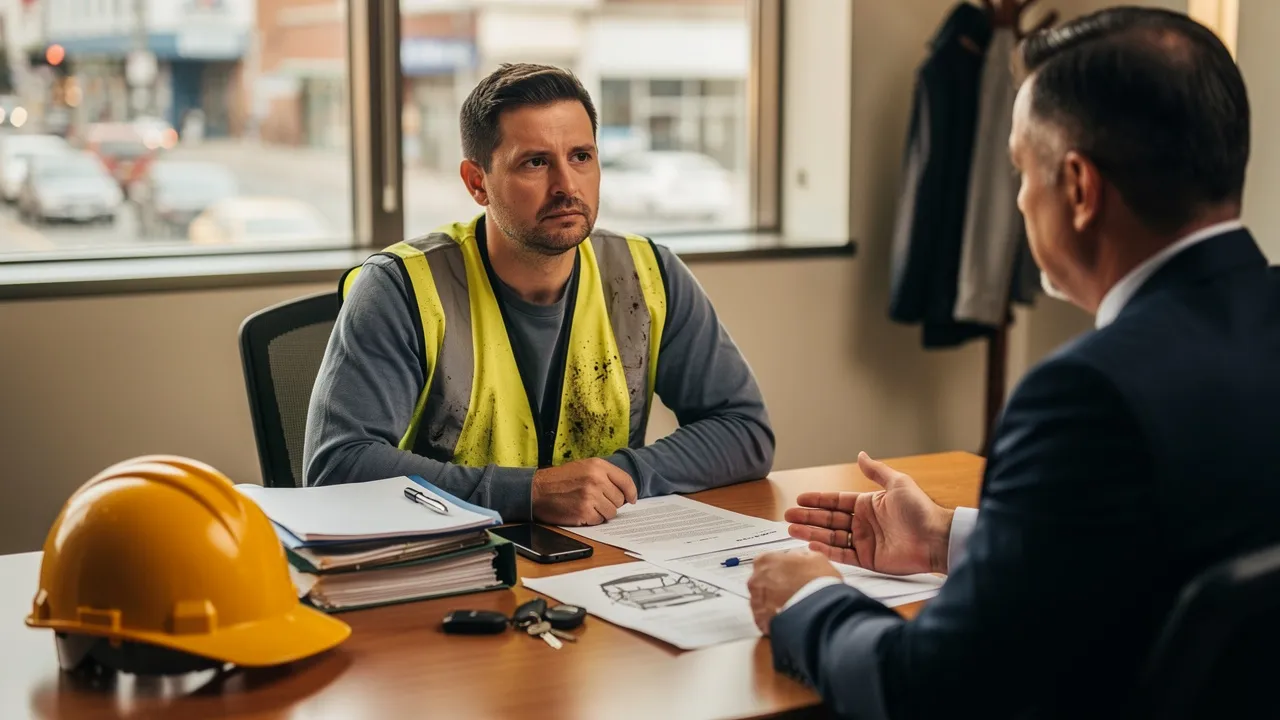
A New York car-crash consultation becomes easier to evaluate when you start with the questions that remain unanswered, rather than trying to decide fault or predict a recovery on your own. You may be able to handle a simple collision involving only property damage through the insurance process, but an injury, uncertain medical picture, disputed account, or accumulating expense can make a legal review worth considering. The point is not to label your claim before the facts are organized. The point is to identify whether your situation has moved beyond a straightforward exchange of insurance information.
Your first decision can be framed in three parts:
- What happened? Record the sequence, location, road and weather conditions, vehicles involved, and anything you observed before and after the impact.
- What changed afterward? Note pain, treatment, missed activities, vehicle damage, expenses, insurance communications, and any uncertainty about the crash account.
- What still needs a case-specific answer? Separate facts you can document from questions that require review of your records and the applicable New York law.
The New York State Bar Association advises keeping your own accident record, including the date and time, road and weather conditions, estimated speeds of the other vehicles, and other relevant details. It also advises considering a diagram of the vehicles’ positions and directions immediately before and after the crash. That record gives you a clearer starting point for deciding whether to request a consultation. It does not decide liability, eligibility, compensation, or outcome.
Do not wait for every question to be resolved before organizing the file. A useful file can contain uncertainty. Mark an item as disputed, estimated, missing, or awaiting a document instead of filling the gap with a guess. That distinction helps you explain what you know and what you need reviewed.
Separate a simple collision from an injury consultation question
A minor collision without injuries or substantial property damage may not require an attorney to resolve disputes or file insurance claims. That possibility does not create a rule for every crash. It describes a narrower situation: a collision that remains limited in both its physical consequences and the issues you need to resolve.
An injury changes the question you are asking. Even when an injury initially seems minor, consider getting medical care and a personal-injury lawyer’s free opinion before making decisions about the case. You do not need to prove that the injury is permanent before asking for information. You do need to keep the distinction clear: seeking a consultation is a way to have your facts reviewed, not a conclusion that you have a valid claim or that another driver is responsible.
The following conditions can make a consultation worth considering without answering the legal question for you:
- You or a loved one was injured in the crash.
- Your symptoms, treatment, or need for follow-up care remain part of the situation.
- The collision account is disputed or difficult to reconstruct.
- You are dealing with medical bills, prescriptions, vehicle-repair costs, rental-car expenses, or other accident-related records.
- Insurance communications have created questions you cannot answer from the documents alone.
- The crash affected your ability to keep up with ordinary responsibilities, and you need to present the practical consequences clearly.
The construction-worker context can add practical details without deciding the legal category. If you were driving to a jobsite, traveling between work locations, carrying equipment, riding in a work vehicle, or trying to return to work after the crash, write down those circumstances as facts. They may help explain the setting and the effect of the collision, but they do not by themselves establish fault, coverage, or eligibility.
If the collision involved no injury and no substantial property damage, you may decide to begin with the insurance process. If an injury is present or the consequences are not simple, consider medical care and a consultation before making decisions about the case.
What a car crash lawyer can add to the review
Your own notes preserve what you remember; a consultation gives you a setting to present those notes and ask which unanswered questions need closer legal attention. The available accident guidance identifies photographs, police reports, medical records, witness information, insurance documents, and expense records as materials that may help an attorney evaluate the situation.
A lawyer’s review may help you organize factual issues that are easy to overlook after a collision. For example, the review can keep these subjects distinct:
- The event itself: where the vehicles were, what you observed, road and weather conditions, and what happened immediately before and after impact.
- The physical consequences: symptoms, medical visits, prescriptions, diagnostic testing, therapy, and changes in daily activity.
- The paper trail: police information, insurance policies, adjuster communications, bills, receipts, repair records, and witness contacts.
- The unresolved questions: which details are documented, which details are disputed, and which conclusions cannot yet be drawn.
This separation matters because a photograph may show vehicle damage without explaining every part of the collision. A medical record may document treatment without answering a liability question. An insurance communication may show what was requested or said without resolving what coverage applies. Keeping each record tied to the question it can actually address reduces the risk of treating one document as an answer to every issue.
We provide emotional and logistical assistance to people affected by car crashes, and we specialize in representing people injured in automobile accidents. We can guide clients through necessary filings to help them stay on track. Those services do not mean that every consultation leads to representation or that a particular result is available. They describe the type of support you can discuss when you bring a New York crash record for review.
We emphasize personal and frequent one-on-one communication with clients. That approach gives you room to explain the collision in your own words, identify what has changed since the crash, and ask which records should be gathered next. Keep the conversation focused on facts you can identify and documents you can provide. A consultation is more useful when you bring both the organized material and the questions that the material has not answered.
Document the work connection before asking what it means
For a New York construction worker, the useful starting question after a car crash is not whether the facts already establish a claim. It is what the work-related circumstances were and what can be documented about them. Keep those details separate from conclusions about fault, coverage, eligibility, or compensation.
Record whether the trip was to, from, or between work locations; whether it was connected to an assigned task; who gave relevant instructions; and whether tools or materials were in the vehicle. Note the date and time, location, road and weather conditions, the positions and directions of the vehicles, and what happened immediately before and after the collision. If you do not know an answer, mark it as unknown rather than filling the gap with an assumption.
Make a simple diagram showing the vehicles’ positions and directions just before and after the crash. Keep available scene photos or videos, which can document road and weather conditions, vehicle damage, debris, skid marks, and traffic signals or signs. A police report may include the crash’s date, time, and location, involved parties’ information, witness statements, potential citations, and the officer’s observations. These records preserve the account; they do not by themselves decide how the work circumstances affect an individual matter.
Keep any available assignment details, work-location information, instructions, or messages about the trip with the crash notes. If the vehicle carried tools or materials, describe what was present and any visible damage without inferring its legal significance. Also keep a dated account of symptoms and care. Relevant medical records may include prescriptions, doctors’ notes, emergency-room records, CT scans, MRIs, X-rays, and physical-therapy records.
Preserve the remaining records that bear on the event: witness contact information, your insurance policy, statements given to adjusters, the other driver’s insurance information, and accident-related expense documents such as prescription costs, medical bills, rental-car receipts, and vehicle-repair records. The question for a lawyer is how these separate records fit together with the work-related facts, not whether this guide can decide the issue. We offer free consultations for personal-injury cases.
Record the crash as a sequence of observable details
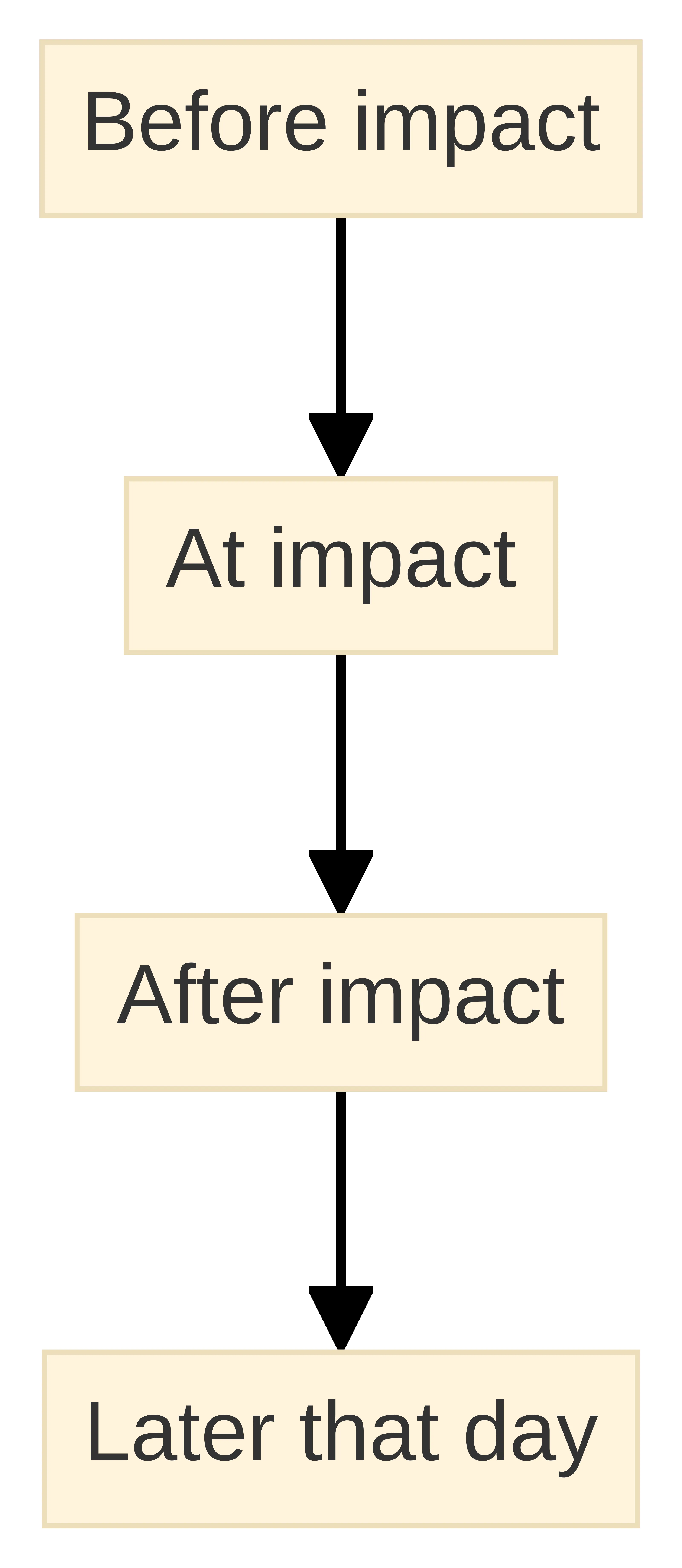
Your own crash record should describe observable details in sequence rather than begin with a theory about who caused the collision. The New York State Bar Association advises recording the date and time, road conditions, weather conditions, estimated speeds of the other vehicles, and other details you consider relevant. Write the account while the information is available to you, then preserve the original notes instead of repeatedly rewriting them.
Use a simple structure:
- Before impact: Record where you were traveling, the direction of travel, traffic or roadway conditions you observed, and what the other vehicles were doing as far as you could see.
- At impact: Describe the movement, contact, position of the vehicles, sounds, visible signals or signs, and any immediate physical reaction.
- After impact: Note where the vehicles stopped, visible damage, debris, conversations, emergency response, witnesses, and your condition at the scene.
- Later that day: Add medical care, insurance contact, photographs taken, police information received, transportation problems, and expenses you incurred.
Estimated speed is not the same as a measured speed, and memory is not the same as a document. Mark estimates as estimates and separate what you personally observed from what another person told you. If you are unsure whether a traffic signal was green, write that you are unsure. If you remember the direction of travel but not the exact speed, record the direction and identify the speed as unknown.
A factual sequence helps you explain the crash without overstating what you know. Consider drawing a diagram showing the vehicles’ positions and directions just before and after the collision. Label the diagram as your recollection and identify anything you cannot place with confidence. Keep the date of each later addition so you can distinguish the original account from information learned afterward.
Preserve the scene and official record
Accident-scene photographs and videos can preserve details that are difficult to describe later. Available guidance identifies weather and road conditions, vehicle damage, roadway debris, skid marks, traffic signals, and signs as examples of what these images may document. Keep the original files when you have them, and note when and where each image was taken if that information is available.
Your scene file can include:
- Photographs or videos of each vehicle and visible damage.
- Images of the roadway, surface conditions, debris, skid marks, signals, signs, and surrounding area.
- The location where each vehicle stopped, if you recorded it safely.
- The names and contact information of witnesses or other involved parties.
- Any photographs or documents later sent to you by an insurer, repair facility, or agency.
Use a consistent file system. You might group material into folders for scene images, vehicle damage, official documents, witness information, and later communications. Give files descriptive names based on the date or subject rather than relying only on a phone’s default numbering. Do not alter the original image before saving a copy for notes or sharing.
A police report may include the crash’s date, time, and location, involved parties’ information, witness statements, potential citations, and the responding officer’s observations. Treat the report as one part of the file, not as a substitute for your own account or every other record. Compare the report with your notes without changing your memory to match it. If a detail differs, identify the difference for discussion rather than trying to resolve it through assumption.
Keep scene documentation safe and lawful. Do not return to a roadway or active traffic area to obtain a photograph. If you already have the material, place it in a folder with the report and your notes so the relationship between each record and the crash remains clear.
Put the injury and treatment record in one place
Your injury and treatment record should show what you experienced, what care you received, and which records are available. If you or a loved one is injured in a crash, seek medical attention immediately and consider consulting a personal-injury lawyer as soon as possible. If an injury seems minor, the same guidance recommends medical care and a personal-injury lawyer’s free opinion before you make decisions about the case. These recommendations do not tell you what diagnosis you have or what outcome to expect.
Relevant medical records may include prescriptions, doctors’ notes, emergency-room records, CT scans, MRIs, X-rays, and physical-therapy records. Gather the documents you already have and make a simple treatment timeline:
- Date and location of the first medical visit.
- Symptoms you reported and changes you noticed afterward.
- Diagnostic tests, prescriptions, referrals, therapy, and follow-up visits.
- Transportation used for appointments and related receipts when available.
- Questions or gaps in the records that you want to raise during a consultation.
Describe changes in function rather than relying only on a label. If standing, climbing, lifting, driving, reaching, or using tools became difficult, record what changed, when it changed, and how you noticed it. If you continued working, record that fact as well; working does not by itself describe the full medical picture. Keep work observations separate from a medical diagnosis.
Do not reduce the record to a single injury label. Describe the symptoms and care in your own words, preserve the medical documents as they arrive, and avoid guessing about long-term effects. A lawyer can review the information you bring, while a medical professional addresses diagnosis and treatment. If you have not obtained needed medical care, address your health needs first rather than waiting to assemble a perfect legal file.
Preserve the insurance conversation without drawing conclusions
Your insurance file should preserve what was communicated without turning an adjuster’s question or statement into a legal conclusion. Available car-accident guidance identifies your insurance policy, statements given to adjusters, and the other driver’s insurance information as materials that may be important in a car-accident lawsuit. Keep the documents together and record the date, method, and subject of each communication.
Create a communication log with these fields:
- Insurer, representative, or other contact involved.
- Date and time of the call, letter, email, text, or online submission.
- Claim or reference number shown on the communication.
- Questions asked and information you provided.
- Documents requested, sent, or still outstanding.
- Any follow-up date or response you were told to expect.
Preserve your policy, declarations or coverage pages you have received, claim correspondence, recorded-statement requests, repair estimates, photographs, and messages about payment or vehicle handling. Do not fill gaps with guesses. If you do not remember an answer, mark it as uncertain in your notes rather than presenting an estimate as a fact.
Keep copies of anything you submit and note the method used to send it. If an insurer sends a form, letter, estimate, or request that you do not understand, place it in the consultation file with the envelope or delivery information when available. Do not summarize a document so completely that the original wording disappears; the original communication may show the question, context, and response together.
A consultation can help you place the insurance conversation alongside the crash, injury, and expense records. It cannot turn an incomplete file into a settled answer about coverage, liability, or compensation. Bring the original communications and your log so the discussion starts with what was actually said and documented.
Keep chronology and content separate in the communication log. A later message may refer to an earlier call, but the existence of a follow-up does not by itself establish what was agreed. Note the document or message connected to each entry and preserve the sequence. If you gave information by phone and have no written confirmation, identify the entry as your recollection of the call. If an insurer’s document uses terms you do not understand, copy the wording into your question list instead of translating it into a conclusion. If you sent photographs, forms, or bills, note which files were sent and retain the version you submitted. If an item was requested but not sent, mark it as outstanding rather than assuming it was received. This keeps the discussion focused on what was asked, what was provided, and what remains unclear without treating the log as a determination of coverage or responsibility.
Keep witnesses and accident-related expenses traceable
Witness contacts and accident-related expense records should remain traceable from the first entry to the document you bring to a consultation. Keep the contact information for witnesses so an attorney can follow up on their accounts of the accident. Record how you obtained each contact and avoid asking a witness to change or expand an account simply to fit your own description.
For each witness, note the person’s name, available contact information, where the person was located, and what you understand the person may have observed. Separate those observations from your interpretation. You may know that someone was nearby without knowing exactly what that person saw. Keep both facts distinct.
Your expense file can include prescription costs, medical bills, rental-car receipts, and vehicle-repair records. Organize it by date and preserve invoices, receipts, estimates, payment records, and correspondence when available. A useful index can contain:
- Date of the expense.
- Provider, pharmacy, repair facility, rental company, or other source.
- What the expense relates to.
- Amount shown on the document.
- Whether it was paid, submitted to insurance, disputed, or still unresolved.
- File name or location of the supporting receipt or invoice.
Keep witness information separate from your interpretation of what a witness proves. Keep expenses separate from a prediction about what you may recover. Those boundaries make it easier to identify missing documents and ask focused questions. If a record cannot be located, write down what you remember about it and label the entry as an unresolved gap rather than recreating a receipt from memory.
Use the construction-worker context without assuming a legal category
Your work as a construction worker can provide important context for explaining the collision, but that job title alone does not decide the legal issues in a vehicle case. Start by describing the circumstances you can document: where you were traveling, why you were traveling, whether you were driving or riding, what vehicle was involved, and what happened before and after the crash.
Construction work can make the practical record harder to assemble. Your schedule may change, your equipment or vehicle may be at a jobsite, and physical symptoms may affect tasks that require lifting, climbing, standing, driving, or using tools. Describe those effects carefully if they occurred, but do not convert them into a legal conclusion. Use available work records, messages, schedules, or other documents only when they accurately show the fact you are trying to explain.
A work-related detail belongs in the file when it helps answer a concrete question. For example, identify the location you were leaving, the destination, whether you were on duty as you understand it, who controlled the vehicle, and what changed after the crash. If you do not know how a work circumstance affects the legal analysis, label it as a question rather than trying to classify it yourself.
Keep these questions separate:
- What was the immediate purpose and location of the trip?
- What did you personally observe about the collision?
- What medical care and restrictions followed?
- Which work activities became difficult or changed?
- Which records support each part of the account?
A construction-worker context may help an attorney understand the real-world effect of an injury, yet it does not establish fault, coverage, eligibility, or compensation. Bring the work-related details that are relevant to your experience and identify what remains uncertain.
To make that distinction useful, create a separate work-connection note rather than burying these facts in the crash narrative. Record:
- The purpose and destination of the trip as you understood them.
- Whether you were driving, riding, or using a work vehicle.
- The employer, supervisor, or other person connected to the trip, if that connection is relevant to what you know.
- The jobsite or work location involved.
- What changed in your work activities after the crash.
- Which available records support each item, such as a schedule, message, vehicle information, or other work document.
Label each entry as a firsthand observation, information from a record, or an unanswered question. This does not establish that the trip belonged to a particular legal category. It creates a factual branch for individualized review without forcing the general statement “I was going to work” to carry more meaning than it can support.
The branch can also prevent separate issues from being merged. The purpose of a trip, the identity or control of a vehicle, an employer’s involvement, and the location of a jobsite are different facts. One may be known while another is uncertain. If you were a passenger, preserve what you know about who provided or controlled the vehicle; if you were driving, distinguish your own observations from information about who owned or controlled it. If you do not have a record, say so. Bring the branch as a set of facts and questions, not as a conclusion.
Check the record for gaps before requesting advice
Your consultation file is ready for a more focused discussion when each major part of the crash has a place in the record, even if some entries say “unknown” or “not available.” Completeness does not mean inventing missing details. It means showing what you have, what you remember, and what still needs attention.
Run this short gap check:
- Crash sequence: Do your notes identify the date, time, location, road and weather conditions, vehicle positions, and what you observed before and after impact?
- Scene material: Do you have available photographs, videos, damage images, roadway details, police information, and witness contacts?
- Injury record: Have you gathered medical notes, emergency-care records, prescriptions, testing, therapy records, and a basic treatment timeline?
- Insurance file: Have you saved your policy, the other driver’s insurance information, statements to adjusters, claim correspondence, and your communication log?
- Expense file: Have you grouped medical bills, prescription costs, rental-car receipts, repair records, and other accident-related documents?
- Questions: Can you list the points you want reviewed without presenting your answer as an established fact?
Then sort each gap into one of three categories:
- A document you may still obtain: for example, a bill, report, photograph, or insurance letter.
- A fact you may still clarify: for example, where a vehicle stopped or what a witness observed.
- A question that requires legal review: for example, how the assembled facts fit together under the law that applies to your circumstances.
The New York State Bar Association advises keeping your own accident record and considering a diagram of vehicle positions and directions. The available accident-evidence guidance also identifies medical, insurance, witness, photograph, police, and expense records that may assist an attorney. Use those categories as an organizing checklist, not as a promise that every category will exist in your case.
If a gap remains, write “unknown,” “not received,” or “needs confirmation.” A visible gap is easier to discuss than an unsupported assumption.
Use the gap check as a dependency check as well as a list. Some records help explain or locate other records: a date in the crash notes can help place a call in the communication log; a medical-visit date can help place a bill or prescription; and a witness contact can be linked to the scene detail that person may have observed. If a link is missing, mark it rather than filling it in. This shows which gaps affect one item and which gaps make a larger part of the account harder to follow.
You can make a final handoff page with four columns: question, supporting record, missing or conflicting detail, and next factual step. The next step should be limited to organizing what is available—for example, locating a document already referenced, preserving a message, or noting that a record was not received. It should not be a prediction about fault, coverage, eligibility, or compensation. A question with no supporting record can still be included, but label it as a recollection or uncertainty. A record with no question can remain in the file without being assigned a conclusion.
This approach gives the consultation a clear agenda while preserving the boundary between preparation and legal advice. It also helps a family member assisting the injured worker see which tasks are document-gathering tasks and which questions should be left for individualized review. The objective is not a perfect file; it is a transparent one in which known facts, missing material, and unresolved legal questions are visibly separated.
Know what this guide cannot decide
This guide cannot determine whether you have a legally viable claim, who is responsible for the crash, what insurance coverage applies, what compensation may be available, or what result a case could produce. It also cannot decide whether a particular record is sufficient for your circumstances. Those questions depend on the facts, documents, communications, and legal issues specific to your situation.
General information can still help you take a sensible preparatory step. You can preserve the accident sequence, gather available records, separate observation from assumption, and identify questions for a consultation. You can also recognize the difference between a simple property-damage collision and a situation involving injury or meaningful consequences without deciding your eligibility.
A checklist is an organizing tool, not a legal determination. A police report is one record, not necessarily the complete account. A medical file describes care and treatment, not every legal issue. An insurance exchange records communications, not the final answer to coverage or responsibility. Keep those boundaries in view as you assemble the material.
Do not use a checklist as a substitute for medical attention, and do not treat a general explanation as individualized legal advice. If your situation includes an injury, disputed facts, insurance uncertainty, or records you cannot interpret, consider requesting a review of the actual file. Bring the facts as they are, including gaps and conflicting information.
Use unresolved questions before requesting a New York consultation
Keep your questions beside those records, especially questions about details that remain disputed or unclear.
A qualified New York attorney must assess your individual circumstances; requesting a consultation does not promise representation, eligibility, compensation, or a particular outcome.
Keep reading
More on Car Accidents
 Car Accidents
What Do Car Crash Lawyers Do in New York? A Construction Worker’s Decision Guide
Learn what car crash lawyers review after a New York crash, what records to gather, and when a consultation may clarify your next step.
Read article Car Accidents
Maximize Your Compensation After a Car Accident: Essential Steps
Maximize your compensation after a car accident with essential steps and legal support.
Read article Car Accidents
4 Steps to Find Someone’s Insurance Policy Number Easily
Learn how to find someone's insurance policy number with these four simple steps.
Read articleHurt like this?
Tell us what happened.
We handle Car Accidents cases across Long Island, Queens and New York City. The consultation is free and you pay nothing unless we win.
- Answered 24/7
- No fee unless we win
- Hablamos español
Send us the details
Takes about a minute. Free and confidential.