Slip & Fall
Slip and Fall Law in New York: How Notice, Evidence, and Next Steps Shape a Claim
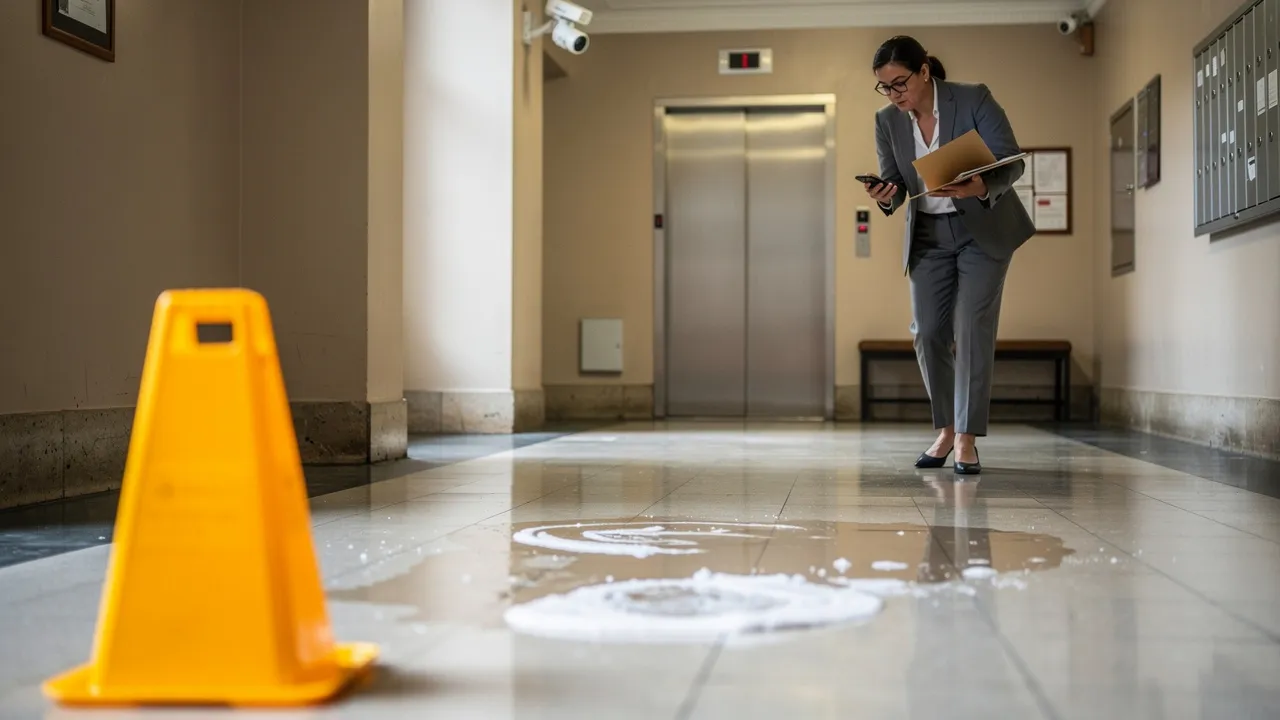
What New York slip-and-fall law examines
New York slip-and-fall law examines whether an unsafe condition on property may support a premises-liability claim. Premises liability concerns a property owner’s or occupier’s duties to protect visitors, guests, and other entrants from dangerous conditions or defects. A slip-and-fall accident is one type of premises-liability claim, and falls can occur in grocery stores, restaurants, office buildings, sidewalks, parks, apartment buildings, and other locations.
The condition may be familiar, such as a wet floor, loose carpeting, uneven pavement, an icy walkway, a broken step, debris, or inadequate lighting. The location alone does not establish responsibility. You need to connect the condition to the person or entity responsible for the property, show how the condition related to the fall, and examine what that party knew or should have known.
Start with the notice question
Notice is the first question in many New York slip-and-fall claims: what did the responsible party know, and when did it know it? Under New York law, recovering compensation for a trip or slip and fall requires showing that the responsible party had notice of the defect or dangerous condition. Notice is also only one part of a negligence claim, alongside duty, breach, causation, and damages.
Actual notice means the owner was directly told about the hazard, such as through a tenant’s complaint about a broken step or an employee’s observation of a spill. A written complaint, an oral report, an incident report, or testimony about a prior warning may help establish that the condition was brought to the owner’s attention.
Constructive notice addresses what the owner should have discovered. Constructive notice means a hazard was visible and existed long enough that a reasonably careful owner could have discovered and remedied it. Courts may consider how long the hazard existed, how visible it was, whether it recurred, and the property’s inspection routines. A banana peel on a grocery-store floor for 30 minutes may create constructive notice; one that just fell probably does not.
A different analysis may apply when the property owner or an employee created the dangerous condition. When the property owner or an employee created the dangerous condition, notice may not be required, but that does not by itself establish liability. Because that wording is broader than the general negligence framework, you should not treat a created condition as an automatic result in your own case. The facts still need to establish the applicable negligence requirements, including what happened, who controlled the area, and how the condition caused the injury.
Timing can change the notice analysis. A general New York limitations period is described as three years under CPLR 214(5). Claims against municipal defendants generally require a 90-day notice of claim under General Municipal Law 50-e. Those are different requirements: a lawsuit deadline does not replace a municipal notice requirement, and a municipal notice period may arrive much sooner. Preserve the date, location, property owner, and governmental involvement as soon as possible so a qualified New York attorney can assess which timing rules apply.
Connect the condition to the full negligence picture
A New York slip-and-fall claim connects five related questions: duty, breach, notice, causation, and damages. Premises liability supplies the setting and the property-related duties. Negligence analysis then asks whether the condition represented a failure to use the required care, whether the responsible party knew or should have known about it, whether that condition caused your fall, and what harm followed.
Use the condition as the organizing fact. A temporary spill may raise different notice questions from a broken step that remains in place. Dropped merchandise, leaking equipment, wet floors, snow, ice, cracked pavement, uneven surfaces, poor lighting, and damaged stairs can each require a different account of how the hazard appeared, how long it remained, and who had the ability to address it.
Inspection and maintenance practices can help place the condition in context. Retail stores and others should establish regular inspection routines and train employees to look for tripping or slipping hazards. Property owners should regularly inspect premises, including adjacent sidewalks and public areas, to identify potential hazards promptly. Identified hazards such as uneven pavement, cracks, debris, and poor lighting should be repaired promptly, and a hazard that cannot be repaired immediately should have adequate warning signs or barriers.
Winter conditions add another factual layer. Your account should identify the weather, the condition of the walking surface, any warnings or barriers, the last time the area was inspected or treated if known, and the party responsible for the location.
You can organize the incident around these questions:
- What condition caused the fall, and where exactly was it?
- Who owned, occupied, maintained, or controlled that area?
- Was the condition visible, recurring, reported, or connected to a repair or inspection issue?
- How did the condition cause the fall rather than merely exist nearby?
- What injuries, treatment, expenses, missed work, or other losses followed?
The answers may remain incomplete at first. That is a reason to preserve the record, not a reason to assume that liability or recovery is established.
Preserve evidence that can establish notice
Evidence that may establish notice should show the condition, its duration, its visibility, its recurrence, or the property’s response. Maintenance logs, video footage, and witness statements may help show that a property owner knew about a hazard. Surveillance video, inspection logs, prior complaints, and photographs may also be significant, but some evidence may disappear quickly.
Photograph the condition from close range and from the approach you took before the fall. Include surrounding signs, lighting, stairs, pavement, merchandise, warning barriers, and other features that show how visible the hazard was. Record the date, time, precise location, weather, and whether the condition changed before you could document it.
Surveillance footage may capture the hazard, employee conduct, cleanup failures, lighting, or the accident itself, and it may contradict what a business or insurer later claims happened. Retail surveillance systems often overwrite recordings on a rolling cycle of days or weeks, so footage may disappear before a lawsuit is filed.
A store-surveillance spoliation letter is a formal written demand, usually sent by an injured person’s attorney, asking a retailer to preserve camera footage, incident reports, and related records. If your fall occurred in a store or other location with cameras, identify the cameras and request preservation promptly through appropriate channels. Do not assume that a recording will remain available simply because cameras were visible.

Build a complete fall record
A complete fall record links the scene to your injury, treatment, expenses, and communications. A slip-and-fall case may be supported without surveillance footage by accident photographs, witness statements, medical records, incident reports, and maintenance logs. Gather what you can without altering, discarding, or repairing the condition yourself.
Create a folder or dated file containing:
- Photographs or video of the condition, surrounding area, and injuries.
- The names and contact information of witnesses.
- Any store, property, or business incident report, including the name of the person who prepared it.
- The shoes and clothing worn during the fall, kept in their condition after the incident.
- Medical records, bills, prescriptions, and treatment instructions.
- Pay stubs or other income records if the injury affected your work.
- Receipts for accident-related expenses, notes about what happened, and communications with the property owner or insurer.
- Maintenance, inspection, cleaning, or repair records obtained during the investigation.

Test the issues that commonly make proof difficult
Several factual pressure points can make a New York slip-and-fall claim difficult to prove without deciding your result in advance:
- Notice may be disputed. The owner may deny receiving a complaint, an employee may not have observed the condition, or the hazard may have existed for too short a time to support constructive notice.
- Duration and visibility may be unclear. A temporary spill or dropped item can appear without warning, and a photograph taken later may not show how long the condition existed before the fall.
- The responsible party may be uncertain. A store, landlord, tenant, contractor, municipality, or another property controller may have different responsibilities depending on the location and arrangement.
- Causation may be contested. The condition must be connected to the fall rather than simply being present somewhere nearby.
- Injury and damages may be challenged. Treatment records, bills, income records, and a consistent account help show what harm followed.
- Shared fault may be raised. New York’s pure comparative-fault rule reduces, rather than automatically bars, recovery when the injured person shares fault.
Timing creates another set of risks. Claims against the State are subject to separate Court of Claims Act rules, and wrongful-death claims generally have a two-year period under EPTL 5-4.1.
For a sidewalk, subway, public building, or other government-connected location, gather the incident and ownership details and seek prompt qualified legal help.
Take the first practical steps
Your first steps should protect your health and preserve the account of what happened. Move through this sequence as safely as your condition allows:
- Obtain medical care appropriate to your condition, particularly if you have serious symptoms, and keep the resulting records and bills.
- Photograph or record the condition, surrounding area, lighting, signs, barriers, and visible injuries before the scene changes, if doing so is safe.
- Write down the date, time, location, weather, sequence of events, and names of witnesses while your memory is clear.
- Ask for the property’s incident-report process and keep a copy of anything you submit or receive.
- Preserve the shoes and clothing from the fall, along with receipts, income records, communications, and treatment information.
- Identify cameras, prior complaints, maintenance activity, and any person who may know when the condition appeared.
- Avoid guessing about who was at fault or making admissions that go beyond the facts you know. Describe what you observed and how you were injured.
- If surveillance or other records may be overwritten, contact a qualified New York attorney promptly about preservation.
A preservation request is not a substitute for documenting the scene or obtaining medical care. It also does not establish that a property owner was negligent. Its purpose is to address records that may otherwise disappear, including camera footage, incident reports, and related materials.
Recognize when the facts call for professional evaluation
Professional evaluation becomes especially useful when the notice, property control, evidence, or timing questions are unclear. Consider prompt qualified help if:
- The owner or insurer disputes that the hazard existed or says it appeared only moments before the fall.
- You do not know whether a store, landlord, tenant, contractor, municipality, or another party controlled the area.
- Surveillance footage, inspection logs, incident reports, or prior complaints may be missing or at risk of being overwritten.
- The fall occurred on a sidewalk, subway property, public building, or other location involving a government entity.
- Your injuries require continuing treatment, affect your work, or involve substantial bills or other losses.
- You are unsure which notice requirement or limitations period applies.
A personal injury attorney may conduct a thorough investigation to uncover evidence and build an argument for property-owner negligence. That investigation may help organize the condition, notice, responsible parties, medical records, and timing issues without assuming that the claim will succeed.
Request a consultation with the organized record
Your preserved record gives a qualified New York attorney a clearer starting point: the condition, the property’s control, possible actual or constructive notice, available witnesses and records, your medical treatment, and any timing concern. We emphasize early investigation because premises cases are won on early evidence.
Bergman, Bergman, Fields & Lamonsoff, LLP has two full-service offices in Hicksville, Nassau County, and Kew Gardens, Queens. We represent victims of automobile, motorcycle, construction, slip, trip and fall accidents, and medical malpractice, and our premises-liability cases include slip/trip and fall accidents, ceiling collapses, and injuries caused by fire. We operate 24 hours a day, 7 days a week.
A qualified New York attorney must evaluate your individual circumstances, including the evidence, responsible parties, applicable rules, and timing. Gather the organized record and use it to discuss what happened and what steps may be available.
Questions about New York slip-and-fall law
Can someone sue a property owner after a slip and fall in New York?
Possibly, but a fall alone does not establish liability. The analysis generally considers whether the owner or occupier owed a duty, whether an unsafe condition existed, whether the party knew or should have known about it, whether the condition caused the fall, and what injuries or losses followed. The responsible party may be a store, landlord, tenant, contractor, municipality, or another property controller, depending on the location and facts.
What should I do if I fell on a New York sidewalk or other public property?
Document the exact location, condition, date, time, weather, witnesses, injuries, and medical treatment as soon as it is safe. Identify which government entity or other party may control the area and seek qualified legal guidance promptly. Municipal defendants generally require a 90-day notice of claim under General Municipal Law 50-e, while claims against New York State are subject to separate Court of Claims Act rules; the applicable requirements can depend on the facts.
Is a New York slip-and-fall claim worth pursuing if the property owner blames me?
A property owner’s claim that you were at fault does not automatically bar recovery. New York’s pure comparative-fault rule reduces, rather than automatically bars, recovery when an injured person shares fault. Whether further evaluation makes sense depends on evidence about the hazard, notice, causation, injuries, responsible parties, and timing, so preserve the record and obtain case-specific guidance before assuming the claim is valid or invalid.
How common are slip-and-fall injuries, and who is most affected?
Falls can affect people in stores, restaurants, offices, sidewalks, parks, apartment buildings, and other locations. A United States report states that more than one million people need emergency medical care each year for slip-and-fall accidents. CDC data reported that in 2018, 27.5% of older adults in the United States reported falling at least once during the prior year and 10.2% reported a fall-related injury; these broad figures do not establish liability or predict an individual claim.
Keep reading
More on Slip & Fall
 Slip & Fall
Slip and Fall Claims in New York: Preserve Evidence and Decide Your Next Step
Learn how New York slip and fall claims may turn on notice, evidence, injuries, property type, and the next steps you can take.
Read article Slip & Fall
When to Contact a Premises Liability Attorney After a New York Property Injury
Learn what to document after a New York property injury and when a premise liability attorney consultation may help organize next steps.
Read article Slip & Fall
Maximize Your Case: Best Practices with Premise Liability Lawyers
Discover best practices for working with premise liability lawyers to strengthen your case.
Read articleHurt like this?
Tell us what happened.
We handle Slip & Fall cases across Long Island, Queens and New York City. The consultation is free and you pay nothing unless we win.
- Answered 24/7
- No fee unless we win
- Hablamos español
Send us the details
Takes about a minute. Free and confidential.