Construction Accidents
New York Wrongful Death Lawyer Consultation Guide for Construction Families
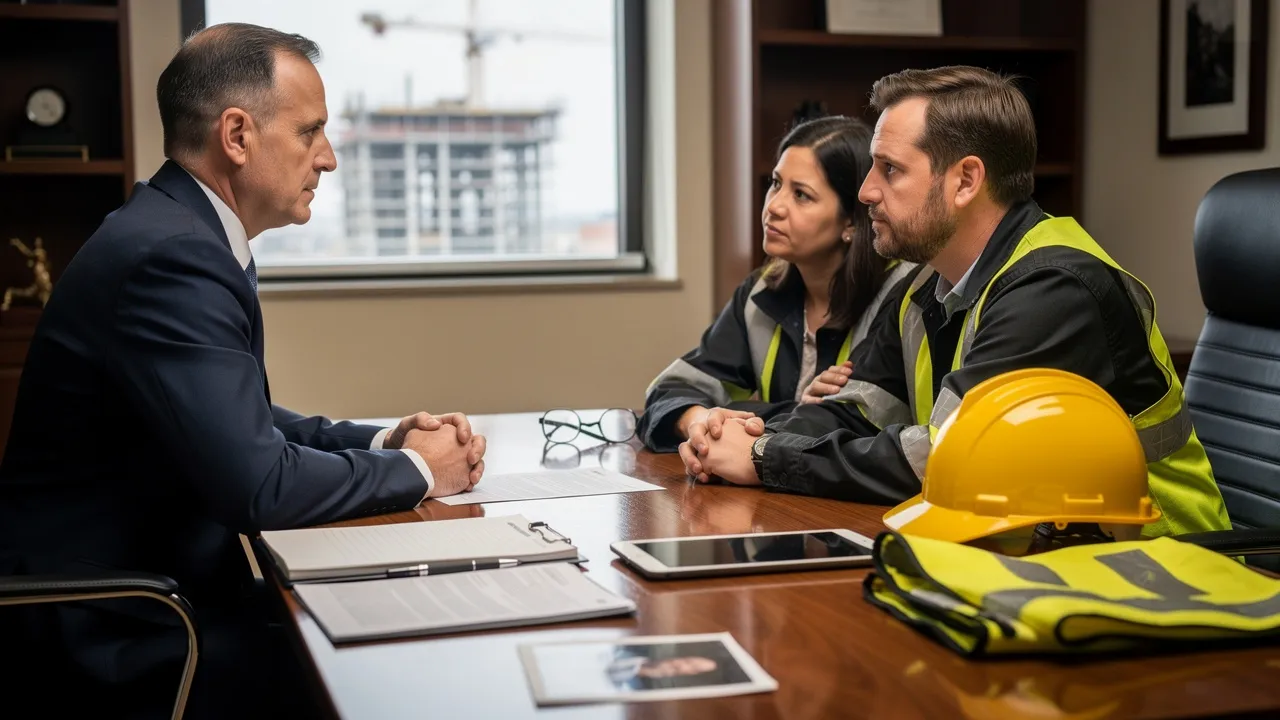
Begin with the decision the family can make now
After a fatal construction-site or other fatal personal-injury incident in New York, you can make one decision now: whether to seek an initial legal discussion about what happened and what records are available. You do not need to decide liability, claimant eligibility, damages, or case value before taking that step. Those questions depend on the particular facts, legal categories, and documents connected to the death.
An initial discussion can give you a place to organize the event, identify missing information, and separate questions that may involve different claims. You can bring a partial record. Unknown details are still details worth identifying; filling gaps with guesses can make the account less reliable.
The decision to request a consultation is separate from the decision to retain counsel. At the first stage, your practical task is to present the facts you have, identify the people and organizations connected to the work, and ask what requires further review. You can also ask what additional documents may matter and how to preserve information that is not in your possession.
Bergman, Bergman, Fields & Lamonsoff, LLP offers free consultations where our experienced construction accident attorneys gather information about injuries and job sites. That conversation can begin with the facts you know: the date and location, the work being performed, the people and companies involved, the records already in your possession, and the questions you cannot yet answer.
Use the first discussion to explain the incident plainly rather than to argue a legal conclusion. A useful account distinguishes what you personally know, what another person told you, and what remains uncertain. That distinction gives counsel a clearer starting point for deciding what needs further review.
Before the conversation, write a short account in chronological order. Include the last confirmed information about the deceased person’s work, the incident itself, the response afterward, and any changes to the site or records that you know about. Keep your account factual and mark assumptions as questions. That approach lets you ask for a legal review without pretending that the family already knows which claim or party applies.
Keep the legal categories separate from the start
Wrongful-death and survival claims address different losses in New York. A wrongful-death claim concerns qualifying pecuniary, or financial, losses caused by the death. A survival claim concerns certain losses the decedent sustained before death. A fatal-injury matter may involve both, but the two claims are not interchangeable.
That distinction affects the questions you bring to a consultation. Ask which losses are being considered, which records relate to the period before death, and which records relate to the financial effects of the death. Do not assume that a document belongs to only one category; let counsel sort out its legal relevance.
A simple way to organize your notes is to use two timelines. The first covers the incident and any period before death that may be relevant. The second covers the financial and personal consequences after the death. Keeping those timelines separate makes it easier to identify which facts still need documentation.
Workers’ compensation and a possible third-party claim create another separate set of questions. The effect depends on the particular records and circumstances.
Bring information about any workers’ compensation claim, benefit payment, notice, settlement discussion, or communication you have. Ask how a possible third-party claim would be reviewed alongside that matter. Keep the two subjects in the same packet, but do not treat them as the same claim.
Also list every organization connected to the project, even if you do not know whether it is an employer, contractor, property owner, equipment provider, or insurer. The identity and relationship of each organization can become a separate question for review.
A practical way to begin is to create four headings in your notes:
- wrongful-death questions;
- survival questions;
- workers’ compensation questions; and
- possible third-party questions.
Place each fact or document under the heading that seems relevant, and mark uncertain placements with a question rather than forcing a conclusion. The purpose is organization. Counsel must determine which categories apply to your circumstances.
Add a fifth heading for questions that cross categories. For example, a document about the deceased person’s employer may matter to the work relationship, a possible third-party issue, and the investigation. Listing it once with cross-references is better than making separate copies that could become inconsistent.

Record what happened before drawing conclusions
The sequence immediately before the death can help frame the legal and factual questions. Write down what the deceased person was doing, where the person was positioned, what task was underway, what changed immediately before the incident, and who was present. Evidence about the activity immediately before death may be relevant, and eyewitness testimony can help establish it.
Use observable descriptions instead of conclusions. For example, record that a worker was on a scaffold, near a hoist, beneath a suspended material, or working beside an excavation only if that is what you know. If you do not know the exact position or sequence, write that the detail is unknown and identify who may know it.
A useful incident timeline can have a separate line for each known event: arrival at the site, assignment of the task, equipment or materials in use, the last observation before the incident, the incident response, and later changes. Put the source of each detail beside it. Your own observation, a coworker’s account, an employer notice, and a medical record should not be presented as though they came from the same source.
Construction-scene photographs and video can document equipment, materials, work areas, missing guardrails, improperly rigged loads, and blocked walkways. Save the original files when you have them, preserve the date and location information attached to the files, and make a note of who took each image.
A scene record should include more than the point where the death occurred. Add access paths, nearby equipment, lighting or weather observations that you personally know, posted signs, visible barriers, and the condition of materials. Do not add an explanation of why a condition existed unless you have a source for it.
For each image or recording, note what is visible, where it was taken, when it was taken if known, and who supplied it. If an image shows only part of the area, label it that way. A limited image is still worth preserving, but it should not be described as a complete picture of the site.
Coworkers, supervisors, and equipment operators may explain how work was performed, whether safety procedures were followed, and whether concerns were raised before the incident. Make a separate list of names, job roles, employer names if known, phone numbers or other contact details already in your records, and what each person may have seen or heard.
Do not ask a witness to adopt your interpretation of the event. Preserve the person’s own account as you remember receiving it, and note the date of the conversation. Counsel can decide how each account should be evaluated and whether additional contact is appropriate.
Separate direct witnesses from people who learned about the event later. Note whether a person saw the work, heard a warning, handled equipment, supervised the task, responded afterward, or only received information from someone else. That distinction gives counsel a clearer list for follow-up.
Preserve the construction scene while conditions can change
A construction scene can change after a fatal incident. The site may be repaired, recorded footage may be overwritten, and witness memories may weaken over time. Evidence gathered soon after the accident may therefore matter later, even when you cannot tell yet what a photograph, recording, or name will establish.
Preservation starts with materials already available to you. Keep copies of photographs, videos, messages, emails, work schedules, notices, and written accounts in their original form. Make a second working copy for notes so that your annotations do not replace the original file.
Create an item log with the file name, date received, person who supplied it, and a short description. If you do not know when a file was created, say so. Do not change the original file name or contents merely to make the packet look uniform.
Use this short preservation list:
- Record the exact site address, project name, building or structure, and work area as you know them.
- Save the names of contractors, subcontractors, supervisors, equipment operators, and property or project contacts.
- List every photograph or video you have and describe what it shows without assigning fault.
- Note whether a camera, phone, vehicle, nearby building, or other known device may have captured the area.
- Save messages or notices that refer to the work, the incident, repairs, safety concerns, or access to the site.
- Write down when you obtained each item and who gave it to you.
- Mark records that you have seen but do not possess and identify who may hold them.
This list helps you bring a traceable record to the initial discussion. It does not establish that any particular item proves negligence.
Do not treat the preservation list as permission to enter a restricted site, remove equipment, or confront people connected with the project. Limit your record to information and materials you can lawfully access, and identify what may need to be obtained or preserved through counsel. The immediate goal is to keep the available account intact while the next steps are evaluated.
If you learn that the site has been repaired, equipment has been moved, or a recording may no longer be available, add that information to the timeline. Describe what you know about the change and how you learned it. Do not turn the change itself into a conclusion about responsibility.

Identify employers, contractors, and project relationships
The relationships among the deceased person, employers, contractors, property owners, supervisors, and equipment providers can shape the questions counsel examines. Documents showing the relationship between the deceased person and another party may help establish whether a duty of care existed.
Start with names, not conclusions. Record the employer listed on pay records, the company named on a badge or uniform, the contractor shown on a project document, the property owner if known, and the person who directed the work. If two companies appear connected, describe the connection you have seen and mark the legal relationship as unresolved.
Use a relationship chart with one line for each person or organization. Include the name used at the site, the name on the record, the role you understand, and the document or person that supports the connection. Different names may refer to the same organization, while similar names may refer to different organizations. Preserve both versions until they can be sorted out.
Gather the relationship records you already have:
- employment agreements, offer letters, pay records, or union information;
- site badges, safety orientations, training records, or work assignments;
- contracts, purchase orders, invoices, leases, permits, or project notices;
- names of general contractors, subcontractors, property owners, managers, and supervisors;
- equipment rental, delivery, maintenance, or ownership information; and
- insurance carrier names, claim numbers, notices, and correspondence.
Insurance information is a useful identification point for the discussion. It does not tell you which party is legally responsible, whether coverage applies, or what a claim may be worth.
Do not discard a record because it lists a different project name, address, or employer name. Note the difference and keep the document with the relationship materials.
Ask counsel how the project relationships will be mapped and which records may clarify who controlled the task, supplied equipment, maintained the area, or supervised the work. Coworkers, supervisors, and equipment operators may also explain how the work was actually performed and whether concerns were raised before the incident.
Bring competing versions of the relationship rather than choosing between them yourself. A worker may have received instructions from more than one organization, and a document may use a different name from the name used at the site. Those differences are reasons to preserve both records.
Ask which missing relationships should be investigated first. A focused question about an unknown contractor, insurer, or property owner can be more useful than trying to decide the legal role of every organization before the records are reviewed.
Gather death, medical, and investigation records
A death certificate, attending physician statement, or another record is usually enough to document the death, although a death outside the country may require more evidence. Place the death record in a clearly labeled folder and note whether you have an original, a certified copy, or a digital copy.
Also record the date and location of death, the agency or medical provider associated with the record, and any correction or amendment you know about. If a document is unavailable, write that it is unavailable rather than substituting an assumption about what it says.
Keep the death record separate from photographs, witness accounts, and legal correspondence. That separation makes it easier to identify which fact comes from the official record and which fact comes from another source.
Medical records may help show the nature of the injuries, what happened before death, or whether medical malpractice was involved. Gather hospital, ambulance, emergency-care, treating-physician, autopsy, and medical examiner information that is already available to you, together with bills or statements connected to the final care when you have them.
Keep the medical record separate from your personal account of what happened. Write down who gave you each piece of information and when. This separation helps counsel compare the documented medical sequence with the construction-site sequence without treating either account as complete before review.
If several providers or agencies hold records, make a list of the provider, date range, type of record, and whether you possess it. Do not summarize a medical record from memory when you can identify the record itself.
A New York FACE investigation of a fatal construction formwork collapse reviewed formwork drawings, incident-site photographs, concrete work records, and a structural forensic investigation report, and consulted OSHA compliance officers and professional engineers. That example shows why drawings, work records, photographs, and technical materials may belong together in a construction-death file.
For your packet, list any police report, agency report, inspection notice, incident report, drawing, work log, expert report, or correspondence you have. Label each item by date and source. A document’s presence does not establish what it proves; it gives counsel a record to examine.
Use the example as a prompt for identifying categories of material, not as a prediction about your incident. The relevant records in your matter may be different. Write down which agencies, employers, project contacts, or medical providers may possess additional information.

Preserve equipment and site-history information
Crane, hoist, and scaffold logs may document inspection dates, repair history, and whether equipment met the standards required for the work. If you have access to a log, inspection tag, maintenance record, repair invoice, rental record, or equipment identification number, preserve it without changing the original.
Record the equipment type, location, owner or operator if known, and the person who gave you the record. If the equipment was moved or repaired after the incident, note what you know about that change and when you learned of it. Do not describe a missed inspection or repair as proof of fault before counsel reviews the complete record.
Create an equipment list even when the record is incomplete. Include the item’s description, identifying number, location, apparent condition as documented, and the records you have or still need to locate.
Department of Buildings violations, open stop-work orders, or unresolved safety complaints may help show whether a hazard was known before an injury. Add the project address, violation number, notice date, issuing agency, and current status if those details appear in records you possess.
A site-history entry should answer three basic questions: what record exists, what location or condition does it identify, and when was it issued or observed? Keep the answer factual. The legal significance of the record depends on its wording, timing, connection to the incident, and the parties involved.
Do not treat a violation, order, complaint, or inspection entry as a finding about the cause of the death. Preserve the complete document, including pages that appear unrelated, and note whether you have the full record or only an excerpt.
Ask during the initial discussion which equipment and site-history materials should be sought, who may possess them, and how their preservation should be handled. Include unanswered requests in your question list. You do not need to know whether a crane log, scaffold record, violation, or complaint helps your case before you identify it.
Add a column to your packet labeled source or custodian. For each missing record, write the person, employer, agency, contractor, or other organization that may have it. This gives the discussion a concrete starting point without assuming that the record exists or what it will show.
Document funeral costs and financial losses
New York wrongful-death recovery is restricted to pecuniary, or financial, losses, so documentation of economic losses may be important to the legal process. That rule makes a financial record useful even when you are not yet able to calculate a total.
Do not reduce the record to one number. Preserve the underlying documents and describe what each payment, earning record, or expense relates to. Counsel must assess which losses qualify and how the law applies to your circumstances.
Organize financial records by type and date. Keep funeral and burial expenses separate from earnings and employment records, and keep both separate from insurance or benefit communications. This structure makes the source of each amount easier to identify.
Funeral and burial records may help document expenses related to the deceased person’s funeral and burial. Place invoices, contracts, receipts, payment confirmations, cemetery records, transportation charges, and insurance or reimbursement correspondence in one folder.
Add a short note beside each item identifying the service, date, payer, and amount shown on the document. If a bill is unpaid, disputed, reimbursed, or only estimated, label it that way. Do not discard a record because you do not know whether it will be used.
Keep records showing who paid an expense and whether another source contributed to it. Preserve estimates as estimates and final invoices as final invoices. Do not combine separate charges into a new total without retaining the documents that support it.
Pay stubs, tax returns, and employer statements may help document the deceased person’s earnings and the family’s resulting financial loss. Gather available pay records, tax filings, benefit statements, employment agreements, schedules, overtime records, and employer correspondence, while keeping copies of the originals.
Create a simple timeline of employment and earnings without predicting future income. Note periods you cannot document, changes in job status, and benefits or household contributions that appear in the records. Those gaps are questions for counsel, not reasons to invent a figure.
If an employer record conflicts with a tax record or family account, preserve both and describe the difference. A clear record of the conflict is more useful than silently choosing one version.
Ask who may maintain the wrongful-death action
In New York, a duly appointed personal representative may maintain a wrongful-death action in the circumstances described by Estates, Powers and Trusts Law § 5-4.1. The statutory rule makes the estate and personal-representative question a subject to raise promptly with counsel.
That rule does not allow you to determine from a family relationship alone who may bring a particular action. Bring available probate, estate, will, executor, administrator, and appointment records. If no representative has been appointed, write that fact in your questions rather than treating it as a final answer.
Use the exact names shown on estate documents. If a will, appointment record, or probate filing uses a different name or spelling from a family or employment record, keep both versions and note the difference.
Ask these questions about the representative issue:
- Has a personal representative been appointed, and what document shows the appointment?
- Does the estate have an executor or administrator, and are the names consistent across the records?
- Which estate or family documents should be gathered before the legal review?
- Does the possible wrongful-death matter need to be coordinated with any survival issue?
- What information is still needed before counsel can discuss who may maintain an action?
These questions organize the conversation without assigning eligibility yourself. Give counsel the documents and let the applicable New York rules be applied to the actual estate circumstances.
If estate administration is underway, add the appointment date, court or jurisdiction shown on the record, and the name of the appointed representative to your packet. If you do not know whether an appointment exists, list that as an unanswered question rather than guessing.
Treat filing time as an issue to verify promptly
New York law generally requires a wrongful-death action under Estates, Powers and Trusts Law § 5-4.1 to be commenced within two years after the decedent’s death. Exceptions and other potentially applicable deadlines may change the analysis, so you should raise timing at the beginning of any legal discussion.
The period is tied to the date of death under the cited statutory rule, not simply to the date when you learned every fact about the incident. Do not wait until the record feels complete before asking about time. A partial record can be enough to identify the need for prompt legal review.
Write the date of death in a prominent place in the packet, but do not calculate a final deadline from this general description. Other claims, parties, estate circumstances, and exceptions may require a different analysis.
Write these dates on the first page of your packet:
- date of death;
- date and location of the incident;
- date of any workers’ compensation notice or claim;
- date of any insurance or agency communication; and
- dates of any estate appointment, probate filing, lawsuit, settlement discussion, or prior legal contact.
Mark uncertain dates with an approximation and identify the document or person that may confirm them. Keep a copy of every notice with its envelope, electronic timestamp, or delivery information when available.
If two records show different dates, list both and identify the source of each. Do not resolve the discrepancy by selecting the date that seems more convenient.
The two-year period is a general statutory reference, not a calculation of your deadline. Exceptions, other claims, government-related parties, estate circumstances, and other rules may affect the analysis. Raise the dates and claims that apply to your situation promptly during a legal discussion.
Timing should be one of the first subjects in the consultation, alongside preservation of the scene and identification of the personal representative. A missing date should be labeled as missing, not silently filled in.
Ask how workers’ compensation and third-party issues will be reviewed
A construction-site death may require separate questions about workers’ compensation and a possible third-party claim. Bring every workers’ compensation document you have, including claim numbers, payment records, notices, carrier communications, employer communications, and settlement proposals. If no claim has been made, record that fact without assuming what should happen next.
Ask counsel to explain how that possibility would be analyzed with the records in your packet. Do not assume that a potential third party, an employer, or an insurer belongs in a particular legal category before review.
Keep benefit records in date order. Include the name of the carrier or administrator, the claim number, the period covered by each payment, and any communication that discusses a settlement or recovery. This information lets the discussion address the existing benefit history rather than relying on memory.
Use the following questions to keep the review focused:
- What facts would distinguish an employer-related workers’ compensation issue from a possible claim involving another party?
- Which contractors, property owners, equipment providers, or other entities should be identified for review?
- How would a third-party recovery interact with benefits already paid or being considered?
- Which documents are needed to understand the benefit history and any payment calculation?
- What should you avoid signing or describing as a final settlement before the legal review?
- What decision, if any, comes after the initial record review?
These questions do not choose a legal path. They help you ask for an explanation of how the paths may overlap and where they remain separate.
Add questions about communications already received from an employer, carrier, contractor, or other party. Preserve the communication and envelope or electronic record when available, and describe what response, if any, has already been made.
Ask how investigation and family communication will work
Ask prospective counsel who will handle each part of the review and how the work will be communicated:
- Who will examine the available scene photographs, video, drawings, and equipment records?
- Who will identify and organize witnesses, contractors, supervisors, and project contacts?
- What preservation steps should be considered for footage, logs, records, or physical conditions?
- How will you receive updates about requests, interviews, records, and the next decision point?
- Who should your family contact when a new document or fact becomes available?
- What questions can be answered now, and what requires additional investigation?
Frequent, clear communication matters because the record may grow in stages. Ask for a communication plan that identifies the contact, the expected type of update, and what information you should send when circumstances change.
Write the answers down with the date of the conversation. If different family members are communicating with counsel, agree on who will send new records and who will keep the master packet current.
Evidence gathered soon after a construction accident may matter later because a site can be repaired, footage can be overwritten, and witness memories can weaken over time. Ask promptly how available material should be preserved, but do not promise that any preservation step will establish causation or liability. The investigation must connect the facts to the legal questions after the particular record is reviewed.
If a record cannot be obtained immediately, list what it is, who may possess it, and why you believe it may exist. That is enough to make it an investigation question without treating the missing material as proof of anything.
Assemble a concise consultation packet
A consultation packet should let you explain the incident in order, identify the people and organizations involved, show which records you have, and mark what remains unknown. Keep the packet concise enough to navigate, but do not remove a document merely because you cannot yet explain its legal significance.
Use one master timeline and separate folders for the scene, relationships, death and medical records, equipment and site history, financial records, workers’ compensation, and questions. Give each file a plain name with its date and source. Keep original files unchanged and make notes in a separate working copy.
Put a one-page index at the front. List the folders, the most important dates, the known organizations, the personal-representative status, and the questions that need prompt attention. The index should help you find a document; it should not attempt to summarize the legal merits.
Include these items when they are available:
- Incident timeline: the date, location, task, sequence immediately before death, emergency response, and later site changes.
- Scene record: photographs, videos, site address, project name, work area, equipment descriptions, and the identity of each image or recording source.
- People and relationships: the deceased person’s employer, contractors, supervisors, property or project contacts, equipment providers, witnesses, and known insurers.
- Death and medical records: the death certificate or other death record, medical records, medical examiner or autopsy information, and final-care records.
- Investigation materials: police, agency, workplace, inspection, drawing, work-log, technical, or incident records already in your possession.
- Equipment and site history: crane, hoist, scaffold, maintenance, inspection, repair, Department of Buildings, stop-work, or safety-complaint records.
- Financial records: funeral and burial expenses, pay stubs, tax returns, employer statements, benefits, and other records tied to financial loss.
- Claim records: workers’ compensation notices, claim information, insurance communications, settlement discussions, and prior legal correspondence.
- Questions and unknowns: every fact you cannot confirm, every missing document, and every decision you need counsel to explain.
For each folder, add a short list of missing items. The list should identify the record or fact, the person or organization that may have it, and the date when you first noted the gap.
Use the packet during the conversation by turning to the relevant folder rather than trying to recall every detail from memory. Point out conflicts, missing dates, uncertain names, and documents you have only seen but do not possess. A death record may document the death; medical records may show injuries or events before death; photographs and video may document the physical scene; relationship records may help examine a duty of care; and financial records may document earnings or funeral expenses.
Those functions are organizing purposes, not guarantees about what a record proves. Keep that distinction visible on the packet’s first page.
At the end of the discussion, update the questions folder with the answers, unresolved issues, requested records, and next communication point. Do not replace the original question with an answer that has not been confirmed.
Know what an initial consultation cannot establish
An initial consultation cannot, by itself, establish negligence, causation, claimant eligibility, damages, a filing deadline, or case value. A New York wrongful-death case generally requires evidence of a duty of care, breach, causation, and measurable damages. Wrongful-death and survival claims also concern different losses, and New York wrongful-death recovery is restricted to qualifying pecuniary, or financial, losses.
The practical boundary is clear: bring the available record and ask what requires further review. Do not treat a missing document as proof that no claim exists, and do not treat a favorable fact as proof that a claim will succeed. Counsel must examine the particular people, entities, dates, records, and applicable rules.
A consultation can identify questions and possible records for review. It cannot turn an incomplete account into a conclusion about responsibility or the amount of any recovery.
Before ending the discussion, ask for a plain-language list of:
- facts that need confirmation;
- records that should be preserved or obtained;
- legal categories that require separate treatment;
- timing questions that need prompt verification;
- people or organizations that need further identification; and
- the next decision and who will communicate it.
Write down the answer while the discussion is fresh. If the answer is uncertain, record the uncertainty and the information needed to address it rather than converting it into a prediction.
Ask which questions can be answered from the current packet and which require additional investigation. This gives you a concrete way to track the discussion without treating an open question as a negative answer.
Keep the packet available for later questions and update it when a new document or fact arrives. Preserve the earlier version of the timeline when a correction is made, and identify what changed and why. That record helps keep the family’s account consistent while the particular facts and applicable law are reviewed.
Request a free consultation with the organized record
Our two full-service offices are in Hicksville, Nassau County, and Kew Gardens, Queens. Tell us where the incident occurred, which records you have, and which dates or relationships remain unclear. That information gives the initial discussion a concrete place to begin without predicting whether a particular claim or legal path applies.
Bring what you have, label what is missing, and let the next conversation focus on the facts that require review.
What should the family bring to a wrongful-death consultation?
What should I bring to a New York wrongful death lawyer consultation after a construction-site death?
Bring the incident timeline, site address, photographs or video, witness and employer information, contractor and insurance records, death and medical records, estate documents, funeral expenses, earnings records, workers’ compensation materials, and prior communications. Label missing or disputed information instead of guessing.
Can a family member file a wrongful-death claim in New York?
Not necessarily. Under New York law, a duly appointed personal representative may maintain a wrongful-death action in the circumstances described by Estates, Powers and Trusts Law § 5-4.1. Bring any will, probate, executor, administrator, or appointment records so counsel can review who may act.
What if important construction records or evidence are missing?
List the missing item, who may possess it, when you learned about it, and why it may matter. Preserve everything lawfully available, including original photographs, messages, notices, and records. Do not enter a restricted site, remove equipment, or treat a missing record as proof of responsibility.
How are workers’ compensation and a possible third-party claim handled after a fatal workplace accident?
They are separate issues that may need coordinated review. Provide claim numbers, benefit records, carrier communications, employer notices, and settlement discussions.
What is the difference between a wrongful-death claim and a survival claim?
A wrongful-death claim concerns qualifying financial losses caused by the death, while a survival claim concerns certain losses the decedent sustained before death. One fatal-injury matter may involve both, but the claims are not interchangeable and require different records and analysis.
How quickly should a family discuss filing deadlines after a death in New York?
Promptly. New York law generally requires a wrongful-death action under EPTL § 5-4.1 to be commenced within two years after the decedent’s death, but exceptions and other deadlines may apply. Give counsel the date of death and every relevant notice or estate date without relying on this general period as an individualized deadline.
Keep reading
More on Construction Accidents
 Construction Accidents
How to Evaluate a New York Personal Injury Law Firm After a Construction Injury
Compare a New York injury practice after a construction accident, organize your facts, and prepare for a focused consultation.
Read article Construction Accidents
4 Essential Consumer Fraud Legal Services for Construction Workers
Essential consumer fraud legal services for construction workers facing deception and injustice.
Read article Construction Accidents
5 Key Examples of Unfair Labor Practices Every Construction Worker Should Know
Discover at least 5 examples of unfair labor practices that every construction worker should know.
Read articleHurt like this?
Tell us what happened.
We handle Construction Accidents cases across Long Island, Queens and New York City. The consultation is free and you pay nothing unless we win.
- Answered 24/7
- No fee unless we win
- Hablamos español
Send us the details
Takes about a minute. Free and confidential.