Car Accidents
What Is Negligence in a New York Car Accident Claim?
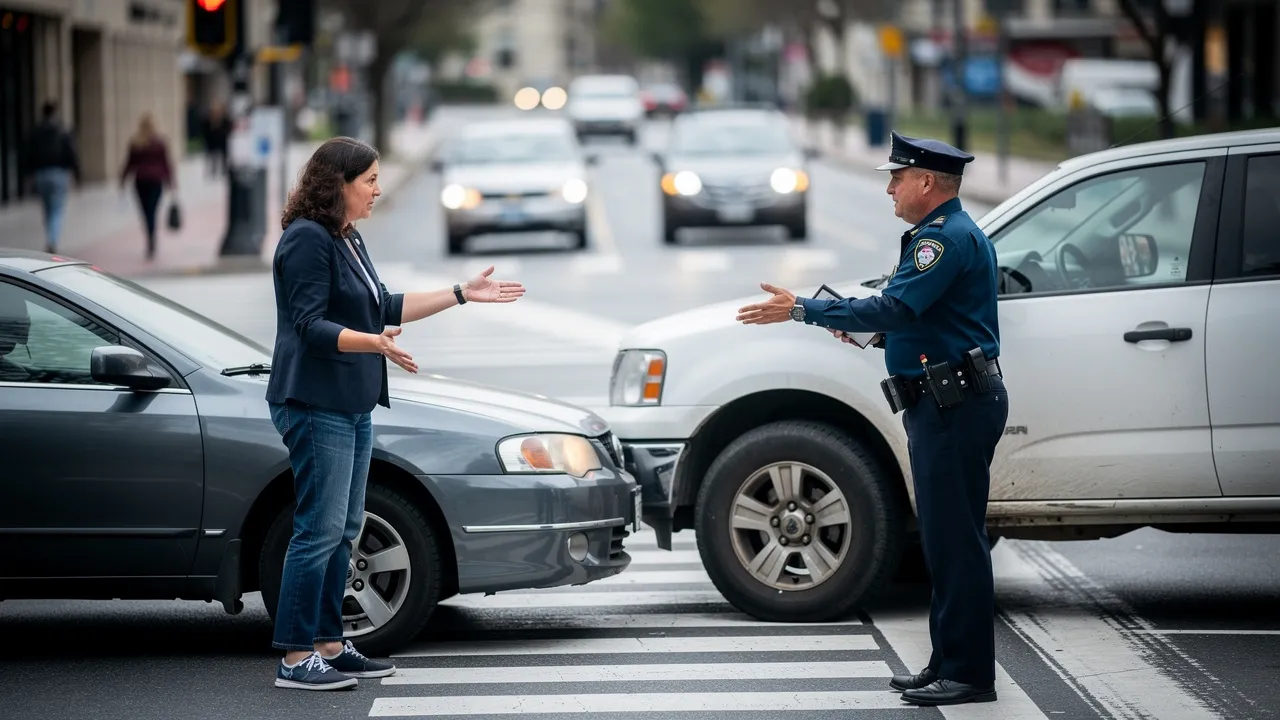
What negligence means after a New York collision
Negligence in a New York collision generally means failing to use the care that a reasonably prudent person would use under the same or similar circumstances, when that failure results in harm or injury. The question is not simply whether a crash occurred. The question is whether someone’s conduct fell below the level of reasonable care and caused a legally relevant injury.
A New York car accident claim may therefore involve a review of conduct, the circumstances surrounding the collision, the injuries being claimed, and the connection between the conduct and the harm. A collision can raise a negligence question without answering it. You need facts that help show what happened before anyone can responsibly decide whether the legal requirements are met.
This distinction matters when you are hurt as a driver, passenger, or pedestrian. Your account of the collision may be important, but it is only one part of the review. Available records, witness information, vehicle damage, medical documentation, insurance communications, and other details may bear on the questions that follow.
The word negligence describes a legal issue, not a label that should be attached automatically at the scene of a crash. The same type of event may require a different evaluation when the surrounding circumstances differ. Conditions before the collision, what each person could observe, the sequence of events, and the nature of the claimed injury can all affect the questions that need to be answered.
Reasonable care is judged in relation to the same or similar circumstances, not in the abstract. Conduct that deserves review after one collision may look different in another because the surrounding facts differ. For that reason, this general explanation cannot establish that you or another person was negligent. It gives you a way to organize the questions that a New York attorney may need to examine.
Separate a negligence question from a proven claim
A negligent tort is a legal claim or lawsuit alleging that negligent behavior caused harm or injury. After a collision, you may have a reasonable basis to ask whether another person’s conduct contributed to your injuries, but that question still requires factual and legal review.
The difference can be stated simply:
- A negligence question asks whether the available facts may show a failure to use reasonable care and a connection to harm.
- A collision report or insurance position may record what was reported, but it does not automatically resolve every issue about negligence, causation, or damages.
Treating a possible claim as having no value simply because fault is disputed can create the opposite problem. The useful step is to identify what is known, what remains uncertain, and what records may help answer the unresolved questions.
You can apply that distinction to every statement made after a crash. A person may say that another driver was at fault, an insurer may disagree, or a report may describe the event in limited terms. Each statement can become part of the record without settling the legal questions. Keep descriptions of what happened separate from conclusions about what the law requires.
New York litigation may require separate decisions about whether a defendant was negligent and whether that negligence proximately caused the claimed injuries. A jury may decide those questions in litigation. That possibility shows why the fact of an accident, by itself, does not determine the result of an injury claim.
Overview
A New York collision-related negligence review can be organized around five connected but separate subjects:
- Expected care: What level of care would a reasonably prudent person have used under the same or similar circumstances?
- Possible departure: What conduct, if any, may have fallen below that expected level?
- Causation: Did the conduct proximately cause the injury being claimed?
- Harm: What injury or other loss is being claimed, and what information documents it?
- Other New York rules: How might comparative-fault, no-fault, and serious-injury rules affect the legal analysis or the losses that may be recoverable?
These subjects should not be collapsed into one conclusion. The first four help organize the negligence inquiry. Comparative fault may affect damages even when another person’s conduct is also at issue. Automobile-insurance rules may impose separate conditions on what can be recovered. A clear review keeps those questions in their proper places.
The framework also helps you identify the difference between a missing fact and an unfavorable fact. A missing witness account may require further investigation. A fact that does not support your preferred explanation still belongs in the account. Both types of information can affect how the collision, injury, and possible claim are evaluated.
New York CPLR 1411 generally provides that culpable conduct attributable to a claimant does not automatically bar recovery; instead, damages otherwise recoverable are diminished in proportion to that conduct relative to the conduct that caused the damages. Those rules do not decide whether negligent conduct occurred. They address different parts of the claim.
Use four questions to organize the legal analysis
A four-question framework can help you discuss a collision without jumping to a legal conclusion. The framework is a way to sort information, not a decision about your case.
1. What care was expected?
The first question is what care a reasonably prudent person would have used under the same or similar circumstances. Negligence is measured against reasonable care, so the circumstances surrounding the collision matter. Your account should distinguish what you personally observed from what you later learned or inferred.
2. What conduct may have departed from that care?
The second question is whether the available information raises a possible departure from the expected level of care. Use cautious language at this stage. A fact that deserves investigation is not automatically proof that a legal breach occurred. The issue may depend on what happened, what was known at the time, and how the circumstances are interpreted under New York law.
3. Did the conduct proximately cause the injury?
The third question connects conduct to harm. It is not enough to identify behavior that appears careless in isolation. The review must also consider whether that conduct proximately caused the injuries being claimed. A medical record can document an injury, but the legal question may still require attention to how the collision and the claimed injury are connected.
4. What harm is being claimed?
The fourth question identifies the injury and other loss at issue. Medical treatment, symptoms, limitations, expenses, and other accident-related effects may need to be organized so that the claimed harm can be evaluated. This question does not assume that every reported loss is legally recoverable. It identifies what needs to be documented and reviewed.
Together, these questions let you move from a broad concern—“Who was at fault?”—to a more useful account of the facts. They also make it easier to see which issue remains uncertain. For example, you may have a clear account of the contact between vehicles but less information about how the injury developed afterward. That gap should be recorded as a question, not filled with an assumption.
New York litigation may place negligence and proximate cause before a jury as separate questions. That separation is practical as well as legal: conduct, causation, and injury should each have supporting information rather than being treated as one automatic conclusion.

Recognize conduct that may raise negligence questions
Conduct that may raise a negligence question should be described as a possibility until the facts are reviewed. Reckless driving can be an example of a negligent tort. That statement does not mean that every allegation of reckless driving proves negligence or that every collision involving a disputed driving decision has the same legal result.
You can start by asking focused questions:
- What conduct is being identified as a possible departure from reasonable care?
- What did you personally observe, and what information came from another source?
- Is there a record, photograph, witness account, or other material that bears on the conduct?
- Is the conduct being connected to a specific injury, or is that connection still uncertain?
Those questions keep the review tied to facts instead of labels. Calling conduct “negligent” at the beginning may conceal the more useful question: what happened, and what information supports that description?
Describe the conduct as precisely as you can. “The other vehicle struck mine” records an event. “The other driver was negligent” states a legal conclusion. Keeping those statements separate makes it easier to identify what still needs to be established.
A disputed description of conduct should remain a disputed description until it is evaluated. You do not need to decide the legal label while preserving what you know about the collision.
Ask whether the conduct and injury are connected
Causation asks whether the conduct being challenged proximately caused the injury being claimed. That question is separate from whether the conduct may have fallen below reasonable care. A person may identify conduct that deserves review and still need to establish how that conduct led to the particular injury or loss.
For your records, keep the sequence clear:
- What happened before the collision?
- What happened at the time of impact or contact?
- What symptoms, injuries, or limitations did you notice afterward?
- What treatment, testing, or other care followed?
- What other events might affect the claimed injury or loss?
This sequence is not a legal conclusion. It gives you a way to keep the collision account, medical information, and claimed effects connected without blending them together. It may also show where additional information is needed.
Timing can matter to the review. Record when symptoms began, when you sought care, what treatment followed, and how the condition affected your activities. Those entries do not prove causation on their own, but they preserve the sequence that must be considered when causation is disputed.
New York case law recognizes that factual issues about your conduct may matter when a defendant argues that your conduct was the sole proximate cause of the injury. In that circumstance, the defendant may argue that liability should not be imposed. The point is not that such an argument succeeds in every case. The point is that causation can remain contested even when you believe another person’s conduct was careless.
A fair review therefore asks both what another person may have done and whether the available facts connect that conduct to your claimed injuries. It should also preserve information that bears on the timing, diagnosis, treatment, and effects of the injury.
Account for the injured person’s own conduct
New York comparative-fault rules make your own conduct a separate question from whether another person may also have acted negligently. Under CPLR 1411, a claimant’s culpable conduct generally does not bar recovery. Instead, damages otherwise recoverable are diminished in proportion to the claimant’s culpable conduct relative to the conduct that caused the damages.
That rule does not tell you what percentage, if any, would apply to your circumstances. It also does not decide whether another person was negligent, whether the conduct caused your injury, or whether the claimed losses are recoverable. Those issues require individual review.
Your account should therefore include facts that may be uncomfortable or seem unfavorable, not only facts that support your position. Accurate information gives a New York attorney a better basis for identifying disputed issues and explaining what still needs to be evaluated. Preserving those facts is not an admission that you caused the collision or that recovery is unavailable.
Do not edit the account to make it sound more favorable. Record what you remember, identify what you do not know, and separate your observations from statements made by other people. That approach keeps the comparative-fault question open for proper review instead of turning uncertainty into an assumption.
Keep no-fault and serious-injury rules separate from negligence
New York automobile-injury rules address questions that are separate from whether negligent conduct caused a collision. They do not define reasonable care or prove that a driver was negligent.
This distinction matters because a possible negligence theory does not automatically answer what categories of loss may be pursued. You may need to examine both the conduct and causation questions and the rules that apply to the type of loss being claimed. Do not treat a discussion of fault as a substitute for reviewing the separate insurance and serious-injury issues.
A useful way to keep the issues separate is to ask two different questions: “What conduct may have caused the collision and injury?” and “What rules govern the losses I am seeking to recover?” The first question concerns negligence and proximate cause. The second may involve the New York automobile-injury rules described above. A complete review may need both, but the answers should not be assumed to be the same.
The existence of an injury does not by itself resolve either question. You still need to distinguish the fact of treatment from the legal categories of loss and distinguish a disputed account of conduct from a finding of negligence.
Preserve the facts that allow the questions to be evaluated
Accident and injury information is easier to evaluate when you preserve it in an organized form. Preservation does not prove negligence. It gives you a clearer record of what you know and helps identify questions that require legal review.
Create a practical record with these categories:
- Collision details: Write down the date, approximate time, location, weather or roadway conditions you observed, the direction of travel, and a factual account of what happened before and during the collision.
- People and vehicles: Record the names and contact information available for drivers, passengers, pedestrians, witnesses, and other involved people. Note the vehicles involved and any insurance information exchanged.
- Physical information: Keep photographs, videos, vehicle-damage information, repair records, and copies of any police, incident, or insurance documents available to you.
- Medical information: Save discharge papers, bills, appointment details, diagnoses, treatment instructions, prescriptions, and notes about symptoms or limitations. Keep the dates in order.
- Effects and losses: Record time missed from work, out-of-pocket expenses, changes to ordinary activities, and other effects that you are claiming resulted from the collision.
- Communications: Preserve written notices, claim numbers, insurer correspondence, recorded-statement requests, and messages concerning the accident or your injuries.
Use dates and direct observations where possible. If you are unsure about a detail, mark it as uncertain rather than filling the gap with an assumption.
Keep the original files when you can, including photographs in their original form and messages showing their dates. Do not discard documents because they appear repetitive or unfavorable. Put the materials in date order and make a short list of questions beside any item you do not understand.
A concise factual record can help you explain the collision without relying on memory alone. It can also show whether the unresolved issue concerns conduct, causation, the extent of the injury, insurance, or a separate claim rule. Keep the record secure and add documents as you receive them.

Do not overlook the no-fault notice issue
The New York no-fault notice rule addresses a separate time-sensitive issue after an injury-causing motor-vehicle accident. New York Department of Financial Services guidance says to file a written no-fault claim as soon as reasonably practicable and, in no event, more than 30 calendar days after the accident unless you can provide written proof clearly and reasonably justifying a late filing. This notice issue is separate from deciding whether another driver was negligent.
Do not treat the deadline as a reason to postpone action while you investigate every detail of the collision. Preserve the information you have, submit the written notice within the stated period when applicable, and keep a copy of what you sent and when you sent it. If the 30-day period has passed, the guidance refers to written proof of a clear and reasonable justification for late filing; that condition requires careful review rather than an assumption that the claim is automatically accepted or rejected.
For an accident occurring in New York State, New York guidance generally directs you to file the no-fault claim with the insurer of the vehicle you were in. If you were a pedestrian, it generally directs you to the insurer of the vehicle that struck you. Keep the accident location and your role in the collision clear because those facts affect which filing instruction may apply. When the circumstances do not fit those general situations, obtain advice about the appropriate filing path rather than guessing.
When a New York consultation may help
A New York consultation may be useful when you have preserved the available accident and injury information but still have questions about conduct, causation, insurance, or the rules that may affect a car accident injury claim. A qualified New York attorney must decide how those rules apply to your individual facts; this general explanation cannot determine negligence, eligibility, the serious-injury question, or the value of a claim.
At Bergman, Bergman, Fields & Lamonsoff, LLP, we provide emotional and logistical assistance to people affected by car accidents. We manage no-fault paperwork, insurance, and the serious-injury requirement for auto-accident cases in New York. Bring your collision account, available records, treatment information, insurance communications, and questions so the discussion can focus on the facts that remain unresolved.
A consultation can also help you separate questions that may otherwise become mixed together: what happened, what injury is being claimed, what notice has been provided, and what rules may affect recovery. You can use the organized record to explain the sequence and identify the points on which you need direct legal guidance.
If you have been hurt in an accident, we can discuss how assistance may be provided and what information is available for review. The practical next step is to keep your records together and address time-sensitive no-fault notice issues promptly.
Frequently asked questions about a New York car accident claim
What does negligence mean in a New York car accident claim?
It generally means that someone failed to use the care a reasonably prudent person would use under similar circumstances, and that failure resulted in harm. A collision alone does not establish negligence; conduct, causation, injury, and available evidence must be evaluated separately.
Can my own actions affect a New York car accident injury claim?
They may. Under New York’s comparative-fault rule, a claimant’s culpable conduct generally does not automatically bar recovery, but damages otherwise recoverable may be reduced in proportion to that conduct. The effect depends on the facts and does not by itself determine whether another person was negligent.
How soon should I address no-fault notice after a New York motor-vehicle accident?
If you were injured, file a written no-fault claim as soon as reasonably practicable and generally no later than 30 calendar days after the accident, unless written proof clearly and reasonably justifies a late filing. Keep a copy of the notice and its submission date. The appropriate insurer generally depends on whether you were in a vehicle or were a pedestrian.
Keep reading
More on Car Accidents
 Car Accidents
A Five-Part Answer Check for a New York Car Accident Consultation
Use a five-part record to decide whether a nearby New York car accident lawyer can address your unanswered claim questions.
Read article Car Accidents
How to Choose a Nearby New York Car Accident Law Firm: A Verification-First Guide
Choose an attorney firm near you for a New York car accident claim with a verification-first review and consultation checklist.
Read article Car Accidents
How to Prepare for a New York Car Accident Attorney Consultation
Prepare for a New York car accident consultation by organizing records and separating no-fault, injury, insurance, and fault questions.
Read articleHurt like this?
Tell us what happened.
We handle Car Accidents cases across Long Island, Queens and New York City. The consultation is free and you pay nothing unless we win.
- Answered 24/7
- No fee unless we win
- Hablamos español
Send us the details
Takes about a minute. Free and confidential.