Car Accidents
Car Accident Claims in New York: A Step-by-Step Guide to Reporting, Evidence, and Insurance
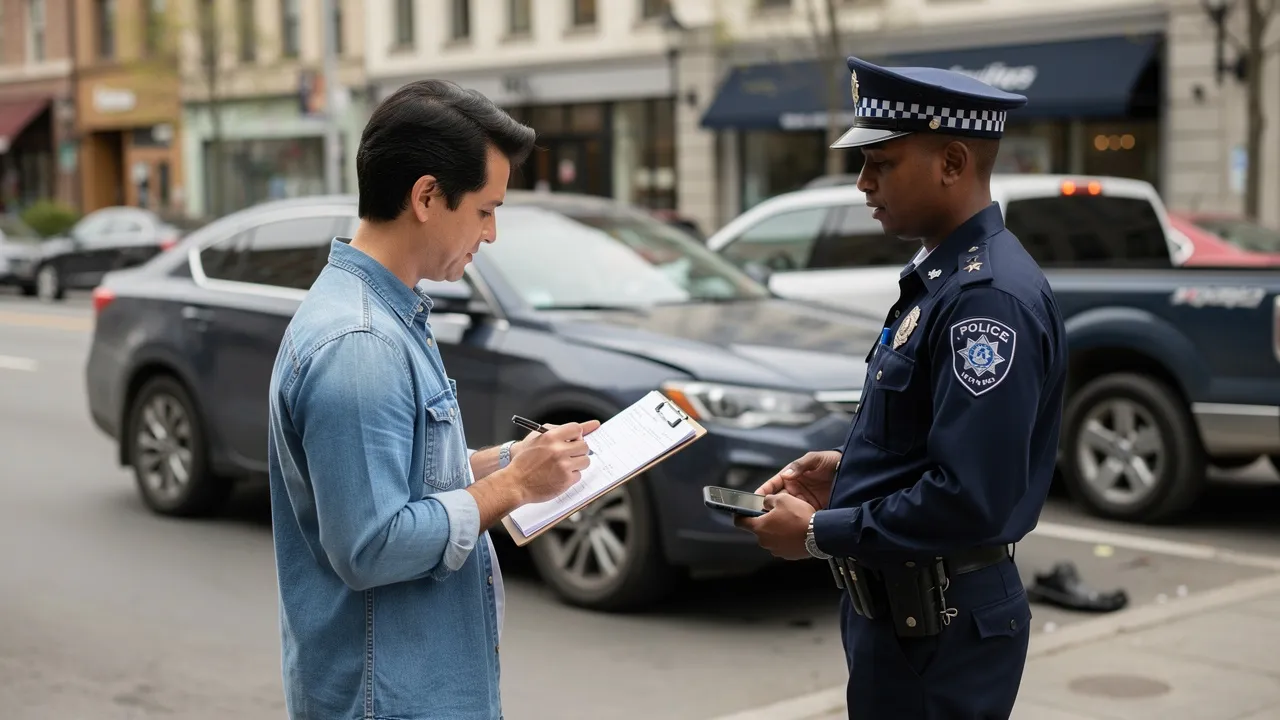
What to do first after a New York car accident
The first minutes after a New York car accident should focus on safety, emergency help, staying at the scene, and creating a reliable exchange of information. If anyone is injured or killed, notify the police immediately and make sure ambulance or rescue personnel are called. You must stop after a crash. Leaving a scene involving property damage is a traffic violation, while leaving a scene involving a fatality or personal injury is a criminal violation.
The immediate safety steps after a crash are straightforward:
- Do not move an injured person unless fire or another life-threatening danger makes movement necessary. If movement is necessary, keep the person’s back and neck as straight as possible.
- If wires are down, touching a vehicle, or lying near it, do not approach them. Warn people inside a vehicle to remain there until help arrives.
- Exchange your name, address, driver license number, vehicle registration, and insurance information with the other drivers and police. Include the insurance policy number and effective date.
- Write down what you know while the scene is fresh, but do not guess about facts you did not observe.
A calm, factual record gives you a better starting point for the reporting and insurance steps that follow.
Report the collision to police, your insurer, and the DMV
New York crash reporting involves separate communications with the police, your insurer, and the Department of Motor Vehicles. Promptly report the accident to your insurance company and the local police department. Reporting the crash to your insurer does not finish your legal obligation to report it to the DMV.
A DMV report is required for a crash involving a fatality or personal injury.
The DMV guidance says you must file the report within 10 days of the event. The 10-day period measures the time from the crash to the DMV filing. Failure to report can be a misdemeanor and can lead to suspension or revocation of a driver license or vehicle registration. Because the guidance differs on whether exactly $1,000 triggers the property-damage requirement, check the New York DMV’s current instructions or obtain qualified legal review before relying on that threshold.
The Report of Motor Vehicle Crash, or MV-104, is available through motor vehicle offices, most insurance agents, and the DMV website, and it can be submitted online. Your insurer will usually include the form with claim materials. To obtain a crash report, contact the local police agency or precinct where the collision occurred and ask whether the report is available and what fee applies. Keep the report number, submission date, and copies of everything you send.
Separate the police report request from the DMV filing in your notes. They are different records, and the date you requested a police report does not by itself document the date you filed the MV-104.

Open the No-Fault claim with the correct insurer
The correct No-Fault insurer generally depends on your position in the collision. If you were a driver or passenger in a vehicle involved in a New York accident, file with the insurer of the vehicle you occupied. If you were a pedestrian, file with the insurer of the vehicle that struck you. If the vehicle is unknown or uninsured, you may file with the insurer of a household family relative who had an auto policy when the accident occurred. If no auto policy existed in your household, file the No-Fault claim with the Motor Vehicle Accident Indemnification Corporation, or MVAIC.
A New York No-Fault claim requires written notice to the applicable insurer as soon as reasonably practicable and no later than 30 calendar days after the accident, unless written proof provides a clear and reasonable justification for the delay. For this notice requirement, the period begins the day after the accident. Give the insurer identifying information and reasonably obtainable details about the time, place, and circumstances of the collision.
Do not wait for every document before giving the required notice. The notice itself is meant to identify you and provide the accident details that are reasonably available at that point.
Once the insurer receives No-Fault notice, the insurer must request information that identifies you and the policyholder, along with reasonably obtainable accident details, so the claim can begin processing. After receiving any No-Fault claim notice, the insurer must mail NYS Form NF-2 within five business days. The insurer or MVAIC must also send an Application for Benefits and a letter explaining available No-Fault coverage, your rights, and your obligations within five business days after receiving the claim notice. Complete and return the application as soon as possible.
Keep the mailing date, delivery confirmation, completed application, and every page you submit. If you speak with the insurer by telephone, add the call date and the name or department to your claim log.

Build a dated incident file from original records
A dated incident file turns a stressful collision into a sequence you can explain. Keep original records where possible, save copies separately, and add the date to each entry. Your file should include:
- The date, time, location, weather or road conditions you personally noticed, and a plain description of what happened.
- Photographs of the vehicles, visible damage, the surrounding location, traffic controls, and any conditions relevant to the collision.
- Names and contact information exchanged at the scene, including driver license, vehicle, and insurance details.
- The police agency, precinct, report number, DMV filing information, and copies of the MV-104 and related submissions.
- Witness names and contact information, along with a note distinguishing what each person saw from what someone else told you.
- Medical records, bills, appointment information, prescriptions, and documentation of missed work or lost earnings.
- Every letter, email, claim number, estimate, request, and response from an insurer.
Medical documentation should identify the treatment as related to the auto accident. Tell your health care provider that you are being treated for injuries related to an auto accident, and keep the provider’s records with the rest of the file.
The crash report belongs in the file even when the police report is not yet available. Contact the local police agency or precinct to ask about availability and any fee, and record the date of your request. Keep the original photographs and documents in their original form before adding notes or highlights. A simple chronology can show what happened, which records exist, and which questions still need qualified review.
Use separate file sections for scene records, reporting, medical care, wage loss, vehicle damage, and insurer communications. Label each document by its date and keep a short note explaining what the document records. This makes it easier to distinguish an original observation from a later estimate or interpretation.
Keep injury benefits and vehicle damage on separate tracks
Injury-related benefits and vehicle-damage issues can follow different paths. No-Fault questions focus on the injured person, the vehicle occupied or involved, required notice, medical treatment, and supporting documentation. Vehicle-damage questions focus on the policy’s physical-damage coverage, the condition of the car, inspection, repair, and valuation. Keep separate sections in your incident file so a repair estimate does not become a substitute for medical or injury records.
New York auto-insurance rules provide that if your damaged or stolen car has collision or comprehensive coverage, you have a right to a prompt and fair settlement for either the damage amount or the car’s actual cash value, whichever is lower. If the damaged vehicle is available for inspection, the insurer must inspect it and make a good-faith offer within six business days after receiving notice of the loss. The six-business-day period measures the time after the insurer receives notice when the vehicle is available for inspection. You retain the right to choose the repair shop, even if the insurer identifies a shop that will repair the vehicle at the insurer’s estimated cost.
After you and the insurer agree on a settlement, the insurer must make payment within five business days. The five-business-day period measures the time after agreement on the settlement. For a total loss because a car was stolen or damaged beyond repair, New York insurance guidance describes payment of the actual cash value—retail value plus sales tax, subject to depreciation and applicable deductions—or replacement with a substantially similar car. The applicable policy, the loss category, and the vehicle’s condition affect which valuation rule applies. Ask for the written estimate or valuation and preserve it with your file before making a decision.
Communicate with insurers from documented facts
Insurance communication should begin with the facts needed to identify the claim and describe the collision. When an insurer receives No-Fault notice, it must request identifying information and reasonably obtainable details about the accident so it can begin processing the claim. Use a dated contact log for every call, email, letter, document request, and response. Record the name or department you contacted, the question asked, the answer given, and the next stated step. Keep communications limited to accurate, observed facts; do not make unsupported statements about fault, causation, injury extent, or claim value. If an insurer asks for information you do not understand, contact a qualified professional or the responsible authority promptly.
Your contact log should distinguish what each document establishes from what remains unanswered. Mark whether an entry concerns the crash itself, medical treatment, lost earnings, vehicle damage, or an insurance request. If you do not know an answer, mark the question as unresolved instead of filling the gap from memory. Keep copies of communications and label each response by the date received.
Check for a public-entity notice requirement
A claim against a municipality can involve a separate Notice of Claim requirement, so an ordinary police report or insurance notice may not complete every required step. For a claim against a municipality under New York General Municipal Law, a Notice of Claim generally must be served within 90 days after the claim arises, normally on the date of the accident or other event forming the basis of the claim. The 90-day period measures the time for serving that municipal notice, not the time for making an ordinary insurer report.
A New York municipal Notice of Claim must be written and sworn before a notary public. It must identify you and any attorney, describe the claim, specify when, where, and how the event arose, and state the claimed injuries or damages and dollar amount when practicable. If a municipality may be involved, preserve the public-entity information in your incident file and obtain qualified review promptly because the notice period and required contents are distinct from the No-Fault process.

Recognize when the claim needs qualified New York review
Use a practical checkpoint: the free consultation is a fit when the file includes difficult No-Fault paperwork, a disputed insurance issue, a serious-injury question, an uninsured driver, or practical difficulty managing the claim alongside injuries and other responsibilities. Bring the records that show what happened, what you reported, and what remains disputed.
We provide emotional and logistical assistance to people affected by car accidents. We manage No-Fault paperwork, insurance, and the serious-injury requirement for auto accident cases in New York. We operate 24 hours a day, 7 days a week. If the other driver is uninsured, you may still have options for recovery, although the available path depends on the facts and applicable coverage.
Bring your dated incident file to qualified review. Include the crash report information, exchanged insurance details, photographs, medical records and bills, lost-earnings documentation, repair estimates, insurer correspondence, and a short list of unanswered questions. Add a one-page chronology with the accident date, reporting dates, treatment dates, claim numbers, and pending requests. A concise chronology lets you begin with the sequence instead of reconstructing it during the conversation.
Bring the organized claim record to the next conversation
A protected New York collision claim begins with a safe scene and continues through prompt reporting, the correct No-Fault notice, separated injury and vehicle records, and careful communication. Keep the file dated and factual, preserve original documents, and treat every deadline as a separate obligation. Individual legal conclusions depend on the facts, applicable New York law, policy terms, injuries, and evidence; a qualified New York personal injury lawyer can evaluate those details with you. Bring the organized record so the next conversation can address your actual questions.
Questions about starting a New York car accident claim
Does reporting a New York crash to my insurer also satisfy the DMV reporting requirement?
No. Reporting the collision to your insurer does not complete a separate DMV obligation. When the DMV reporting requirement applies, use the MV-104 and file it within 10 days of the event. Confirm whether exactly $1,000 in property damage triggers the DMV reporting requirement with the New York DMV or a qualified New York personal injury lawyer.
When does the 30-day New York No-Fault notice period begin?
The period begins the day after the accident. Written notice should be given to the applicable No-Fault insurer as soon as reasonably practicable and no later than 30 calendar days after the accident, unless written proof clearly and reasonably justifies the delay. Keep proof of when you submitted the notice.
Can I pursue medical benefits and vehicle-damage coverage from the same crash?
They can involve separate claim tracks. Medical benefits generally require No-Fault notice, treatment records, and supporting medical or lost-earnings documentation. Vehicle damage depends on applicable physical-damage coverage, inspection, repair, and valuation. Keep the records separate and ask for written explanations of any insurer decision affecting either track.
What should I do if the other driver had no insurance?
Do not assume that the absence of the other driver’s insurance ends the process. If the vehicle is unknown or uninsured, you may be able to file with the insurer of a household family relative who had an auto policy when the accident occurred. If no auto policy existed in the household, file the No-Fault claim with the Motor Vehicle Accident Indemnification Corporation (MVAIC). The available options depend on the facts and applicable coverage.
Keep reading
More on Car Accidents
 Car Accidents
New York Accident Attorney: How to Decide Whether to Request a Consultation After a Crash
Learn when to contact a New York accident attorney, protect evidence, understand deadlines and fees, and prepare for a consultation.
Read article Car Accidents
Long Island Accident Lawyers: How to Choose the Right Representation After a Car or Truck Collision
Learn how to choose Long Island accident lawyers after a car or truck collision, prepare records, and request a consultation.
Read article Car Accidents
Car Accident Lawyer Near Me in New York: How to Compare Local Relevance and Prepare for a Consultation
Compare a New York car accident lawyer near you by local relevance, insurance experience, and consultation preparation.
Read articleHurt like this?
Tell us what happened.
We handle Car Accidents cases across Long Island, Queens and New York City. The consultation is free and you pay nothing unless we win.
- Answered 24/7
- No fee unless we win
- Hablamos español
Send us the details
Takes about a minute. Free and confidential.