Car Accidents
What Does Negligent Mean After a New York Car Accident?
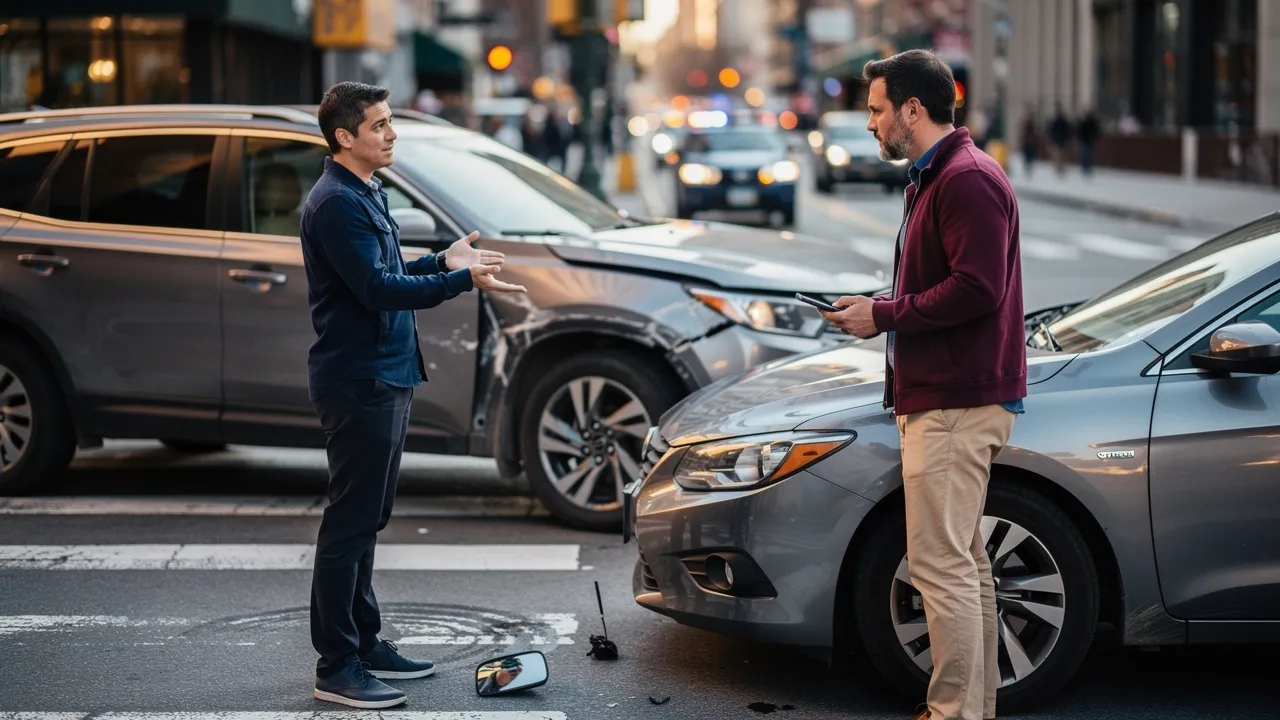
What “negligent” means in plain language
The word “negligent” means failing to use the reasonable care a careful person would use in the same situation when that failure causes harm to someone else. In an accident setting, the word points to conduct that may have fallen below the level of care the circumstances required. It does not, by itself, decide who is legally responsible.
A driver can make a poor choice without every detail being known about the road, traffic, weather, visibility, timing, and injuries. Those surrounding facts matter. The same action may look different when examined in context, which is why “negligent” is a starting description rather than an automatic finding of fault.
The word “negligent” has an everyday meaning and a legal application. In everyday language, “negligent” describes someone who is careless or who does not pay attention to a responsibility. In a car accident, the related legal concept asks whether a driver failed to act with the care a reasonably prudent driver would use under similar circumstances.
That distinction gives you a useful way to read an accident report, insurance communication, or legal document. A statement that someone was negligent may describe an alleged failure to use reasonable care, but it does not establish that the required legal elements have been proved. You still need to separate what happened, what the person was expected to do, and how the conduct connects to the harm.
How negligent, negligence, carelessness, and accidents differ
The terms “negligent” and “negligence” describe related but different things. “Negligent” is an adjective used to describe a person, act, or failure to act. “Negligence” is the legal concept of failing to behave with the level of care a reasonable person would have used under the same circumstances.
Carelessness is the ordinary-language idea behind the word “negligent,” but legal negligence requires more than a person feeling that an act was careless. The analysis asks about the responsibility involved, the level of care required, the conduct that allegedly fell short, and the harm connected to it. A conclusion should rest on those facts rather than on a label alone.
An accident is not automatically negligence. New York-focused legal guidance explains that some injuries are simply accidents rather than torts, and the analysis begins by asking whether the person or entity that caused the injury had a duty to take some level of care toward the injured person.
That boundary matters after a collision. A crash may leave you injured, frightened, or certain that something went wrong, yet the available facts may not show a breach of a legal duty. The absence of a negligence conclusion does not erase the injury; it means the responsibility question needs to be examined separately from the fact that a collision occurred.
Recklessness describes a different level of conduct from ordinary negligence. Both concepts can involve failing to act with reasonable care, but they differ in awareness, intent, and potential consequences. That difference can matter when legal responsibility is discussed, even though you should not decide from a short description which label applies.
A useful working distinction is simple: carelessness is the everyday description, negligence is the legal concept, and an accident may occur without negligence. Use these terms to organize questions, not to make a final determination about a particular driver.
How reasonable-driver standards apply to collision conduct
A car-accident negligence analysis compares the driver’s conduct with the care a reasonably prudent driver would have used under similar circumstances. The comparison is not against a perfect driver who never makes a mistake. It concerns the conditions present at the time, including what the driver did, what the driver could observe, and what a careful driver would reasonably have done.
For example, the question may involve speed, following distance, attention, lane position, traffic controls, or the decision to continue through a developing hazard. The word “may” matters here. An example can identify a question for review without proving that the driver’s conduct was negligent in your collision.
Negligent behavior can involve an action or a failure to act that breaks a duty of care owed to another person, when the person knew or should have known the conduct created a risk of harm. A person’s omission can be negligent only when that person had a duty to act.
This distinction helps you avoid treating every failure as legally meaningful. A driver’s decision to perform an unsafe maneuver is an action. Failing to respond to a developing traffic condition may be an omission. The legal question is whether a duty existed, what reasonable care required in that situation, and whether the conduct caused the injury—not merely whether you can describe something the person did not do.
Examples of conduct that may be negligent in a collision
Potentially negligent driving can include several kinds of conduct, but each example still requires a fact-specific review. Common examples include:
- Speeding or following another vehicle too closely.
- Driving while distracted or fatigued.
- Driving under the influence.
- Making an improper lane change or ignoring another traffic law.
- Running a red light or failing to observe a stop sign.
A driver who fails to observe a traffic signal, such as a red light or stop sign, may be negligent. The signal, the driver’s view, the traffic pattern, and the connection between the violation and the collision can all matter. Treat the example as a question to investigate, not as a conclusion about fault.
A pedestrian collision can involve potentially negligent driver conduct such as speeding, distracted driving, failing to yield at a crosswalk, or ignoring a traffic signal. Pedestrians also have a duty to exercise reasonable care for their own safety, and a pedestrian’s own negligence may affect the pedestrian’s ability to recover compensation.
That shared responsibility does not mean that a pedestrian is automatically at fault after being struck. It means the review should examine the actions and conditions involving everyone who may have contributed to the event. Crosswalk location, signals, visibility, traffic movement, and timing may be relevant facts, but the available information must be assessed before anyone reaches a legal conclusion.
Distracted driving is one example of conduct that can raise a negligence question. One published estimate reports that around 424,000 people are injured each year in accidents with distracted drivers. That figure describes people injured in distracted-driver accidents; it does not measure fault, prove causation, or predict the result of any individual New York collision.
The practical question after a crash is narrower: what was the driver doing, what could the driver see or perceive, and did that conduct contribute to the impact and resulting harm? Photographs, witness accounts, camera footage, and other records may help preserve the answer while the details remain available.

Why the facts must establish duty, breach, causation, and harm
The negligence question is commonly organized around four requirements: a duty of care, a breach of that duty, causation, and damages. In plain language, the analysis asks:
- Did the person or entity owe you a duty to take reasonable care?
- Did the conduct fall below the required level of care?
- Did that conduct cause the collision or injury?
- Did you suffer harm or loss that the law recognizes as damages?
A New York-focused explanation also emphasizes that some injuries are accidents rather than torts, so an injury alone does not answer the duty question. The four-part structure is a way to organize the facts; applicable law controls how those questions are applied.
Causation asks more than whether careless conduct happened before an injury. New York authority describes proximate-cause analysis as examining whether an act unreasonably threatened the safety of others and whether the injury was a proximate consequence of that act.
Reasonable-care analysis may also consider the foreseeable likelihood and severity of harm and the burden of precautions needed to reduce the risk. Those ideas help explain why timing, distance, visibility, traffic conditions, and the sequence of events can matter. A collision may follow conduct that seems careless, yet the legal analysis still must connect that conduct to the particular harm.
The facts of a collision determine whether the label “negligent” fits the conduct and the resulting harm. A description such as “the driver was distracted” may be only one part of the account; you may still need to understand when the distraction occurred, what the driver could perceive, and how the event unfolded.
For that reason, avoid treating a traffic violation, an injury, or an insurance disagreement as a complete negligence analysis. Each fact should be connected to the duty, the alleged breach, the causal sequence, and the harm. If an essential link remains uncertain, a qualified review can help identify the question that still needs an answer.
How shared responsibility can affect the analysis
Comparative negligence can reduce the damages a plaintiff recovers according to the degree of negligence each party contributed to the incident. When an injured person was partially at fault, a court may assign percentages of fault to both the injured person and the defendant.
This means that another person’s possible negligence is not always the only question. The review may also consider whether your own conduct contributed to the event and, if so, how the applicable law treats that contribution. Do not turn that general principle into a percentage estimate for your own collision without a case-specific legal analysis.
A comparative-negligence illustration assigns 60% of fault to the defendant and 40% to the plaintiff; in that example, the plaintiff may recover 60% of the damages rather than the full amount. The 60% and 40% figures measure the parties’ assigned shares of fault in that illustration, not the likely allocation in your case.
The example shows why an injured person should preserve facts about every participant’s conduct instead of assuming that an injury automatically establishes full recovery. The actual analysis depends on the evidence, the parties, the alleged duties, the causal connection, and the law that applies to the matter.

What to do first after a collision or injury
Immediate safety comes before deciding who may have been negligent. If you face an emergency, an unsafe scene, or an urgent medical concern, seek immediate qualified help and contact the responsible authority promptly. Do not delay emergency assistance while trying to settle the fault question at the scene.
After the immediate safety issue is addressed, use a short checklist:
- Write down what you remember about the collision, including the sequence of events and the conditions you observed.
- Identify witnesses and preserve their contact information when it is available.
- Take photographs of the scene, vehicles, visible conditions, and injuries when you can do so safely.
- Note whether traffic-camera or nearby security-camera footage may exist.
- Keep the police report and other records connected to the collision.
These steps do not prove negligence by themselves. They help preserve information that may support a driver-negligence claim.
A collision response should protect the accuracy of your account. Describe what you observed and separate direct memory from assumptions.
Do not treat a missing photograph, witness, or camera recording as proof that a particular account is correct. Instead, record what evidence exists and what remains uncertain. Photographs, traffic-camera footage, witness statements, a police report, and potentially nearby security-camera footage may support a driver-negligence claim, so preserve each available item and keep the basic chronology together.
When a New York collision warrants qualified legal guidance
A New York collision warrants consideration of qualified legal guidance when you have an injury, symptoms that appear or worsen, uncertainty about immediate safety, disputed accounts, or concerns that important evidence may be incomplete or changing. Those circumstances do not establish that you have a claim. They indicate that a general definition may not answer the questions raised by your situation.
Prompt guidance may also be useful when you cannot tell whether the event was an accident, a breach of duty, or a cause of the harm. A qualified New York personal injury attorney can examine the available account and help frame questions about duty, reasonable care, causation, damages, and applicable law without promising eligibility or an outcome.
A legal review can begin with a focused account rather than a conclusion. Prepare the basic facts you know:
- When and where the collision or injury occurred.
- Who was involved and what each person appeared to do.
- What injuries or symptoms followed.
- Which photographs, witness details, reports, or camera information remain available.
- What facts are disputed or still uncertain.
This information gives the discussion a factual starting point. You do not need to decide that another person was negligent before asking what the available facts may show.
Discuss the collision with your preserved records ready
The word “negligent” should help you organize the questions after a New York collision, not replace the analysis. Preserve your account and available records, seek immediate qualified help when safety or urgent medical needs require it, and avoid making a final liability decision from a label alone.
Only a qualified professional who reviews the specific facts and applicable law can advise you about your situation. Bring your basic account, injury information, and preserved evidence when you seek that review.
Questions to clarify before discussing a possible negligence issue
What evidence can help show potentially negligent driving?
Useful records may include photographs of the scene, vehicles, visible conditions, and injuries; witness contact information; the police report; traffic-camera footage; and potentially nearby security-camera footage. Preserve what is available without treating any single item as conclusive proof of fault.
What should I avoid doing after a New York car accident?
After immediate safety needs are addressed, avoid arguing about fault, guessing about facts you do not know, or making a premature admission that you caused the collision. Describe what you observed, separate memory from assumptions, and preserve the basic chronology and available records.
Can my own conduct affect a negligence claim after a collision?
It may. Comparative negligence can lead to fault being assigned to more than one participant, and the amount recovered may be reduced according to each party’s assigned share under the applicable law. That general principle does not determine how fault would be allocated in a particular case.
When should I discuss a New York collision with a qualified personal injury attorney?
Consider seeking qualified guidance when someone is injured, symptoms appear or worsen, the accounts are disputed, important evidence may be incomplete or changing, or you cannot tell whether the event involved a breach of duty or caused the harm. A case-specific review can assess the available facts and applicable law without assuming eligibility or an outcome.
Keep reading
More on Car Accidents
 Car Accidents
New York Accident Attorney: How to Decide Whether to Request a Consultation After a Crash
Learn when to contact a New York accident attorney, protect evidence, understand deadlines and fees, and prepare for a consultation.
Read article Car Accidents
Long Island Accident Lawyers: How to Choose the Right Representation After a Car or Truck Collision
Learn how to choose Long Island accident lawyers after a car or truck collision, prepare records, and request a consultation.
Read article Car Accidents
Car Accident Lawyer Near Me in New York: How to Compare Local Relevance and Prepare for a Consultation
Compare a New York car accident lawyer near you by local relevance, insurance experience, and consultation preparation.
Read articleHurt like this?
Tell us what happened.
We handle Car Accidents cases across Long Island, Queens and New York City. The consultation is free and you pay nothing unless we win.
- Answered 24/7
- No fee unless we win
- Hablamos español
Send us the details
Takes about a minute. Free and confidential.