Car Accidents
Comparative Negligence After a New York Car Accident: Fault, Evidence, and Your Next Steps
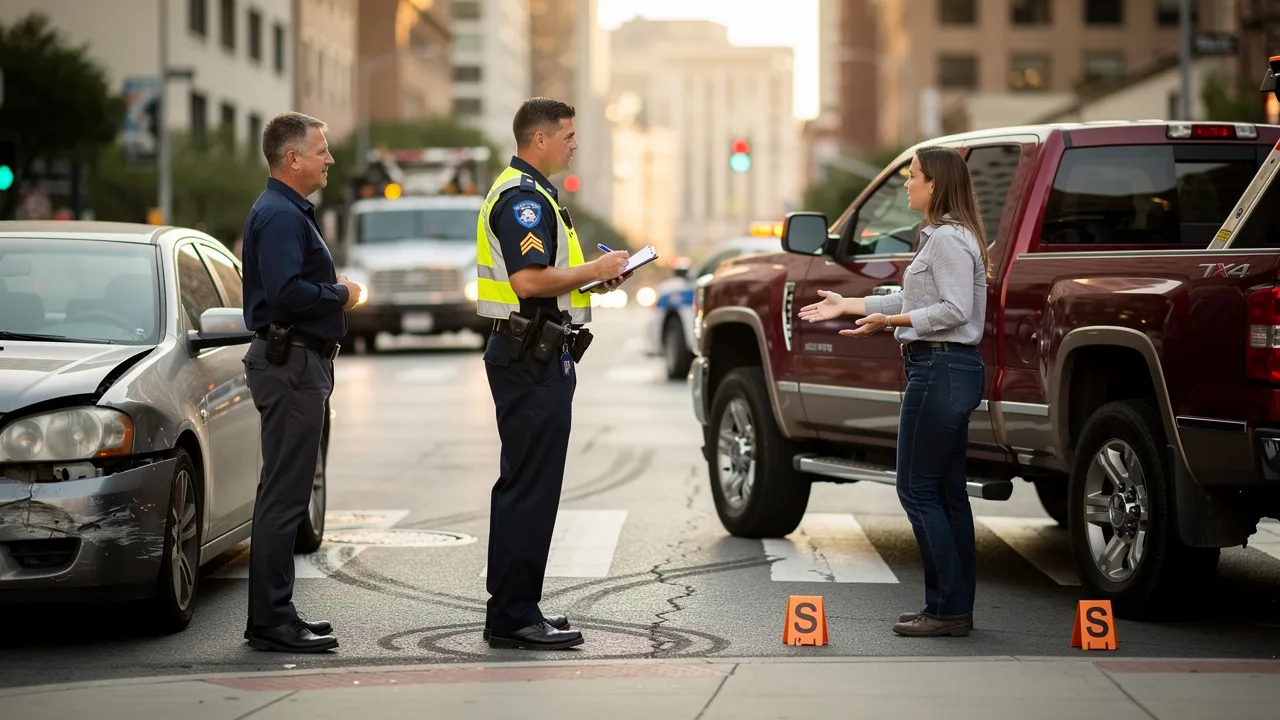
Start With the Fault Question
Comparative negligence matters after a New York car or truck collision because the question is not limited to what happened to your vehicle. The responsibility assigned for the collision can affect who is responsible for injury-related and property-damage damages. Drivers, passengers, and pedestrians may each face questions about whether their conduct contributed to a collision, but the answer cannot be determined reliably by guessing at a percentage from a first account of the crash. The examples in this guide do not establish a reliable general percentage for how often comparative-negligence disputes arise in New York motor-vehicle claims.
A useful starting point is to separate three tasks:
- identify the conduct that may have contributed to the collision;
- preserve the records that may show what happened; and
- obtain case-specific guidance before responding to a disputed allegation of fault.
Those tasks keep the focus on the collision record rather than on an unsupported conclusion about your share of responsibility.
A New York court matter shows why the percentage can matter without deciding anything about your collision. In Bortugno v. Schindler Elevator, the court reduced Mr. Bortugno’s damages by 20%, an amount identified as $1,528,000, for comparative fault. The court document stated that the plaintiffs’ cumulative recovery was adjusted to $6,112,000. The figures describe that particular New York case, its parties, and its verdict; they do not predict the value or result of a car-accident claim.
The practical point is narrower: a fault allocation can change a damages award after the underlying responsibility and damages questions have been decided. Your task at the outset is to preserve the facts that may bear on that allocation.
This guide explains the percentage concept, separates general comparative-negligence models from the governing framework for a New York claim, and gives you a way to organize the collision record. If responsibility for your crash is disputed, contact a qualified New York personal injury lawyer promptly for case-specific guidance. Use the information to decide what questions require focused legal attention.
Translate Comparative Negligence Into Percentages
Comparative negligence is a legal principle under which a court may reduce damages according to each party’s degree of negligence. A court may assign percentages of fault to both an injured person and another party when the injured person’s conduct is found to have contributed to the incident. If you are found partly at fault, your compensation may be reduced by the percentage assigned to you.
That calculation is not the same as saying that you caused the entire collision. It is a way of expressing how responsibility is divided under the applicable legal framework. The assigned percentage must be tied to the facts and the parties involved; it should not be treated as a label based on an insurance conversation or an incomplete scene description.
A simple illustration makes the structure easier to see. If a court assigns 60% fault to the defendant and 40% fault to the plaintiff, the plaintiff may recover 60% of the damages rather than the full amount. The 60% figure measures the defendant’s assigned share, while the 40% figure measures the injured plaintiff’s assigned share in that example.
A separate pure-comparative-negligence explanation uses an even more extreme illustration: a plaintiff assigned 99% fault may claim damages for the 1% attributed to the other side, subject to the assigned-fault reduction. These are models and examples, not conclusions about your collision.
The percentage can therefore affect the amount that remains after fault is allocated. The percentage does not, by itself, establish what your total damages are, which parties may be responsible, or which legal rule applies. Those questions depend on the collision facts, the available record, and the governing law.

Separate General Models From a New York Claim
The governing negligence framework matters because whether and how much you may recover when your own actions contributed to an injury depends on the applicable state’s rules. General comparative-negligence explanations describe more than one approach, including models that use different fault thresholds. A general description should not be treated as a current determination of which threshold controls a New York claim.
The general models can be set out this way:
| General model | Fault threshold described | Effect described in the source |
|---|---|---|
| Pure comparative negligence | Recovery may remain available even when the injured person is more than 50% at fault | Damages are reduced by the injured person’s assigned percentage of fault |
| Modified comparative negligence | Recovery is available only when the injured person’s fault is less than 50% under the described rule | At 50% or more fault, recovery is barred under that rule |
| A different bar-rule description | Some explanations use a 51% threshold instead of a 50% threshold | Recovery is barred at 51% or more fault under the described rule |
The table describes general models and the thresholds stated in general legal explanations. It does not select a New York rule for your claim.
The useful question is not, “Which percentage should I assume?” The useful questions are: What law governs the claim? How is fault being alleged? Which facts support or contradict that allegation? What parties and sources of responsibility must be considered? Keep those questions open until the applicable framework and the collision record are examined together.
Use Collision Facts as Questions, Not Conclusions
Collision conduct can raise shared-fault questions without answering them. For illustration, one scenario describes a driver who was speeding and another driver who ran a red light, with both actions contributing to the collision. The example assigns 30% responsibility to the speeding driver and 70% to the driver who ran the red light. The 30% and 70% figures belong to that illustration; they are not a way to estimate your fault from a similar-sounding event.
Your account should therefore preserve the underlying details: the direction each vehicle traveled, traffic controls, lane position, speed information, impact location, road conditions, and what each person did before the collision. Describe what you know. Do not turn an uncertain memory into a percentage.
Distracted driving can create another factual question. Proving that a driver was texting can be challenging but may be achievable when evidence is preserved and applicable legal deadlines are respected. That statement does not establish that texting occurred in your crash. It identifies why device-related allegations should be connected to records and other facts rather than repeated as assumptions.
General fault models can also produce stark examples. Under the modified comparative-negligence rule used in this illustration, a person found 55% at fault would receive no compensation under that rule. Another illustration says that if a jury found you 20% responsible and the defendant 80% responsible, your compensation would be reduced by 20%.
Those examples show why the legal model and the factual allocation must be kept separate. Neither example tells you whether a court would assign fault in your case.
See How the Record Can Affect the Fault Allocation
The assigned fault percentage directly affects the final compensation amount, and even a small shift in that percentage can significantly change the payout. An insurer may argue that you bear a larger share of responsibility, which can reduce the insurer’s financial responsibility. That allegation is a position to test against the collision record, not a finding that you should accept without examination.
A damages illustration shows the arithmetic without applying it to your claim. With $100,000 in damages, a 20% fault assignment would reduce the illustrated recovery to $80,000. If the assigned fault increased to 40%, the illustrated recovery would fall to $60,000. Here, $100,000 measures the hypothetical total damages, 20% and 40% measure the hypothetical shares assigned to the injured person, and $80,000 and $60,000 measure the corresponding illustrated recoveries.
The arithmetic does not establish the amount of your damages or the percentage that should apply. It shows why preserving facts that may move the allocation can matter.
When an insurer raises comparative negligence, compare the allegation with the complete record. Look for details that support or challenge the proposed account rather than trying to negotiate from an assumed percentage.
Build a Collision Evidence File Before Seeking Advice
A collision evidence file gives you one place to organize the information already available about the crash, your injuries, and communications about the claim. Preserved evidence can matter when the responsibility record is disputed; the file is an organizational aid, not a promise that any item will prove fault or establish a recovery.
Create the file in this order:
- Accident records: Keep the report or incident information you received, the date and location, vehicle details, insurance information, and any exchange of contact information.
- Medical documentation: Gather records, discharge papers, bills, prescriptions, appointment information, and notes describing symptoms or treatment after the collision.
- Photographs and video: Preserve scene, vehicle, roadway, traffic-control, visible-injury, and property-damage images in their original form when possible. Keep the date or other identifying detail with each item.
- Witness information: Record names, contact details, and a short note about what each witness said they saw. Separate your memory from another person’s account.
- Insurer communications: Save letters, emails, claim numbers, recorded-interview requests, texts, and notes of calls. Keep copies of anything you send.
Use one chronological folder or digital file and add materials without rewriting the originals.
A useful timeline should identify what happened before the impact, the impact itself, immediate symptoms, medical care, vehicle or scene changes, and communications that followed. Mark uncertainty plainly. “I do not remember” is more accurate than filling a gap with a guess.
Preserve potentially relevant material instead of deleting, discarding, cropping, editing, or overwriting it. If a phone, vehicle, camera, or account contains original information, keep the original source and make a separate copy for ordinary use. Do not contact a witness to pressure them into changing an account.
The organized file should help you answer basic questions quickly: where the collision occurred, who was involved, what was observed, what treatment followed, and what an insurer has asked you to say or provide. It does not need to contain a finished legal theory. Its immediate use is to keep details together so that later questions can be addressed from the same record.

Take the First Safe, Verifiable Steps
Your first steps after a collision should protect immediate safety and preserve an accurate account. Address emergency medical needs and immediate hazards before trying to analyze comparative negligence. Once those needs are handled, record what you know, collect available information, and keep the evidence file organized.
Use this short sequence:
- obtain emergency help for urgent injuries or unsafe conditions;
- follow the medical instructions you receive and keep the related records;
- write down the sequence of events while your memory is available, separating observation from assumption;
- preserve photographs, witness information, accident records, and insurer communications; and
- avoid discarding or altering potentially relevant material.
Insurance communications deserve particular care when fault is disputed. Insurance companies often argue that the injured person bears greater fault, which can reduce the insurer’s financial responsibility. Do not guess about speed, distance, traffic signals, visibility, or your own responsibility simply to make an answer sound complete. Give only an accurate account of what you know, and keep a copy of what you provide.
Comparative negligence assigns each party a percentage of fault, and an injured person’s compensation may be reduced by the percentage assigned to that person. That principle does not tell you what to admit, deny, or estimate in a particular communication.
The effect of a percentage depends on the legal model and the facts. For illustration, a person assigned 70% fault with total damages of $100,000 could still recover $30,000 after a 70% reduction under a pure-comparative-negligence model. In another illustration, a jury’s assignment of 20% responsibility to the injured person would reduce compensation by 20%.
The $100,000, 70%, $30,000, and 20% figures belong to those examples. They are not a calculation of your damages or a reason to concede fault.
If comparative negligence is raised, consider seeking early legal guidance about how fault is being assigned and how to respond to the allegation. Prompt attention is especially sensible when an insurer presents a recorded statement, requests a broad release, disputes the account of the collision, or points to conduct you do not understand or cannot verify.
Recognize When Case-Specific Evaluation Is Appropriate
Case-specific evaluation becomes appropriate when the responsibility record has more than one plausible path. Warning signs include a disputed account of the crash, conflicting witness information, uncertainty about which driver or vehicle contributed, an insurer’s demand that you accept a fault percentage, or a passenger claim involving more than one potentially responsible driver.
A New York court passage states that a passenger’s interests may be seriously compromised if a potentially responsible driver is not named as a defendant. The same passage says the passenger could collect nothing in the cited matter if a jury found the truck driver not negligent or not a substantial factor and the passenger’s driver had not been named as a defendant. That passage concerns its own parties and procedural posture; it is not a conclusion about your claim.
Passengers should therefore identify every vehicle and driver connected to the collision instead of assuming that the most visible vehicle is the only possible source of responsibility. Drivers and pedestrians should likewise preserve information about vehicle movement, traffic controls, witnesses, and communications that may clarify the competing accounts.
The question is not whether you can assign fault on your own. The question is whether the available record contains an unresolved responsibility issue that should be addressed before you make a statement or accept an insurer’s position.
The 2019 date and the notice finding belong to that elevator case, not to a car accident. Its limited lesson here is that responsibility questions turn on the facts and parties in the particular matter.

Request a Consultation With the Organized Record
Your organized collision file gives you a practical basis for discussing disputed fault: preserve the accident information, medical documentation, photographs, witness details, and insurer communications; separate what you observed from what you assume; and bring unresolved questions about responsibility to a qualified New York personal injury lawyer. A qualified professional must decide how the law applies to your facts, what parties and evidence require attention, and whether representation is appropriate. No percentage example can promise compensation or a particular result.
At Bergman, Bergman, Fields & Lamonsoff, LLP, we protect injury victims’ rights after car accidents. We operate 24 hours a day, 7 days a week. To take the next step, request your free consultation and submit the organized collision information for case-specific review; the request does not guarantee representation, compensation, or an outcome.
Questions About Comparative Negligence After a New York Collision
What is comparative negligence after a New York car accident?
It is a legal principle under which a court may assign fault percentages to the parties. If the injured person is found partly responsible, damages may be reduced by that assigned percentage. The applicable New York legal framework, evidence, parties, and facts must be evaluated before any percentage can be applied.
Can comparative negligence affect a passenger’s claim when more than one driver may be responsible?
It can raise questions about every driver and vehicle connected to the collision, not just the vehicle that appears most visibly involved. A passenger’s interests may be affected if a potentially responsible driver is not considered. Preserve the information for each vehicle, driver, witness, and insurer communication, and seek case-specific guidance before accepting one account of responsibility.
What should I preserve if an insurer says I caused part of the crash?
Keep the accident or incident records, medical documentation, original photographs or video, witness information, and all insurer communications. Add a chronological account that separates what you observed from what you assume. Do not discard, edit, or overwrite potentially relevant material, and avoid guessing about speed, distance, traffic signals, or your share of fault when responding.
Keep reading
More on Car Accidents
 Car Accidents
New York Accident Attorney: How to Decide Whether to Request a Consultation After a Crash
Learn when to contact a New York accident attorney, protect evidence, understand deadlines and fees, and prepare for a consultation.
Read article Car Accidents
Long Island Accident Lawyers: How to Choose the Right Representation After a Car or Truck Collision
Learn how to choose Long Island accident lawyers after a car or truck collision, prepare records, and request a consultation.
Read article Car Accidents
Car Accident Lawyer Near Me in New York: How to Compare Local Relevance and Prepare for a Consultation
Compare a New York car accident lawyer near you by local relevance, insurance experience, and consultation preparation.
Read articleHurt like this?
Tell us what happened.
We handle Car Accidents cases across Long Island, Queens and New York City. The consultation is free and you pay nothing unless we win.
- Answered 24/7
- No fee unless we win
- Hablamos español
Send us the details
Takes about a minute. Free and confidential.