Pedestrian Accidents
How to Prepare for a New York Pedestrian Accident Attorney Consultation
Decide what you need from a pedestrian-accident consultation
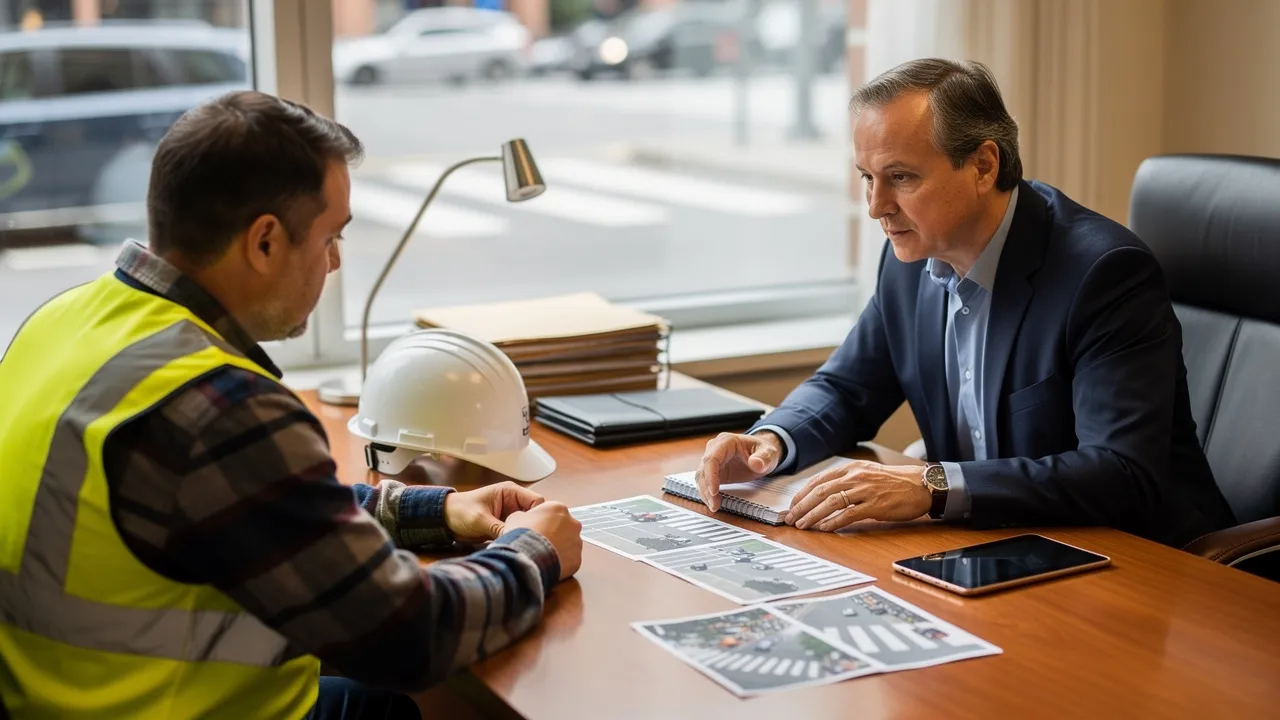
A New York pedestrian-accident consultation gives you a structured opportunity to explain what happened, organize the information you already have, and identify questions that require an attorney’s review. You do not need to arrive with a finished legal theory. Start with a clear account of the crash, the injuries and medical care that followed, the people who may have seen what happened, and the insurance information connected with the incident.
Your goal before the meeting is organization, not certainty. Write down the facts while they are available to you, keep related documents together, and separate what you personally observed from what someone else told you. If a detail is uncertain, mark it as uncertain rather than filling in the gap from memory or assumption.
A useful preparation plan has four parts:
- Create a timeline of the accident, emergency response, medical care, and communications that followed.
- Collect the records, photographs, contact details, and insurance information already in your possession.
- List the questions you want answered about investigation, communication, fees, costs, and next steps.
- Compare prospective attorneys by asking about experience with pedestrian cases similar to yours.
The information you bring can help make the conversation more focused. It does not, by itself, establish who was responsible, whether you can bring a claim, what compensation might be available, or whether a particular deadline applies. Those questions depend on your circumstances and the applicable New York law.
You can prepare even if some information is missing. Note what you do not have, record where you last saw it, and explain the gap during the consultation. A missing photograph or unknown insurance detail should become a question on your list, not a reason to reconstruct events inaccurately.
If a family member is helping you prepare, ask that person to keep your materials in one folder and distinguish the information you provided from any separate recollection. This is especially useful when pain, medication, stress, or a hospital stay made it difficult to keep a complete account. The purpose of the folder is practical: it lets you and the attorney work from the same basic set of facts and identify what still needs attention.
What a pedestrian accident attorney can help you evaluate
A pedestrian-accident attorney can use an initial consultation to examine the relationship among the roadway events, your account of the impact, your injuries, your medical records, available witnesses, and the insurance information connected with the incident. The discussion should focus on your actual circumstances rather than on a generic answer about every pedestrian collision.
Bring the story in chronological order. Begin with where you were walking, how you approached the roadway, what traffic controls or crosswalk markings you observed, and what you remember immediately before contact. Continue through the impact, the response at the scene, transportation for medical care, later treatment, and communications with drivers, insurers, employers, or family members. If you do not remember part of the sequence, say so plainly.
The attorney may need to distinguish several questions that are easy to combine:
- What happened at the roadway and what can be supported by available records or witnesses?
- What injuries were identified, what care did you receive, and what information remains outstanding?
- Which drivers, vehicle owners, insurers, witnesses, or other participants may need to be identified?
- What documents or communications should be preserved for further review?
- What questions about the claim cannot be answered until the facts and records are examined more closely?
This process is not a promise that your claim will succeed. It is a way to put the known facts and unresolved questions in front of counsel so that the next discussion is based on your situation.
You can make the conversation more useful by bringing both favorable and difficult facts. Include facts that may complicate your account, such as uncertainty about the signal, a gap in treatment, a conversation you had with an insurer, or a delay in locating a witness. An attorney who hears the complete account can tell you which issues require more information and which records may help address them.
You also do not need to use legal terms. Describe what you saw, heard, felt, did, and received in ordinary language. A statement such as “the car stopped, then another vehicle moved around it” gives the attorney a factual starting point. A conclusion such as “the driver was automatically liable” does not replace the underlying details.
For construction workers and families in New York, a pedestrian collision may also intersect with a worksite commute, a delivery, or another work-related circumstance. Record that context if it applies to you, but do not assume that the work connection determines the legal character of the incident. Let the attorney examine how it fits with the rest of the facts.
Start with the New York crash facts
New York law provides a factual starting point for discussing a pedestrian collision. As of November 6, 2026, when traffic-control signals are absent or not operating, New York law generally requires a driver to yield to a pedestrian crossing within a crosswalk on the roadway where the vehicle is traveling, subject to statutory exceptions. The statute also addresses the pedestrian’s conduct: a pedestrian may not suddenly enter a vehicle’s path when the vehicle is so close that yielding is impractical. When a vehicle has stopped for a pedestrian at a marked crosswalk or an unmarked crosswalk at an intersection, a vehicle approaching from behind may not pass the stopped vehicle.
Those provisions help identify details to discuss, but they do not turn a short description into a liability decision. The consultation should therefore address the specific location, the presence or operation of signals, the type of crosswalk, the movement of each vehicle, the point at which you entered the roadway, and what each person could observe. The attorney may also need to examine photographs, video, witness accounts, traffic records, or other available material.
Before the meeting, write down the roadway facts in separate sentences rather than blending them into a conclusion. Your notes can answer questions such as:
- Where were you standing or walking immediately before you entered the roadway?
- Was there a marked crosswalk, an unmarked intersection crosswalk, a pedestrian signal, or another traffic-control signal?
- Was the signal operating, and what did you observe it display?
- Which direction did each vehicle travel, and did another vehicle stop nearby?
- Did you see a driver approach from behind a stopped vehicle?
- What lighting, weather, visibility, or obstructions do you remember?
- Did anyone at the scene describe what happened, and can that person be identified?
Do not change an uncertain memory into a definite fact to make the timeline sound complete. Mark the point as uncertain and take it to the consultation. That distinction can be more useful than an overconfident reconstruction.
A crosswalk provision is one part of the factual and legal review. It does not answer every question about a pedestrian collision, and it does not establish that any particular person is entitled to recover. Keep the statutory language beside the concrete scene details, then ask the attorney how the provision may relate to the facts that can be documented.
Record what happened at the scene
New York DMV guidance states that a person involved in a crash must stop, regardless of the level of damage. Leaving a New York traffic incident involving property damage is described as a traffic violation, while leaving an incident involving personal injury or a fatality is described as a criminal violation. After a crash involving other drivers, the people involved must exchange identifying and insurance information with the other drivers and police, including a name, address, driver license number, vehicle registration, insurance policy number, and effective date.
If you are preparing after the event, record what happened at the scene as accurately as you can. Note whether police, emergency medical personnel, a driver, a passenger, a coworker, or a bystander was present. If you received a report number, card, receipt, or other document, place it with your consultation materials. If you did not receive one, write down that fact and any identifying information you do remember.
Create a scene record with these separate entries:
- The date, approximate time, and location, including the nearest intersection or landmark.
- The direction in which you were walking and the direction of each vehicle you remember.
- The location of the crosswalk, curb, traffic signal, stop sign, or other visible roadway feature.
- The names, descriptions, or contact details of drivers, passengers, witnesses, police officers, and emergency personnel, if available.
- The vehicle make, model, color, license plate, or other identifying detail you recorded.
- The place where you received first aid or emergency transportation, if that occurred.
- Any statement you made to police, a driver, a witness, an employer, or an insurer, together with the approximate date and method of communication.
Do not rely on one person’s memory to fill in every part of the scene. List your own recollection separately from information supplied by a family member or witness.
If you still have clothing, a damaged personal item, a police card, photographs, or other material from the scene, keep it in its existing condition and record where it came from. Do not edit photographs or videos before saving the original file. If someone else has a photograph or recording, write down that person’s name and the date you learned about it.
They give you a clearer account to discuss and help identify what information may need to be requested or located.
Organize injury and medical information
Your injury and medical information should be organized as a timeline, not reduced to a single diagnosis or a prediction about recovery. Begin with the symptoms or injuries you noticed at the scene. Then list emergency treatment, later appointments, testing, prescriptions, therapy, follow-up instructions, and any change in symptoms that you remember.
Include the names and contact details of hospitals, urgent-care centers, physicians, therapists, and other providers if you have them. Place available discharge papers, appointment summaries, test results, prescriptions, bills, payment records, and written instructions in the same folder. If a provider sent information through an online portal, save the document in a form you can locate again and note the date you accessed it.
A practical medical timeline can include:
- The date and location of each visit.
- The reason for the visit as you understood it.
- The body area or symptom discussed.
- The examination, testing, treatment, or instruction you remember receiving.
- The next appointment or follow-up step that was recommended to you.
- Any work, household, transportation, or daily activity issue you want to discuss.
- Any gap in treatment, missed appointment, change in provider, or unresolved billing question.
Use the language in your records where possible, but explain in ordinary words what the injury has meant for you day to day.
Do not diagnose yourself from an internet search or assume that a symptom has only one cause. Do not omit a prior injury, medical condition, or earlier treatment because you think it will make the account harder to explain. Instead, mark the information for discussion and bring the records you have. An attorney may need to understand the sequence of events, while medical professionals address diagnosis and treatment.
If another person is helping you, ask that person to help sort documents by date without changing the substance of the records. Keep copies of items you provide to anyone else. Your folder can include a short list of questions such as whether another record is needed, how to locate a missing report, and which medical communications should be directed to counsel.
If the collision affected your ability to work, attend training, care for family, travel, or complete ordinary tasks, describe the change and when it occurred. Bring pay records, schedules, employer communications, or other documents only if you already have them and they relate to the issue you want to discuss. Do not estimate a financial loss from memory when a record may provide a more accurate starting point.
The purpose of this section of your file is to describe your experience and organize available information. It is not to decide the seriousness of an injury, connect every symptom to the collision, or predict the outcome of treatment.
Gather witnesses, photographs, and other available records
Witness information can be useful to discuss even when you do not know exactly what the person saw. Record the person’s name, phone number, email address, location at the scene, and how you came to have the contact information. Note whether the person was walking, driving, working nearby, traveling with you, or responding after the impact. If you only remember a description, a uniform, a business, or a vehicle associated with the person, write that down.
Keep your own account separate from the witness’s account. Do not ask a witness to adopt your description or suggest what the person should say. A short note stating “witness was near the deli on the northeast corner” is better than a confident statement about what that person observed when you were not in a position to know.
Sort photographs and videos into groups so the attorney can understand what each file shows. If you have them, organize:
- Images of the roadway, crosswalk, traffic signals, signs, curb, lighting, and nearby obstructions.
- Images of the vehicle, damaged property, clothing, or visible scene conditions.
- Photographs of injuries taken at different times, with the date or approximate date identified.
- Screenshots, messages, or recordings that relate to the incident, medical care, insurance communications, or witnesses.
- Video from a phone, nearby business, vehicle, residence, or public location, if someone has told you such a recording exists.
Save original files before making copies or adding labels. For each item, note who created it, when it was created if known, and where it was taken. Do not crop, filter, annotate, or combine files in a way that removes the original version.
Other available records may include a police document, emergency transportation record, hospital paperwork, incident report, work schedule, delivery record, map, receipt, or message showing when you were at the location. Include the item only if it relates to the event or the issue you want to discuss. A simple index can make the folder easier to use:
- Item name.
- Date created or received.
- Person or organization that created it.
- Where the original or accessible copy is stored.
- One sentence describing what you believe it shows.
Use “believe” or “appears” when you are not certain. A document may need interpretation, and a photograph may show only one moment. Treat each item as something to discuss, not as an automatic answer about liability or compensation.
If a witness, business, insurer, employer, or public agency may have additional material, write down the name and the reason you think the material exists. You do not need to promise that the item will be available or claim to know what it contains. Tell the attorney what you know and what remains uncertain so the conversation can address possible next steps without relying on speculation.

Include insurance and contact information
New York DMV guidance identifies the information exchanged after a crash with other drivers and police: names, addresses, driver license numbers, vehicle registrations, and insurance information, including an insurance policy number and effective date. Keep every item you received, even if you do not know whether it is complete or still active. If you were a pedestrian and did not possess vehicle registration or a driver license, record the information that applied to you and the information supplied by the drivers or police.
Prepare an insurance section in your consultation folder with separate copies or notes for:
- The names and contact details of each driver and vehicle owner you identified.
- Insurance cards, policy information, claim numbers, letters, emails, text messages, and recorded-call summaries you received.
- The name of each insurer and the date you first contacted or heard from that insurer.
- Any request for a statement, medical authorization, records, photographs, or other information.
- Any payment, denial, reservation of rights, settlement discussion, or other written communication you received.
- Your own automobile or household insurance information if you have been asked about it or believe it may be relevant to the discussion.
Do not discard a communication because it seems repetitive. Keep the original message and note whether you responded. If you do not understand a request, put it on your question list instead of guessing what it means.
Insurance information can be incomplete after a stressful collision. Write down the missing name, policy number, effective date, claim number, or contact detail rather than inventing it. If a driver left before information was exchanged, say that clearly and include the vehicle or license-plate details you remember. If police or another person provided information later, identify the source and the date.
Bring the folder to the consultation in a form you can use. A chronological list of calls and messages can be more useful than a loose stack of documents because it shows what was requested, what you supplied, and which questions are still open. The attorney can then discuss the significance of the communications in light of your facts.
Recognize when legal review may be useful
Legal review may be useful when the facts, injuries, records, witnesses, or insurance information do not fit neatly into a short explanation. That does not mean any one circumstance automatically establishes a claim. It means the situation may benefit from a focused discussion of what is known, what is disputed, and what still needs to be located.
You may want to put legal review on your list when:
- You are unsure what happened at the crosswalk, intersection, driveway, worksite entrance, or other point of contact.
- Different people give different accounts of the vehicle’s movement, the signal, the crosswalk, or the impact.
- You have injuries or medical treatment that make it difficult to manage records and communications alone.
- More than one vehicle, driver, owner, employer, insurer, witness, or property owner may be connected with the event.
- You do not know which documents, recordings, photographs, or witness details should be preserved.
- An insurer, driver, employer, or another person has asked you for information and you are unsure how the request relates to the incident.
- The collision affected work, household responsibilities, mobility, or other parts of your daily life that you want to explain.
- You need to compare attorneys and want to ask about experience with pedestrian cases similar to yours.
These are reasons to ask questions, not a checklist that determines eligibility.
You can also seek a consultation when the facts appear simple. A short collision may still leave unanswered questions about the roadway, medical records, insurance communications, or the identity of witnesses. The point of the meeting is to place the relevant information in front of an attorney and learn what can responsibly be said after that review.
Before deciding whether to contact counsel, ask yourself what you need from the conversation. You may want help organizing an account, identifying records, understanding questions about insurance communications, comparing experience, or deciding what information to gather next. Write that goal at the top of your notes so the consultation addresses your actual concern rather than becoming a general discussion with no clear follow-up.
A family member can help you prepare when pain, treatment, work demands, or stress make organization difficult. That person can sort documents, list questions, and attend the conversation if you want support. Keep your own account identifiable, and tell the attorney which information comes from your memory and which comes from someone else’s records or recollection.

Ask whether the attorney has handled similar pedestrian cases
When comparing attorneys, ask whether they have handled pedestrian accident cases similar to yours. General personal-injury experience alone may not be enough to show substantially similar experience. Ask about the features that matter to your account: a crosswalk collision, a signal issue, a vehicle turning or passing, multiple vehicles, disputed observations, serious injuries, or another circumstance that makes your situation distinct.
You do not need a list of every case an attorney has handled. Ask for a clear explanation of whether the attorney has worked with the kind of facts you are bringing and what role the attorney personally had. If the response is broad, follow up with a narrower question about pedestrian cases rather than accepting a general description of automobile or personal-injury work as an answer.
Questions you can write down include:
- How many pedestrian accident matters similar to mine have you handled?
- What features made those matters similar or different?
- Who would communicate with me about the case, and who would handle the legal work?
- What information would you need from me before deciding how to proceed?
- What issues in my account require additional records or investigation?
Listen for a response that addresses your facts without turning the conversation into a promise about your result. Similar experience can inform your comparison, but it does not predict what will happen in your case. Ask the attorney to identify the limits of the comparison as well as its relevance.
Your notes should distinguish an attorney’s experience from an attorney’s assessment of your specific circumstances. Those are related but separate questions. First ask whether the attorney has handled comparable pedestrian matters. Then ask what information the attorney would need before discussing your situation in detail.
Ask about relevant results and case handling
You may ask a prospective lawyer to describe relevant past case results, including the general circumstances and the amount ultimately received, without revealing former clients’ identities. Keep the question specific to cases that resemble your pedestrian collision, rather than asking for a collection of unrelated outcomes.
A useful answer should explain what made the earlier matter similar, what circumstances differed, and what role the attorney played. You can ask whether the result involved a settlement, a verdict, or another resolution if the attorney is permitted to discuss that information. You can also ask what facts, records, witnesses, or legal issues affected the work on that matter. The goal is to understand the type of case handling being described, not to treat another person’s result as a forecast for yours.
Consider asking:
- Can you describe a pedestrian matter with facts similar to mine without identifying the client?
- What were the general circumstances and the main disputed issues?
- Was the matter resolved through negotiation, litigation, or another process?
- What information or investigation affected the result?
- How does that earlier matter differ from the facts I have described?
- What should I avoid assuming from the comparison?
Write down the answer in neutral terms. For example, record the general type of collision, the injury category described, the process used, and the limitation the attorney gave you. Avoid reducing the conversation to a headline number or a phrase such as “my case is the same.”
Past results can help you ask more informed questions about experience and case handling, but they do not establish liability, eligibility, compensation, or a particular outcome in your matter. The details of the roadway, medical history, available records, insurance information, and applicable law may differ. Keep those limitations next to your notes so the comparison remains accurate when you discuss it with family members or use it to compare counsel.

Clarify communication, investigation, fees, and next steps
A consultation should also give you a chance to ask how communication would work if you continue with the attorney. Frequent contact may matter when you are managing treatment, work, family responsibilities, records, and insurance messages. Ask for a practical description rather than a general assurance.
Questions about communication can include:
- Who would be your regular contact?
- Which method should you use for urgent and non-urgent questions?
- How will you receive updates about requests, records, communications, or scheduled events?
- Who can speak with a family member you authorize to help you?
- How should you send new medical records, photographs, bills, or insurance letters?
- What should you do if your contact information, treatment, or work situation changes?
You are comparing a proposed working relationship as well as legal experience. Record the answer and note any part you need explained more clearly.
Ask what investigation may be appropriate for the facts you have described. You can ask whether the attorney expects to examine photographs, traffic controls, police information, witness details, medical records, vehicle information, insurance communications, or another category of material. You can also ask which items you should locate now and which items may require a separate request or investigation.
Do not assume that every possible record exists or that every record will answer the same question. Ask what a proposed investigative step is intended to clarify. For example, a roadway photograph may help document the location, while a medical record may address treatment. Keeping those purposes separate helps you understand the work being discussed without turning a possibility into a promise.
Ask direct questions about fees and case costs before deciding whether to continue. You can ask:
- How are legal fees calculated?
- Which expenses may arise during the matter?
- Who pays an expense when it is incurred?
- Could you owe an expense if the matter does not produce a recovery?
- Which terms will appear in the written agreement?
- What questions should you ask before signing?
A fee question is separate from a question about the strength of your case. Do not assume that a general description answers the terms that would apply to your circumstances. Ask for an explanation of the proposed arrangement and write down any point that remains unclear.
Finish by asking what would happen after the consultation. Ask which documents or information should be provided next, whether another meeting is needed, who will contact you, and what question you should address first. If you need time to consider the conversation, ask how to communicate that and what information should remain preserved while you decide.
Before leaving, repeat the next steps in your own words. This can reveal a misunderstanding while the discussion is still fresh. Keep a dated note of what was discussed, what you agreed to provide, and what remains unresolved. Your notes are for organization; they do not replace the written terms or individualized advice that may apply to your circumstances.
Assess the local fit of Bergman, Bergman, Fields & Lamonsoff, LLP
At Bergman, Bergman, Fields & Lamonsoff, LLP, we represent victims of automobile, motorcycle, construction, slip, trip and fall accidents, and medical malpractice. We handle motor vehicle accidents involving two cars, pedestrians, bicyclists, motorcycles, or motor homes. A New York pedestrian collision falls within the motor-vehicle category we describe, while your particular circumstances still require individual discussion.
We have two full-service offices in Hicksville, Nassau County and Kew Gardens, Queens. Hicksville may be a relevant local context for you if you live or work in Nassau County; Kew Gardens may be relevant if you are in Queens. Location alone does not determine whether an attorney is suitable for your matter, so include it among the practical factors you compare with experience, communication, investigation, fees, and next steps.
Use the same questions for any attorney you are considering. Explain the location and basic circumstances of the collision, ask whether the attorney has handled similar pedestrian cases, and ask what information would be needed to discuss your situation further. Bring your organized timeline and documents so the conversation can address your facts rather than relying on a broad description of practice areas.
If your collision occurred while you were traveling to or from a construction site, making a delivery, or handling another work-related task, mention that context. Do not assume that it controls the legal analysis. It is one fact for the attorney to consider with the roadway events, injuries, medical information, witnesses, and insurance communications.
Know what general information cannot decide
General information cannot decide liability, eligibility, compensation, a filing deadline, or the strength of your particular claim. Those questions require attention to your facts, the available records, the applicable New York law, and the information that an attorney can evaluate in context. A crosswalk rule, a photograph, a medical record, or another person’s past result may be relevant, but none of those items supplies the complete answer by itself.
This article is general information, not individualized legal advice. Do not treat the preparation checklist as a finding that you have a claim or as a recommendation to take a particular legal step without discussing your own circumstances with a qualified attorney.
Keep uncertainty visible in your notes. If you do not know whether a signal was operating, whether a vehicle stopped, when a symptom began, who had insurance, or whether a witness can be located, write down the question instead of selecting the answer that seems most favorable. The attorney can then explain what information may be needed and which issues require closer review.
The same approach applies to communications and documents. A letter from an insurer, a police record, or a medical note may use terms that you do not understand. Preserve the item, identify your question, and bring it to the consultation. Avoid changing the record or relying on a conclusion drawn from one sentence.
A careful consultation does not need to resolve every issue in one meeting. It should leave you with a clearer account of what you know, what you need to locate, what questions remain, and what next step the attorney has discussed. If the proposed next step is unclear, ask for it to be stated plainly and record the answer with the date.
Prepare your information and request legal review
Before you speak with counsel, assemble the information you have and keep the gaps visible. Your final preparation list can include:
- A dated account of the roadway events, including the crosswalk, signal, vehicle movement, and scene response.
- Driver, vehicle, police, emergency personnel, and witness information.
- Medical records, bills, treatment dates, prescriptions, and notes about changes in daily activities.
- Photographs, videos, messages, reports, clothing or property information, and an index showing where each item came from.
- Insurance cards, policy details, claim numbers, letters, emails, requests, and your communication timeline.
- A written list of questions about similar experience, relevant case handling, communication, investigation, fees, costs, and next steps.
At Bergman, Bergman, Fields & Lamonsoff, LLP, we operate 24 hours a day, 7 days a week. Bring your organized account to the conversation and describe both the facts that seem clear and the points you cannot yet confirm. That gives the attorney a practical starting point for discussing your New York pedestrian accident and the information that may require further review.
You do not need to predict the legal outcome before speaking with an attorney. You need a reliable account, the records you already have, and a clear list of questions. Keep copies of what you provide, note the next steps discussed, and continue preserving relevant information while you decide how to proceed.
What should I bring to a pedestrian accident consultation?
What should I bring to a New York pedestrian accident attorney consultation?
Bring a dated account of the crash, roadway and crosswalk details, driver and vehicle information, witness contacts, police or emergency records, medical records and bills, photographs or videos, and insurance communications. Include a list of missing information and questions. Keep your own recollection separate from information supplied by family members or witnesses, and do not fill gaps with guesses.
When may legal review be useful after a pedestrian accident?
A consultation may be useful when the roadway events are disputed or unclear, injuries require ongoing care, multiple drivers or insurers may be involved, witnesses or records need to be located, or an insurer has requested information you do not understand. These circumstances justify asking questions; they do not determine liability, eligibility, compensation, or whether representation is appropriate.
How can I compare pedestrian accident attorneys during a consultation?
Ask whether the attorney has handled pedestrian cases with facts similar to yours, what role the attorney personally played, how communication and investigation would work, how fees and expenses are handled, and what information is needed next. You may also ask for general descriptions of relevant past results without former clients’ identities. A similar case or past result is not a prediction of your outcome.
What New York crosswalk details should I discuss with an attorney?
Describe whether the crosswalk was marked or at an intersection, whether traffic signals were present and operating, where you were before entering the roadway, how each vehicle moved, whether a vehicle stopped, and what witnesses or records may show. New York law generally addresses a driver’s duty to yield in certain crosswalk circumstances and also addresses a pedestrian’s conduct, but those provisions do not decide a specific collision without reviewing its facts.
Is information about a pedestrian accident consultation individualized legal advice?
No. Preparation checklists and general New York law cannot determine fault, claim eligibility, compensation, deadlines, or the strength of a particular matter. Preserve the information you have, identify uncertainties, and discuss the facts and applicable law with an attorney before relying on a case-specific conclusion.
Keep reading
More on Pedestrian Accidents
Hurt like this?
Tell us what happened.
We handle Pedestrian Accidents cases across Long Island, Queens and New York City. The consultation is free and you pay nothing unless we win.
- Answered 24/7
- No fee unless we win
- Hablamos español
Send us the details
Takes about a minute. Free and confidential.